
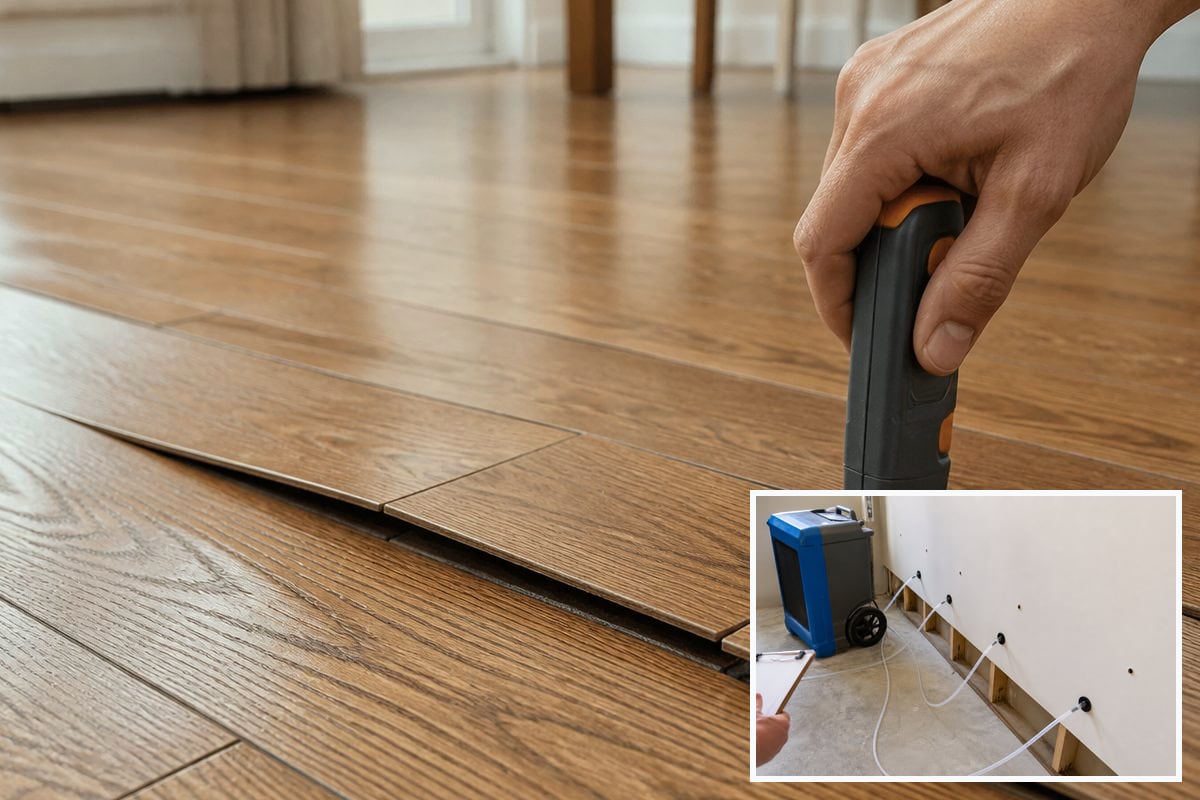
A vacant property faces a different kind of water damage risk than an occupied one. It's not that vacant homes leak more often. It's that nobody is there to notice a leak when it starts, which means a small, cheap-to-fix problem can quietly become a major one over weeks or months. For Los Angeles property owners dealing with an estate, a slow sale, a renovation, or a rental gap, understanding that difference changes how you should actually prepare the property.
This guide covers why vacant properties carry higher water damage risk, a full prevention checklist, inspection scheduling, insurance considerations specific to vacancy, and the region-specific factors that matter for Greater Los Angeles.
Why Vacant Properties Face a Higher Water Damage Risk
Vacant properties face higher water damage risk primarily because no one is present to catch a leak in its early stages, allowing even a small problem to run for days or weeks before anyone notices. The damage itself isn't usually more severe at the source. It's the response time that changes everything.
No One Present to Catch a Leak Early
In an occupied home, a dripping faucet or a damp patch under a sink usually gets noticed and addressed within days. In a vacant property, that same leak can run continuously until the next scheduled visit, which might be weeks away, by which point it's often caused meaningfully more damage to flooring, drywall, and framing.
Common Sources of Undetected Damage (Slow Leaks, Irrigation, Roof)
Slow supply line leaks, a stuck or malfunctioning irrigation valve, and small roof leaks are three of the most common sources of undetected water damage in vacant properties. None of these produce the dramatic flooding people associate with water damage. They produce a slow, steady moisture problem that's much harder to catch without regular inspection.
Vacant Property Water Damage Prevention Checklist
The most effective prevention checklist for a vacant property centers on managing the main water supply, draining or protecting plumbing, and maintaining the roof and drainage systems, since these are the sources most likely to cause undetected damage.
- Shut off or actively manage the main water supply
- Drain plumbing lines while leaving traps filled to prevent sewer gas entry
- Address water heater and major appliance shutoff or drainage
- Maintain roof, gutters and site drainage even while the property sits empty
Shutting Off or Managing the Main Water Supply
In most cases, shutting off the main water supply is the single most effective way to prevent major water damage in an unoccupied property, since it removes the source of a burst pipe or appliance failure entirely. If some water needs to remain on, for irrigation or a fire suppression system, for example, those specific systems should be inspected more frequently than the rest of the property.
Draining Plumbing and Leaving Traps Filled
After shutting off the main supply, drain remaining water from pipes to reduce pressure-related failure risk. At the same time, leave water in plumbing traps, the curved sections under sinks and drains, since a dry trap allows sewer gas to enter the home, which creates its own odor and safety issue.
Water Heater and Appliance Precautions
Turn off or unplug major water-using appliances, including the water heater, washing machine, and dishwasher, and shut off their individual supply valves if the main shutoff isn't in use for some reason. A water heater left running with no one monitoring it is a real and often overlooked risk in a vacant property.
Roof, Gutter and Drainage Maintenance
A vacant property still needs its roof and gutters maintained. Leaves and debris that clog gutters during a vacancy period create the exact conditions for water to back up under roofing material or overflow against the foundation, problems that would normally get noticed and fixed quickly in an occupied home.
Vacant Property Inspection Schedule and What to Look For
A regular inspection schedule, adjusted to the property's specific risk factors, is what actually catches developing problems before they become expensive ones, since no prevention checklist works without someone actually verifying it's holding up.
Recommended Inspection Frequency
[details pending verification] Properties in a renovation or pre-sale state, or those without an on-site caretaker, generally warrant more frequent checks than routinely monitored properties.
Signs of a Developing Leak (Odors, Staining, Warped Materials)
During each inspection, check for musty odors, water stains on ceilings or walls, warped flooring or baseboards, and any unusual moisture around windows, roof penetrations, or plumbing fixtures. These signs are easy to miss on a quick walkthrough, which is why a thorough check matters more for a vacant property than for one where problems would otherwise surface on their own.
Documenting Each Inspection Visit
Keep a dated log or photo record of each inspection visit, noting anything unusual even if it seems minor. This record is useful for your own tracking and can matter significantly if you ever need to demonstrate due diligence to an insurer.
Utility and System Management for Vacant Properties
Decisions about water, gas, and electrical utilities during a vacancy period directly affect both water damage risk and the practicality of monitoring the property at all.
Water, Gas and Electrical Utility Decisions
Keeping electrical service active allows for security systems, lighting, and any humidity control equipment to keep running. Water is often best shut off at the main, as discussed above, while gas service decisions typically depend on whether any gas appliances need to remain functional during the vacancy.
HVAC and Humidity Control While Vacant
Running the HVAC system on a minimal schedule, or using a standalone dehumidifier, helps prevent the humidity buildup that can lead to mold in a closed-up, unventilated property, especially during Los Angeles's more humid coastal and rainy-season stretches. Indoor Humidity and Mold Prevention Guide for Greater Los Angeles Homes
Who to Notify When a Property Sits Vacant
Notifying your insurance provider, a trusted local contact, and relevant utility providers are the three notifications that matter most when a property will sit vacant for an extended period.
Insurance Provider Notification
Notify your insurance provider before an extended vacancy begins, since many policies have specific requirements or limitations tied to vacancy duration that only apply if the insurer actually knows the property is unoccupied.
Local Utility and Municipal Notification
[details pending verification]
Neighbors or Property Manager Contact
A trusted neighbor, property manager, or hired caretaker who can check on the property between your own visits adds a meaningful layer of protection, particularly for catching problems like a burst pipe or storm damage between scheduled inspections.
Vacancy Clauses and Insurance Considerations
Most standard insurance policies limit or exclude certain types of coverage once a property has been vacant beyond a specific period, which makes this one of the most commonly misunderstood risks of extended vacancy.
How Vacancy Affects Standard Policy Coverage
Many standard policies limit or exclude coverage once a property has been vacant beyond a set period, commonly 30 to 60 days, unless a vacancy endorsement has been added. This applies to landlord and homeowner policies alike and catches a lot of owners off guard during a slow sale or an extended estate settlement process.
Vacant Property Insurance Endorsements
| Coverage Type | Water Damage Coverage | Applies When |
|---|---|---|
| Standard policy, property occupied | Typically full coverage per policy terms | Property is actively lived in |
| Standard policy, property vacant beyond limit | Often limited or excluded | Vacancy exceeds policy's defined threshold |
| Vacant property endorsement | Coverage restored per endorsement terms | Added proactively before or during vacancy |
Contact your insurance provider directly to confirm your policy's specific vacancy terms before an extended vacancy begins.
Freeze Protection for Vacant Properties in Cooler LA-Area Microclimates
Most of Greater Los Angeles does not face meaningful freeze risk, but a small number of higher-elevation and mountain-adjacent microclimates within the region do, and this section applies specifically to those areas rather than the region as a whole.
When Freeze Protection Applies in Southern California
If your vacant property sits at higher elevation, in mountain-adjacent communities, or in any area that regularly sees overnight freezing temperatures in winter, standard freeze-prevention steps apply just as they would in a colder climate. For the large majority of LA-area properties at lower elevations, this isn't a primary concern.
Basic Freeze-Prevention Steps If Needed
Where freeze risk genuinely applies, drain exterior hose bibs, insulate exposed pipes in unconditioned spaces like garages or crawl spaces, and consider maintaining minimal heat in the structure rather than shutting it down entirely during winter months.
Seasonal and Regional Considerations for Los Angeles Vacant Properties
Rainy Season Preparedness
Los Angeles's rainy season, concentrated in the winter months, can bring intense atmospheric-river storms that stress roofing, gutters, and site drainage all at once. A vacant property heading into this season benefits from a pre-storm roof and gutter check, since storm damage that goes unnoticed for weeks compounds quickly. Drain and Sewer Backup Prevention Checklist for Los Angeles Homeowners
Long-Term Vacancy During Renovation or Sale
A property vacant for a few weeks during a routine sale carries meaningfully different risk than one vacant for many months during a stalled renovation or a slow estate process. Treating both scenarios identically, as many general checklists do, misses the point. Extended vacancy warrants a more frequent inspection cadence and a real conversation with your insurer about coverage.
When to Hire a Caretaker, Inspection Service or Restoration Professional
Signs You Need Immediate Professional Assessment
Any active water intrusion, an unexplained spike in water usage before shutoff, visible mold, or significant storm damage discovered during an inspection warrants an immediate professional assessment rather than waiting for the next scheduled visit.
How LA Water Damage Supports Vacant Property Owners
[details pending verification]
Frequently Asked Questions About Vacant Property Water Damage Prevention
Should I turn off the water completely in a vacant property?
In most cases, yes. Shutting off the main water supply is the single most effective way to prevent major water damage in an unoccupied property, since it removes the source of a burst pipe or appliance failure. If any water needs to remain on, for irrigation or a fire suppression system, for example, those systems should be inspected more frequently.
How often should a vacant property be inspected?
There's no universal standard, and frequency should scale with the property's risk factors and length of vacancy. [details pending verification] Properties in a renovation or pre-sale state, or those without an on-site caretaker, generally warrant more frequent checks than routinely monitored properties.
Does homeowners or landlord insurance still cover a vacant property?
Many standard policies limit or exclude coverage once a property has been vacant beyond a set period, commonly 30 to 60 days, unless a vacancy endorsement has been added. Contact your insurance provider directly to confirm your policy's specific vacancy terms before an extended vacancy begins.
Do I need to winterize a vacant property in Los Angeles?
Most of the Greater Los Angeles area doesn't face the hard-freeze risk that drives winterization advice in colder climates, but higher-elevation or mountain-adjacent properties can still see freezing temperatures. Assess your specific property's elevation and climate before deciding whether freeze protection steps are necessary.
What are the earliest signs of water damage in an unoccupied home?
Look for musty odors, water stains on ceilings or walls, warped flooring or baseboards, and any unusual moisture around windows, roof penetrations, or plumbing fixtures. Because no one is present daily, even small leaks can go unnoticed for weeks, so a thorough visual check during each inspection matters.
Who should I notify when a property will be vacant for an extended period?
Notify your insurance provider so your policy accurately reflects the vacancy, inform a trusted neighbor or property manager who can check on the property, and confirm utility providers are aware if you're adjusting service. [details pending verification]
When should I call a professional instead of just doing periodic checks myself?
Call a professional if you find any sign of active or recent water intrusion, if the property will be vacant for several months or longer, or if you don't have a reliable local contact to check on it regularly. [details pending verification] Contact LA Water Damage at request a callback for an inspection.
Request a Vacant Property Water Damage Risk Assessment
Vacant properties reward a little proactive planning far more than occupied homes do, since there's no one on-site to catch a problem as it develops. A professional risk assessment can help you identify vulnerabilities before an extended vacancy begins, or address damage that's already occurred.
Contact LA Water Damage
Call request a callback or visit contact form to request a vacant property water damage risk assessment.
---