
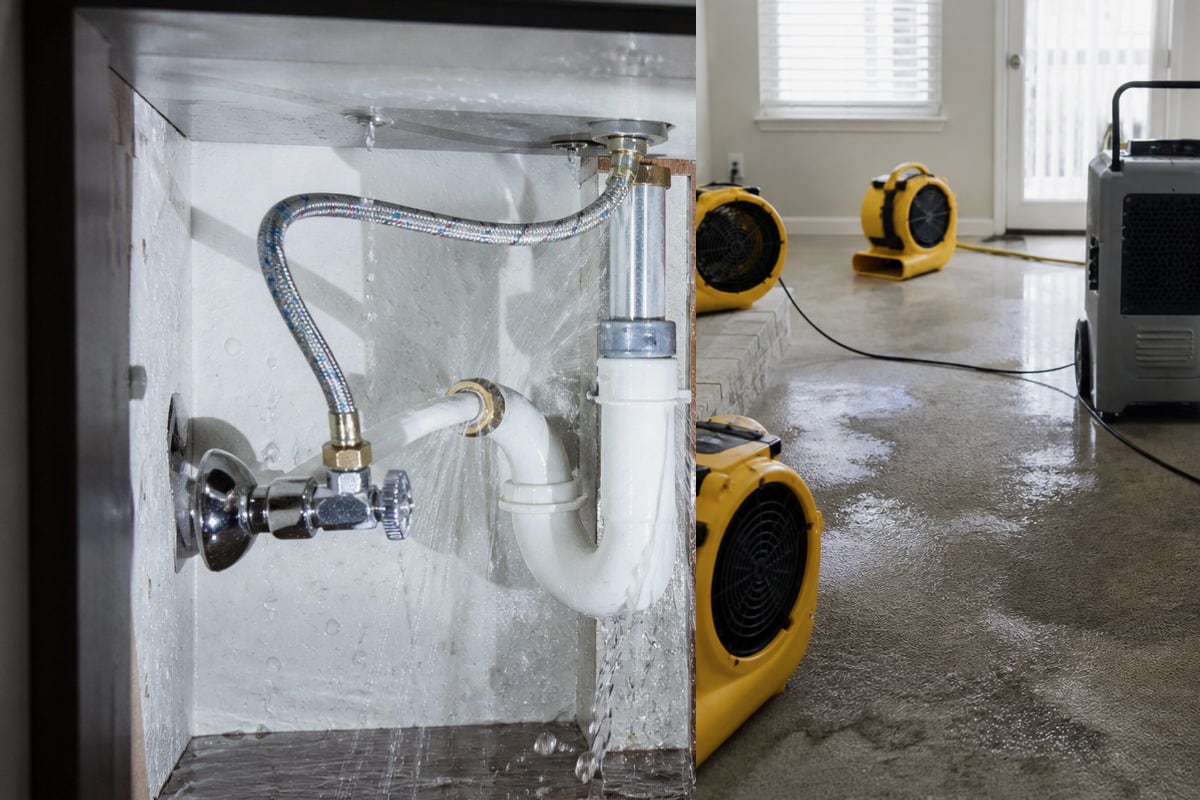
A washing machine hose is a small, unglamorous piece of rubber or braided steel that most people never think about, right up until it fails while nobody is home and floods an entire laundry room, hallway, and the room below it. Appliance supply lines are one of the most common sources of home water damage precisely because they're invisible until they aren't.
This checklist walks through every appliance with a supply line, how often to inspect each one, and what to actually look for, so you can catch a failing hose before it becomes a flooded floor.
Why Appliance Supply Lines Are a Leading Cause of Home Water Damage
Appliance supply lines are one of the most common sources of home water damage because they run under constant water pressure, often in low-visibility locations behind appliances that rarely get moved, and a failure can release a large volume of water before anyone notices. Unlike a slow drip under a sink, a burst supply line behind a washing machine can release water continuously until someone manually shuts it off, which is why prevention through regular inspection matters more here than almost anywhere else in a home. This is part of the same interior-plumbing awareness covered in California Storm Preparation Checklist for Property Owners (2026 Winter Rain Season Guide), since appliance hoses are exactly the kind of hidden risk that storm prep checklists tend to overlook.
Which Appliances Have Supply Lines You Need to Inspect
Five appliance categories account for most residential supply line failures: washing machines, dishwashers, refrigerators with ice makers, water heaters, and toilets or under-sink fixtures, and each has slightly different inspection needs based on how it's connected and how it's used.
Washing Machines
Washing machine hoses run under full water pressure at all times, not just while the machine is running, which makes them the highest-risk supply line in most homes. Check both hoses at the wall and appliance connections for cracks, bulging, or dampness.
Dishwashers
Dishwasher supply lines are usually smaller and lower pressure than washing machine hoses, but leaks here often go unnoticed longer because they're hidden inside a cabinet, allowing moisture to damage cabinetry and flooring before it's visible.
Refrigerators and Ice Makers
Refrigerator ice maker lines are the most commonly neglected supply line in the home, since the appliance is rarely moved and the thin plastic or copper tubing is easy to forget entirely. These lines run continuously and are worth pulling the refrigerator out to check at least once a year.
Water Heaters
Water heater supply connections handle both pressure and, in many cases, heat, which accelerates wear on fittings and hoses over time. Check for corrosion, mineral buildup, or dampness at the connection points, and treat any gas smell near a water heater as an immediate stop-and-call-a-professional situation rather than something to inspect further yourself.
Toilets and Under-Sink Fixtures
Toilet supply lines and under-sink fixture connections are lower risk individually but numerous, since most homes have several. A slow leak at any one of these can cause meaningful cabinet or flooring damage over weeks or months before it's noticed.
How Often to Inspect Each Type of Supply Line
Inspection frequency should match each appliance's risk level, with washing machine and water heater connections checked most often since they carry constant pressure, and lower-risk fixtures checked on a quarterly or twice-yearly basis.
| Appliance | Hose Type | Inspection Frequency | Replacement Interval |
|---|---|---|---|
| Washing machine | Rubber or steel-braided | Every load or monthly | 3-5 years (rubber), longer for steel-braided |
| Dishwasher | Braided or plastic | Quarterly | 5-10 years or at first sign of wear |
| Refrigerator ice maker | Plastic or copper tubing | Twice a year | 5-10 years or at first sign of wear |
| Water heater | Flexible connector | Twice a year | 5-10 years or at first sign of corrosion |
| Toilets and under-sink fixtures | Braided supply line | Twice a year | 5-10 years or at first sign of wear |
Every Load / Every Use Checks
A quick glance at washing machine hoses before or after each load, checking for dampness or an obvious kink, takes seconds and catches early warning signs before a full failure.
Quarterly and Twice-a-Year Inspections
Dishwashers, refrigerators, water heaters, and under-sink fixtures should get a closer look every three to six months, checking fittings and connection points rather than just the visible length of hose.
Annual Full Replacement Review
Once a year, review the age of every supply line in the home and replace anything approaching or past its typical service life, rather than waiting for a visible failure to force the decision.
Step-by-Step Appliance Hose Inspection Checklist
A thorough hose inspection takes only a few minutes per appliance and focuses on three things: the hose material itself, the fittings at each end, and any signs of moisture already present at the connection.
What to Look For (Cracks, Bulges, Rust, Kinks)
Check the full length of each hose for cracks, bulging, kinks, or a stiff, brittle feel rather than normal flexibility. Rust or mineral crust at the fittings is a sign the connection has already been leaking slowly. If you smell gas near a water heater or see exposed wiring near any water source, stop the inspection and contact a licensed professional immediately rather than continuing.
How to Check Connections and Fittings
Confirm each fitting is hand-tight and free of drips, and look for a compression fitting, which is the mechanical connection that joins a supply line to a pipe or appliance, showing any signs of dampness or mineral buildup. A connection that looks fine from a distance can still be loose enough to leak slowly.
Rubber vs. Steel-Braided Hoses: Which Is Safer?
Steel-braided hoses are generally the safer long-term choice over rubber hoses because they resist bursting and kinking better, but neither type is failure-proof, since steel-braided hoses can still fail at the fitting or crimp point where the metal braid meets the connector.
| Feature | Rubber Hose | Steel-Braided Hose |
|---|---|---|
| Cost | Lower | Higher |
| Burst resistance | Lower, degrades from inside | Higher, resists bursting |
| Kink resistance | Lower | Higher |
| Typical lifespan | 3-5 years | Longer, but inspect fittings regularly |
| Best for | Budget replacement | Washing machines, water heaters |
Signs a Hose Needs Immediate Replacement
Replace a hose immediately if you see any bulging, cracking, rust at the fittings, or dampness around the connection point, regardless of how new the hose looks overall. Rubber hoses in particular can degrade from the inside before any external crack is visible, which is why age-based replacement matters as much as visual inspection.
When to Replace Proactively vs. Wait for Failure
Proactive replacement, meaning swapping hoses on a set schedule rather than waiting for visible damage, is the more reliable approach for high-risk appliances like washing machines and water heaters, since internal degradation isn't always visible from the outside.
[details pending verification] for Professional Hose Replacement
Hose replacement costs depend on hose type, appliance, and accessibility. [details pending verification] Contact LA Water Damage or a licensed plumber for a property-specific estimate.
Common Mistakes Homeowners Make With Supply Lines
The most common mistake is relying entirely on visual inspection and skipping age-based replacement, since a hose can look fine externally while degrading internally. Other frequent mistakes include never checking the refrigerator ice maker line because the appliance is rarely moved, assuming steel-braided hoses never fail, and not knowing where the individual appliance shutoff valve is located, which forces a scramble to the main shutoff during a failure. How to Find and Use Your Main Water Shutoff Valve covers exactly where to find that main valve if an appliance shutoff isn't accessible or present.
What to Do If a Supply Line Has Already Failed
If a supply line has already failed, shut off the water immediately, either at the appliance's local shutoff valve or the home's main shutoff, then assess and document the damage before starting cleanup.
Shutting Off the Water Immediately
Locate the appliance's dedicated shutoff valve first, since it's usually faster to reach than the main valve. If you can't find or operate it, use the main shutoff instead. How to Find and Use Your Main Water Shutoff Valve explains how to locate and operate the main valve safely if you haven't already identified it in advance.
When to Call LA Water Damage for Emergency Water Extraction
Call a water extraction professional as soon as the water is off and the area is safe, since standing water from a supply line failure can soak flooring and drywall quickly, and mold growth becomes a real risk within 24 to 48 hours. [details pending verification]
Supply-Line Maintenance for Greater Los Angeles Homes and Businesses
Greater Los Angeles homes and businesses face a few region-specific factors worth naming directly. Older housing stock throughout the region often still has original or long-overdue appliance connections, and Southern California's mineral-heavy water can accelerate corrosion at fittings faster than in areas with softer water. Renter-occupied properties, which make up a large share of LA housing, also add a layer of complexity, since tenants may not know where appliance shutoffs are located and landlords may not have inspected supply lines recently. Building a simple hose inspection reminder into seasonal maintenance, aligned with California Storm Preparation Checklist for Property Owners (2026 Winter Rain Season Guide), is a practical way to keep this from falling through the cracks.
Frequently Asked Questions
How often should I replace my washing machine hoses?
Replace rubber washing machine hoses every three to five years regardless of appearance, since rubber degrades from the inside before visible cracks appear. Steel-braided hoses last longer but should still be inspected twice a year and replaced if you see rust, fraying, or bulging near the fittings.
What's the difference between rubber and steel-braided supply hoses?
Rubber hoses are less expensive but more prone to bursting from internal degradation, while steel-braided hoses have a woven metal exterior over a rubber core that resists kinking and rupture. Steel-braided is generally the safer long-term choice for washing machines and water heaters.
What are the warning signs a supply line is about to fail?
Look for visible cracks, bulging, rust stains near fittings, kinks, or a hose that feels stiff or brittle rather than flexible. Any dampness, mineral crust, or dripping at the connection point means the hose should be replaced immediately rather than monitored further.
Which appliances are most likely to cause water damage from a failed hose?
Washing machines are the most common source of major water damage because they run under constant water pressure, followed by dishwashers, refrigerator ice makers, and water heaters. All four should be on a regular inspection schedule.
Can I inspect appliance hoses myself, or do I need a professional?
Most homeowners can visually inspect hoses for cracks, bulging, and secure fittings themselves in a few minutes per appliance. If you find damage, are unsure about a fitting, or need to work near a gas water heater connection, contact a licensed plumber for replacement.
How much does it cost to replace an appliance supply line?
Costs depend on hose type, appliance, and accessibility. [details pending verification] Contact LA Water Damage or a licensed plumber for a property-specific estimate.
What should I do if I come home to a burst washing machine hose?
Shut off the water at the appliance valve or main shutoff immediately, then unplug the appliance if it's safe to reach the outlet without standing in water. Document the damage with photos, and contact a water damage restoration professional promptly to begin extraction before mold sets in.
Protect Your Property — Contact LA Water Damage
A ten-minute quarterly check across a handful of appliances is a small habit that prevents one of the most common and avoidable sources of home water damage. It's worth putting on a calendar reminder rather than leaving to memory.
If an appliance supply line has already failed and caused water damage in your Greater Los Angeles home or business, LA Water Damage can help with emergency extraction and drying. Call request a callback or visit contact form.
---