
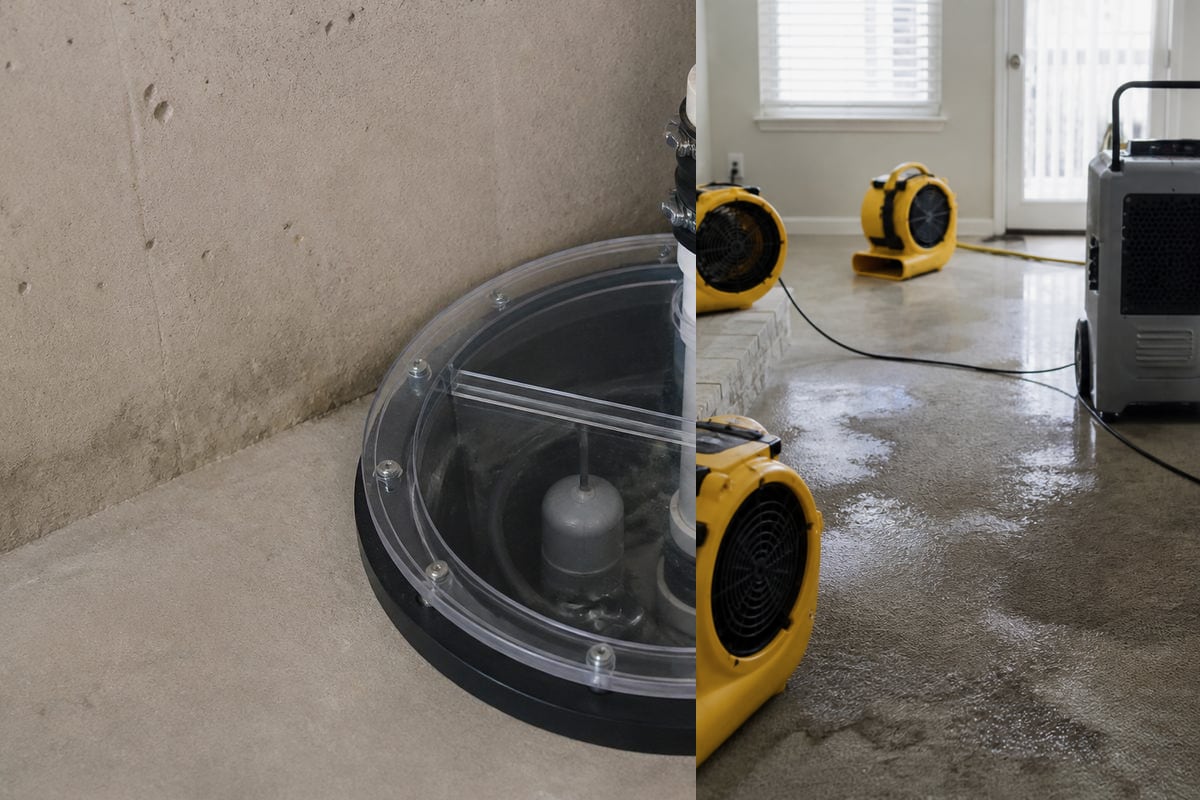
A sump pump is one of those systems that sits quietly in a corner doing nothing visible for most of the year, and then becomes the single most important piece of equipment in the house the moment a storm hits. The problem is that a sump pump nobody has tested since it was installed tends to fail at exactly the moment it's needed most, during a heavy storm and the power outage that often comes with it.
This guide covers how sump pumps work, the warning signs of failure, a realistic maintenance schedule, and what to do if the pump has already failed and water is already on the floor.
How a Sump Pump Works and Why It Matters for Water Damage Prevention
A sump pump works by collecting groundwater or drainage water in a sump pit, a small basin usually set into the lowest point of a basement or crawl space floor, and automatically pumping that water out and away from the structure once it reaches a certain level. It matters for water damage prevention because it's often the last line of defense against basement or crawl space flooding, working alongside gutters and grading rather than replacing them. Gutter, Downspout, and Grading Maintenance Guide for Property Owners covers the above-ground half of this same drainage system.
Warning Signs Your Sump Pump Is Failing
A failing sump pump usually shows warning signs before it stops working entirely, including unusual noises, a pump that runs constantly or won't turn on, visible rust or corrosion, and slow or incomplete drainage from the pit, and catching any of these early gives you time to repair or replace the unit before a storm tests it.
Unusual Noises or Vibration
Grinding, rattling, or a noticeably louder motor than usual often signals a worn bearing or something obstructing the impeller. A pump that suddenly sounds different than it used to is worth inspecting even if it's still technically working.
Pump Running Constantly or Not Turning On
A pump that runs continuously without shutting off may have a stuck float switch, the component that senses water level and triggers the pump. A pump that doesn't turn on at all when water rises is an immediate failure that needs attention before the next rain.
Visible Rust, Age, or Corrosion
Rust on the pump housing or fittings, along with a pump that's approaching or past its typical service life, are signs to consider replacement proactively rather than waiting for a failure to force the decision.
Slow Drainage or Standing Water in the Sump Pit
Water that drains slowly from the pit, or water that sits in the pit without triggering the pump at all, points to either a mechanical failure or a clogged discharge line, both of which need to be resolved before the pump is relied on again.
Sump Pump Maintenance Schedule
A basic sump pump maintenance schedule includes a monthly functional test and a more thorough annual inspection and cleaning, with testing frequency increasing right before and during California's rainy season when the pump is most likely to be needed.
Monthly Testing Steps
- Pour a bucket of water into the sump pit
- Confirm the pump activates automatically
- Confirm it drains the pit fully
- Confirm it shuts off properly once the pit is empty
- Listen for any unusual noise during the cycle
Annual Deep-Clean and Inspection
Once a year, clean debris from the sump pit, check the discharge line for clogs or blockages outside the home, inspect the check valve, which is the component that prevents pumped water from flowing back into the pit, and confirm the battery backup, if installed, is holding a charge.
Battery Backup Systems and Power Outage Risk
A battery backup system keeps a sump pump running during a power outage, which matters because storms are exactly when both flooding risk and power outage risk are highest at the same time. A primary pump without backup power becomes useless at the precise moment it's needed most, which is a gap many property owners don't realize exists until it's too late.
Why Storm Season Increases Failure Risk
Storm season increases sump pump failure risk because heavy rainfall raises groundwater levels right as wind and grid strain increase the odds of a power outage. Never work on a sump pump's electrical connections while standing in water, and disconnect power at the breaker first if it can be reached safely before doing any hands-on inspection.
Sump Pump Repair vs. Replacement
Whether to repair or replace an aging sump pump depends mainly on the pump's age and how many times it has already failed, with newer pumps usually worth repairing and older or repeatedly failing pumps usually better replaced outright.
| Age | Symptom | Recommended Action |
|---|---|---|
| Under 5 years | Isolated issue, first failure | Repair |
| 5-7 years | Occasional issues | Repair, monitor closely |
| Over 7-10 years | Any failure or repeated issues | Replace |
| Any age | Repair cost approaches replacement cost | Replace |
How Long Sump Pumps Typically Last
Most sump pumps last around 7 to 10 years with regular maintenance, though usage frequency, water quality, and pump quality all affect the actual lifespan of a specific unit.
When Replacement Makes More Sense Than Repair
If your pump is older, has failed more than once, or a repair estimate is approaching the cost of a new unit, replacement is usually the more reliable choice, since an aging pump that's already failed once is a reasonable predictor of failing again.
How Much Does Sump Pump Repair or Replacement Cost?
Sump pump repair or replacement costs depend on pump type, the condition of the pit, and whether a battery backup is being added at the same time. [details pending verification]
[details pending verification] Ranges
Because sump pump pricing varies by system type and installation complexity, [details pending verification] Contact LA Water Damage or a licensed plumber at request a callback for a property-specific estimate.
DIY vs. Professional Sump Pump Maintenance
Monthly testing and basic pit cleaning are safe and reasonable DIY tasks for most property owners, while pump replacement, discharge line repair, and battery backup installation are better handled by a licensed professional given the electrical and plumbing work involved. [details pending verification]
What to Do If Your Sump Pump Has Already Failed
If your sump pump has already failed and water is accumulating, prioritize safety around any electrical components near water, remove standing water if it's safe to do so, and contact a restoration professional promptly, since basement and crawl space flooding create conditions for mold growth quickly.
Immediate Steps to Limit Water Damage
Avoid contact with any electrical equipment near standing water. If a portable pump or wet vacuum is available and safe to use, begin removing water. Document the damage with photos before moving anything, since this documentation matters for both mitigation planning and any insurance claim. If the flooding has also affected your interior plumbing, How to Find and Use Your Main Water Shutoff Valve explains how to shut off water elsewhere in the property if needed.
When to Call LA Water Damage for Emergency Water Extraction
Call a water extraction professional as soon as it's safe to do so, since basement flooding often affects materials that are slow to dry and creates real mold risk within 24 to 48 hours if left standing. [details pending verification]
Sump Pump Considerations for Greater Los Angeles Properties
Sump pumps are less universal in Greater Los Angeles than in regions with more basements, but they remain important for hillside properties, homes with below-grade spaces, and areas with high groundwater or poor natural drainage. Southern California's storm pattern, concentrated into a handful of intense atmospheric river events each winter rather than steady year-round rain, means a sump pump here may sit unused for months and then face its hardest test all at once. Combined with the power outage risk that often accompanies major storms across the region, a tested battery backup is arguably even more important here than in areas with more frequent, gentler rainfall. Pairing sump pump maintenance with the broader property checks in California Storm Preparation Checklist for Property Owners (2026 Winter Rain Season Guide) keeps this system from being the one thing that gets forgotten each fall.
Frequently Asked Questions
How often should I test my sump pump?
Test your sump pump monthly by pouring a bucket of water into the pit and confirming it activates, drains the water, and shuts off properly. Test it more frequently right before and during California's rainy season, when the pump is most likely to be needed.
What are the most common warning signs of sump pump failure?
Common warning signs include unusual grinding or rattling noises, the pump running constantly without shutting off, visible rust or corrosion on the unit, and slow or incomplete drainage from the sump pit. Any of these signs means the pump should be inspected before the next storm.
How long do sump pumps typically last?
Most sump pumps last around 7 to 10 years with regular maintenance, though this varies by usage frequency, water quality, and pump quality. If your pump is approaching or past this range, consider proactive replacement rather than waiting for failure during a storm.
Do I need a battery backup for my sump pump?
A battery backup is strongly recommended, since sump pumps often need to work hardest during storms, which is also when power outages are most likely. Without backup power, a primary pump becomes useless exactly when flooding risk is highest.
Should I repair or replace an aging sump pump?
If your pump is under five years old with an isolated issue, repair is often reasonable. If it's older, has failed multiple times, or repair costs approach replacement cost, replacement is usually the more reliable long-term choice.
How much does sump pump repair or replacement cost?
Costs vary by pump type, pit condition, and whether battery backup is added. [details pending verification] Contact LA Water Damage or a licensed plumber for a property-specific estimate.
What should I do if my sump pump fails during a storm?
Prioritize safety first and avoid contact with electrical components near water. If safe to do so, remove standing water and document the damage with photos. Contact a water damage restoration professional promptly, since basement flooding can lead to mold growth within 24 to 48 hours.
Protect Your Basement or Crawl Space — Contact LA Water Damage
A sump pump you've never tested is a sump pump you can't actually count on. The five minutes it takes to run a monthly bucket test is a small habit against a genuinely disruptive failure.
If your sump pump has already failed and caused water damage in your Greater Los Angeles home or business, LA Water Damage can help with emergency extraction and drying. Call request a callback or visit contact form.