
Most winter pipe-freeze guides are written for places where sub-freezing nights are routine. Los Angeles isn't that kind of place, and pretending otherwise doesn't help anyone. This guide is built for the actual risk Greater Los Angeles properties face, which is real for some homes and nearly irrelevant for others, depending on where you live and how your plumbing is set up.
Does Los Angeles Really Get Frozen Pipes?
Los Angeles does occasionally get cold enough for pipes to freeze, but it's a lower-probability risk here than in most of the country, concentrated in specific conditions rather than a routine winter concern for most homes. The coastal basin, where the large majority of the region's population lives, rarely sees temperatures low enough to threaten interior plumbing. Higher-elevation communities and areas closer to the mountains see colder overnight temperatures during a cold snap, and that's where freeze risk becomes worth actually planning for.
Who Is Actually at Risk in Greater Los Angeles
The Los Angeles properties actually at risk of frozen pipes are those in higher-elevation or mountain-adjacent areas, those with exposed or poorly insulated exterior piping, and older homes with plumbing running through unheated garages or crawlspaces.
Higher-Elevation and Mountain-Adjacent Areas
Communities at higher elevation and closer to the surrounding mountain ranges experience colder overnight lows than the coastal basin during a winter cold snap. If you live in one of these areas, a hard freeze warning is worth taking seriously in a way coastal homeowners generally don't need to.
Exposed or Poorly Insulated Piping
Pipes located outside the conditioned envelope of your home, including exterior hose bibs, irrigation lines, and any plumbing running along an exterior wall with little insulation, are the most vulnerable points regardless of where in the region you live.
Older Homes, Garages, and Crawlspaces
Los Angeles's older housing stock often has plumbing that runs through unheated garages, crawlspaces, or attics, areas that weren't built with freeze protection in mind because it historically wasn't a major concern here. These are the spots worth a quick check before a rare cold night.
How to Prevent Frozen Pipes
You can prevent most frozen pipe risk with four simple steps: insulate exposed pipes, seal drafts near plumbing, let vulnerable faucets drip during a hard freeze warning, and prepare your home before extended travel during winter.
Insulating Exposed Pipes
Foam pipe insulation sleeves are inexpensive and simple to install on exposed pipes in garages, crawlspaces, or along exterior walls. This is the single most effective step for the specific homes actually at risk in Greater Los Angeles.
Sealing Drafts Near Pipes
Cold air infiltration through gaps near where pipes enter a wall or foundation can drop the local temperature around a pipe well below the outside air temperature. Sealing those gaps with caulk or foam helps protect the pipe even if you never insulate it directly.
Letting Faucets Drip on Cold Nights
Letting a faucet connected to a vulnerable pipe drip slightly during a hard freeze warning relieves pressure inside the pipe, reducing the chance of a rupture even if ice does form. It costs almost nothing and takes seconds to do.
Preparing Before You Travel
If you're leaving your property for an extended period during a cold stretch, keep the heat set to a minimum safe temperature rather than turning it off entirely, and consider asking a neighbor to check the property if a hard freeze is forecast while you're away.
How to Safely Thaw a Frozen Pipe
You can safely thaw a frozen pipe by applying gentle, gradual heat with a hair dryer, heating pad, or warm towels, starting near the faucet end and working toward the blockage, never with an open flame.
Safe Thawing Methods
Open the faucet connected to the frozen pipe first, so melting water has somewhere to go. Apply heat gradually with a hair dryer on a low setting, an electric heating pad wrapped around the pipe, or towels soaked in warm water, working from the open end of the pipe toward the frozen section.
What Not to Do (Open-Flame Warning)
Never use a blowtorch, propane torch, or any open flame to thaw a pipe. It's a serious fire hazard, it can damage the pipe itself, and it has caused house fires in homes that otherwise had a straightforward, fixable problem. Gradual, indirect heat is always the safer approach.
What to Do If a Pipe Bursts
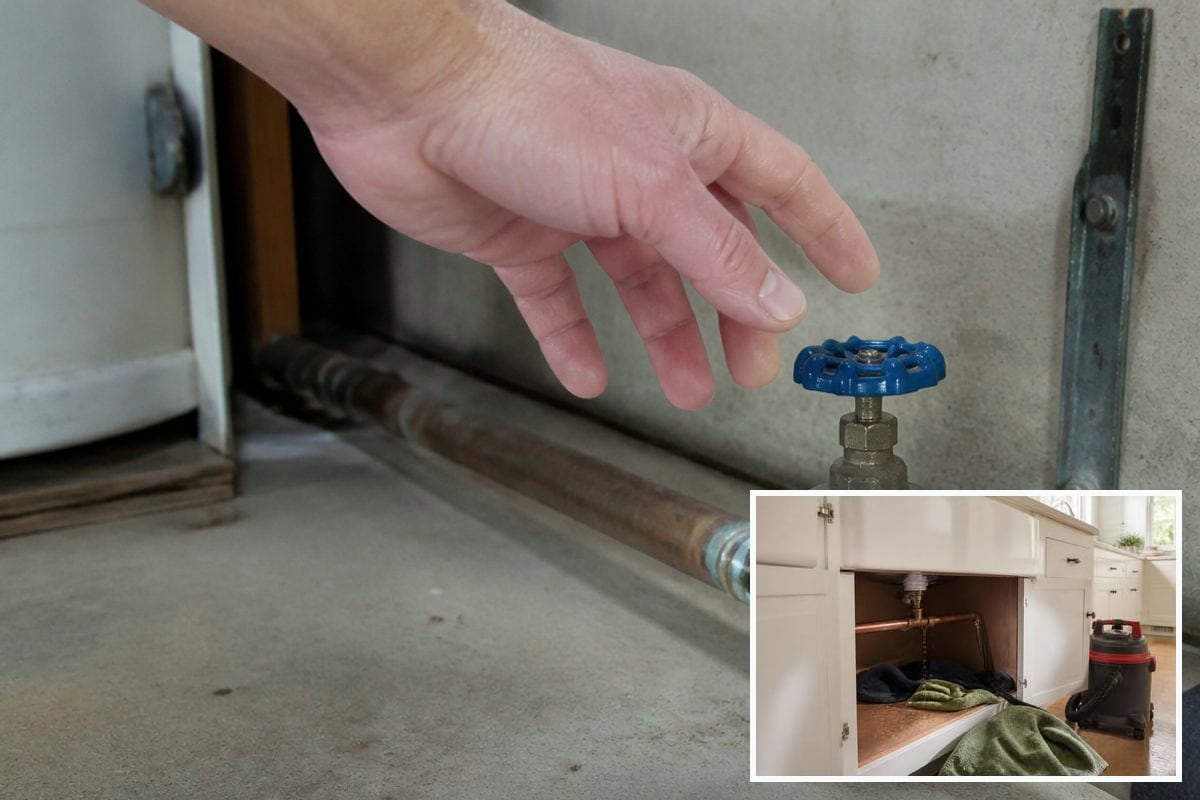
If a pipe bursts, shut off your main water supply immediately, turn off electricity to affected areas if it's safe to do so, and contact a water damage restoration professional right away, since standing water can cause secondary damage within hours.
Finding Your Main Water Shut-Off Valve
Every homeowner should know the location of their main water shut-off valve before an emergency happens, not during one. It's typically located near where the water line enters the house, often in a garage, basement, or exterior utility area.
When to Call a Water Damage Professional
Call a water damage professional as soon as a pipe bursts, not after you've tried to clean it up yourself. Standing water behind walls or under flooring is often more extensive than what's visible, and the documentation process covered in How Moisture Readings and Drying Logs Support Your Restoration Project works best when it starts as close to the event as possible.
How LA Water Damage Responds to Burst and Frozen Pipe Damage
LA Water Damage responds to burst and frozen pipe damage across Greater Los Angeles with water extraction, structural drying, and full documentation from the first visit, following a scope of work built around your specific damage, similar to what's described in What a Restoration Scope of Work Should Include. [details pending verification] once you call. Burst pipe? Call now: request a callback.
If you're checking your property before the cold season hits, pairing this guide with Spring Property Water-Damage Prevention Checklist for Los Angeles Homeowners gives you coverage for both ends of the year.
Frequently Asked Questions About Frozen and Burst Pipes in Los Angeles
How cold does it need to get for pipes to freeze?
Pipes are generally at risk when temperatures drop to around 20 degrees Fahrenheit or below for a sustained period, though exposed or poorly insulated pipes can freeze at slightly higher temperatures during a hard cold snap. Most of Greater Los Angeles rarely reaches these temperatures, but higher-elevation areas occasionally do.
Do I need to worry about frozen pipes if I live near the coast in LA?
Coastal and low-elevation areas of Los Angeles almost never see temperatures cold enough to freeze standard interior plumbing. The greater concern is exposed exterior piping, such as hose bibs or irrigation lines, during an unusually cold night.
What areas of Los Angeles are more at risk for frozen pipes?
Higher-elevation communities and areas closer to mountain ranges can see colder overnight temperatures than the coastal basin. Homes in these areas with exposed or poorly insulated plumbing carry a higher, though still occasional, freeze risk.
Is it true that a dripping faucet prevents frozen pipes?
Yes. Letting a faucet drip slightly relieves pressure inside the pipe, which reduces the chance of a freeze-related rupture even if ice does form. It is one of the simplest and most effective prevention steps during an unusual cold snap.
What should I do first if a pipe bursts in my home?
Shut off your main water supply at the shut-off valve immediately to limit water flow, then turn off electricity to any affected areas if it's safe to do so. Contact a water damage restoration professional promptly, since standing water can lead to secondary damage quickly.
Can I use a blowtorch to thaw a frozen pipe myself?
No. An open flame near a pipe is a serious fire hazard and can also damage the pipe itself. Safer methods include a hair dryer, a heating pad, or warm towels applied gradually along the frozen section.
Frozen pipes are rare here, but a burst one doesn't care how rare it was. If you're dealing with one right now, call LA Water Damage at request a callback or reach out at contact form.