
A pipe that fails while you're home gets discovered in minutes. The same failure while you're on a two-week trip can run undetected for days, soaking floors, saturating drywall, and quietly growing mold behind the walls before anyone notices. That gap between failure and discovery is exactly why "away from home" water damage tends to be worse than the version that happens while someone's around to catch it.
This guide covers the practical steps that actually reduce your risk, from a pre-trip shutdown checklist to smart leak detection technology, plus what to do if you come home and the damage has already happened.
Why Water Damage Risk Spikes When Nobody's Home
Water damage becomes significantly more severe when nobody is present to catch it early, because the single biggest factor in total damage isn't the size of the leak but how long it runs undetected. A small drip caught in an hour causes minor damage. The same drip running for four days can soak subfloors, spread through shared walls, and shift from clean water into a more contaminated, harder-to-remediate category.
This is precisely why prevention for an empty home looks different than everyday household plumbing care. You're not just reducing the chance of a leak. You're reducing the amount of time a leak has to do damage before anyone finds it.
Before You Leave: The Essential Water Shutdown Checklist
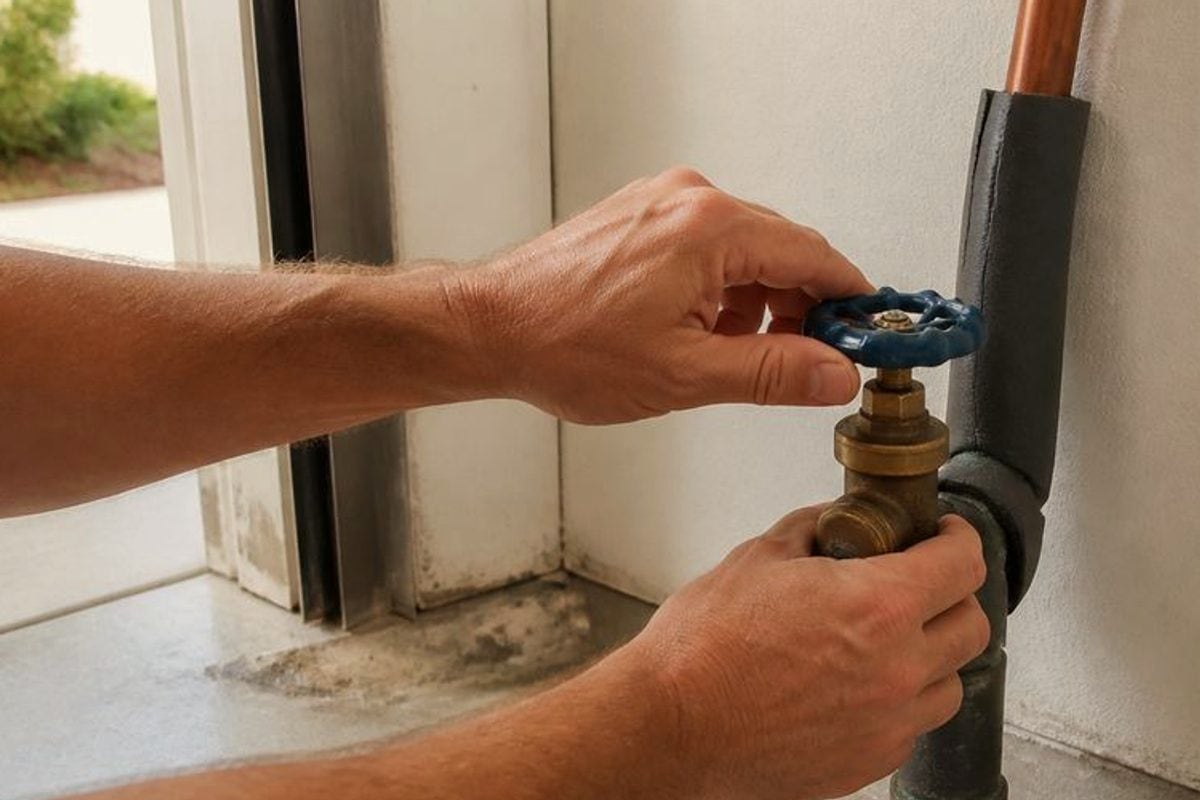
The most effective single step you can take before an extended absence is shutting off your home's main water valve, which removes the pressurized water supply that would otherwise feed a burst pipe or failed hose. For trips longer than a day or two, this is worth the small inconvenience of turning it back on when you return.
- Locate and shut off the main water valve, typically near the street-facing side of the house or in the garage.
- Turn off individual shutoff valves for the washing machine, dishwasher, and ice maker if you're leaving the main valve on for any reason.
- Unplug or power down appliances that use water, including the washing machine and dishwasher.
- Run the dishwasher and washing machine one final cycle so nothing is left mid-cycle with water sitting in the lines.
- Check that all faucets are fully closed, including outdoor hose bibs.
Shut Off the Main Water Valve
This single action prevents nearly every catastrophic water event a house can experience while empty, since a burst pipe or blown hose can't flood a home that has no pressurized water feeding it. If you've never located your main valve, do it before your next trip, not during an emergency.
Know Where Every Individual Shutoff Valve Is Located
Under-sink valves, toilet valves, and appliance shutoffs let you isolate a specific fixture without cutting water to the whole house, which is useful for shorter absences when shutting off the main isn't practical. Walk through your home once and confirm each one actually turns, since valves that haven't been touched in years sometimes seize.
Turn Off or Unplug Appliances That Use Water
Washing machines and dishwashers are common sources of unattended-home water damage, largely because their supply hoses are under constant pressure even when the appliance isn't running. Turning off the appliance-specific shutoff valve removes that risk entirely for the duration of your trip.
Install Leak Detection and Automatic Shutoff Technology
Leak detection technology gives you visibility into your home's water system while you're away, which is the next best thing to being there yourself. These systems range from simple point sensors that alert you to moisture in one spot, to whole-home monitors that track water flow and can shut off the supply automatically.
- Smart leak sensors are small, battery-powered devices placed near common failure points like water heaters, under sinks, and near washing machines. They send a phone alert the moment they detect moisture.
- Wi-Fi flow monitors track water usage at the main line and can flag unusual flow patterns that suggest a leak, even in areas without a physical sensor.
- Automatic shutoff valves go a step further, cutting the water supply automatically when a leak is detected, which limits damage even if you can't respond to the alert immediately.
No sensor prevents every possible failure, and it's worth being honest about that rather than overselling the technology. What these systems reliably do is shorten the time between failure and response, which is the variable that matters most for total damage. Whole-Home Leak Detection: A Complete Guide for Los Angeles Homeowners
Smart Leak Sensors
These are the most affordable entry point into leak detection and require no professional installation, just placement near likely failure points and a connection to your home Wi-Fi. They're a reasonable starting option if a whole-home system isn't in the budget right now.
Automatic Shutoff Valves
Automatic shutoff valves typically require professional installation since they tie into your main water line, but they offer the strongest protection because they act even if you never see the alert. For homes that sit empty for extended stretches, this is often worth the added cost.
Inspect Plumbing, Appliances, and Supply Lines Before You Go
A five-minute inspection before an extended trip catches many of the failure points that cause water damage while a home sits empty. Rubber and plastic supply hoses degrade over time and are one of the most common sources of sudden appliance-related leaks.
- Check washing machine hoses for cracking, bulging, or brittleness, and consider replacing rubber hoses with braided stainless steel versions.
- Inspect the water heater for rust, corrosion, or moisture around the base.
- Look under the kitchen and bathroom sinks for any existing dampness or mineral buildup on supply lines.
- Confirm the dishwasher supply line connection is snug and shows no signs of prior leaking.
- Test the sump pump if your property has one, since a nonfunctional pump during a storm is a common cause of preventable flooding.
Protect the Exterior: Gutters, Downspouts, and Sump Pumps
Clear gutters and functioning downspouts prevent rainwater from pooling against your foundation while you're away, which matters more in Los Angeles than many homeowners assume given the region's occasional but intense atmospheric-river storms.
- Clean gutters and downspouts before any trip planned during the rainy season.
- Confirm downspouts direct water at least several feet away from the foundation.
- Test any sump pump to confirm it activates and drains properly.
- Clear debris from exterior drains and window wells.
Cold-Weather and Extended-Absence Precautions
Frozen pipe risk is real but genuinely lower for most coastal and urban Los Angeles homes than it is for the broader national audience most prevention articles are written for. That said, it's not zero, especially for higher-elevation and inland areas of Greater Los Angeles that see overnight freezes during winter cold snaps.
Keeping the Heat On to Prevent Frozen Pipes
If your property is in a higher-elevation or inland area with genuine freeze risk, keep the thermostat set no lower than the mid-50s while you're away, since a completely unheated home lets interior pipes drop to outdoor temperatures. For most flatland Los Angeles homes, this precaution matters far less than it would in a colder climate.
Longer Trips: When to Shut Off Water Completely
For trips longer than a week or two, shutting off the main valve completely is the most reliable protection regardless of season, since it removes the water source rather than relying on temperature management. Combine this with having someone check the property periodically for the strongest protection available.
Signs You Might Have a Hidden Leak When You Return
A hidden leak often announces itself through small clues rather than an obvious flood, and catching those clues early can be the difference between a minor repair and a major restoration project.
- A musty or damp odor near walls, floors, or under sinks
- Warped, cupped, or discolored flooring
- Peeling or bubbling paint on walls or ceilings
- A water bill noticeably higher than usual for the billing period
- A water meter that continues moving when every fixture in the house is off
If you notice any of these, don't wait to investigate further. Whole-Home Leak Detection: A Complete Guide for Los Angeles Homeowners
What to Do If You Come Home to Water Damage
If you return home to active water damage, shut off the water source immediately if it's still running, avoid contact with standing water near outlets or appliances, and call a restoration company right away. Longer undetected exposure often means the water has moved into a more contaminated category and a wider class of damage, which makes fast professional response more important, not less.
- Shut off the main water valve if the leak is still active.
- Avoid walking through standing water near any electrical outlet, panel, or appliance.
- Photograph the damage before moving anything, for both insurance and restoration documentation.
- Open windows if it's safe and practical to help slow humidity buildup.
- Call an emergency water damage team to begin extraction and moisture assessment.
Days-long exposure while you were away often means the damage has progressed further than it would have if discovered same-day, so professional assessment matters even if the damage doesn't look severe on the surface. Reach our emergency line at request a callback.
First Steps Before Restoration Arrives
Beyond shutting off the water and avoiding electrical hazards, try to move any easily accessible valuables or sentimental items away from standing water if it's safe to do so. Don't attempt to move heavy furniture alone or wade into deep standing water.
When to Call an Emergency Water Damage Team
Any water damage discovered after an extended absence warrants a professional call, since the extended exposure time increases the likelihood of category escalation and hidden moisture beyond what's visible on the surface. [details pending verification] Call request a callback to reach our emergency team.
Water Damage Prevention Tips for Los Angeles Homes
Water damage prevention looks a little different across Greater Los Angeles than it does in a generic national guide, largely because of the region's housing mix. [details pending verification] Vacation properties, extended business travel, and a genuinely large multifamily and condo population all mean more Los Angeles homes sit empty for stretches of time than in many other metro areas, which makes the shutoff and detection habits in this guide especially relevant here.
Frequently Asked Questions About Preventing Water Damage While Away
Should I turn off my main water valve every time I leave the house?
For short errands, it's not usually necessary. For trips longer than a day or two, shutting off the main valve removes the water supply that would feed a burst pipe or failed hose, which is the single most effective prevention step available to any homeowner.
How much does a whole-home leak detector cost?
Costs vary widely by brand, sensor count, and whether the system includes automatic shutoff. [details pending verification] Rather than quoting a fixed number, compare a few systems directly, since features and installation needs differ significantly. Whole-Home Leak Detection: A Complete Guide for Los Angeles Homeowners
What are the first signs of a hidden water leak?
Watch for a musty smell, unexplained increases in your water bill, warped or discolored flooring, peeling paint, or a water meter that keeps moving when everything in the house is off. Any of these warrants a closer inspection.
Does homeowners insurance cover water damage that happens while I'm away?
Coverage generally depends on whether the cause was sudden and accidental versus a long-term leak that went unnoticed, which some insurers may treat as a maintenance issue. Confirm the specifics with your insurance provider. Does Homeowners Insurance Cover Water Damage? A Los Angeles Homeowner's Guide
How often should someone check on my home while I'm traveling?
For trips longer than a few days, having someone check the property every two to three days is a common practice that catches problems early, especially if you haven't shut off the main water valve completely.
What should I do the moment I discover water damage after returning home?
Shut off the water source if it's still active, avoid contact with standing water near outlets or electrical panels, photograph the damage, and contact an emergency water damage restoration company right away to limit further spread and secondary damage like mold.
Can leaving the water main on but shutting off individual appliances still cause damage?
Yes. Supply lines, connectors, and fixtures throughout the house can still fail even if major appliances are switched off, since the pressurized water source is still active. Shutting off the main valve is the more complete protection for longer absences.
Next Steps
Prevention reduces your risk, but it doesn't eliminate it entirely, and that's the honest truth about any home protection strategy. If you come home to water damage anywhere in Greater Los Angeles, our team can respond with emergency extraction and moisture assessment. Call request a callback or visit contact form.
---