
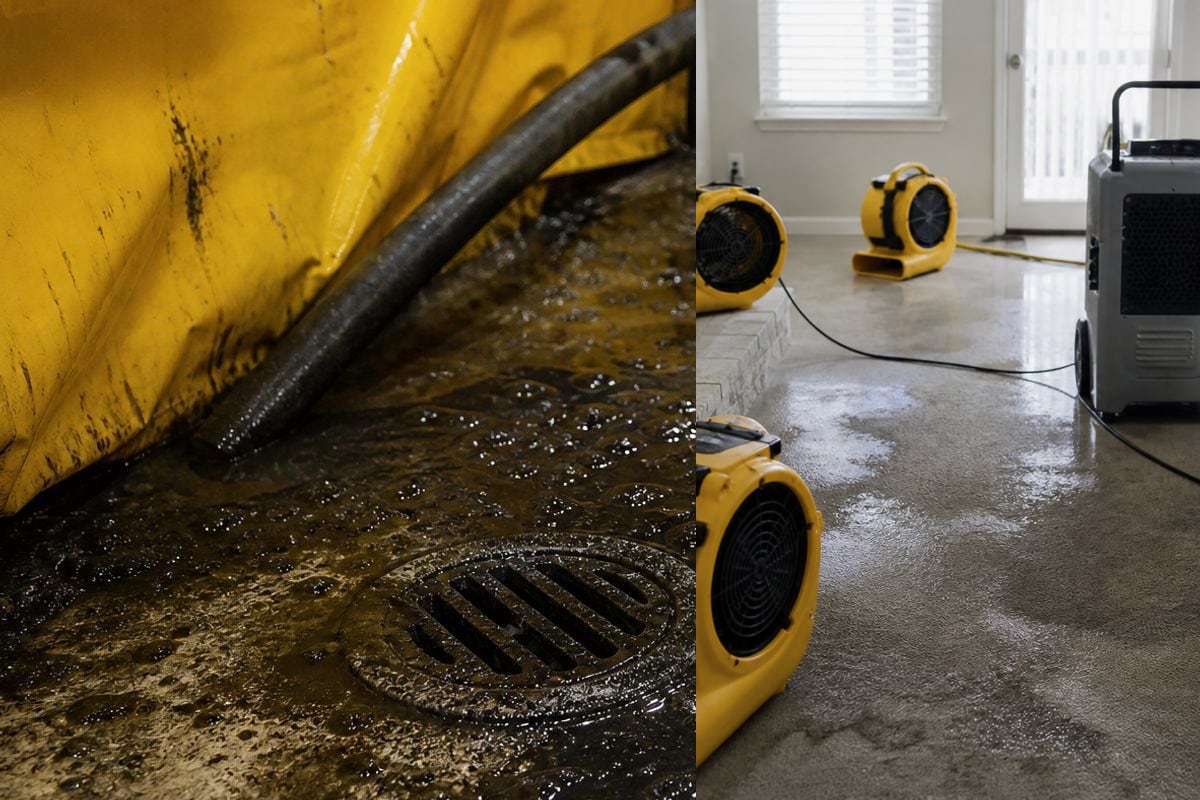
A sewer backup is one of the more unpleasant surprises a homeowner can face, and it rarely happens without warning. Most backups build gradually, through a blockage, a root intrusion, or an aging pipe losing capacity, long before sewage actually rises through a drain. Understanding what causes these backups and catching the early signs gives you a real window to prevent one entirely.
This checklist covers the common causes, the warning signs, a full prevention plan including backwater valves, what to do if a backup happens anyway, and how insurance typically treats this kind of damage.
What Causes Sewer and Storm Drain Backups?
Sewer backups are usually caused by a blockage inside the pipe, root intrusion, aging or undersized infrastructure, or a municipal system overwhelmed by heavy rain. Each cause points to a different prevention strategy, which is why identifying the likely culprit matters.
Fats, Oils and Grease (FOG) Buildup
Grease, cooking oil, and fat solidify inside pipes as they cool, gradually narrowing the interior diameter until wastewater can no longer flow freely. This buildup, commonly abbreviated FOG, is a well-known contributor to blockages, though it's often overstated as the primary cause in single-family homes compared to root intrusion and pipe age.
Tree Root Intrusion
Tree roots are drawn to the moisture and nutrients inside sewer pipes and can infiltrate small cracks or joints, gradually restricting flow until a blockage or full backup occurs. This is one of the most common causes of sewer backups in older, tree-lined neighborhoods, and it's frequently underestimated by homeowners who assume grease is the bigger culprit.
Aging or Undersized Sewer Lines
Many Los Angeles neighborhoods still rely on sewer laterals, the pipe connecting a home to the municipal main, that were installed decades ago using materials like clay or cast iron. These materials degrade over time, developing cracks, offset joints, and reduced capacity that make backups more likely even without a specific triggering event.
Heavy Rain and Storm Surge Overload
During intense rain events, municipal sewer and storm systems can reach capacity faster than expected, particularly in areas where storm drains and sanitary sewers share infrastructure or run close together. When the public system backs up, it can push wastewater back into connected private lines.
Warning Signs of a Sewer Backup Before It Happens
The clearest early warning signs are multiple drains gurgling or draining slowly at the same time, a foul odor near drains or in the yard, and unusually wet or lush patches of grass above the sewer line. Any one of these on its own deserves attention, and more than one at once suggests a developing blockage.
Multiple Slow or Gurgling Drains
A single slow drain is often just a local clog. When several fixtures throughout the house, like a toilet, a shower, and a kitchen sink, all drain slowly or gurgle around the same time, that pattern usually points to a blockage further down the main line rather than an isolated issue.
Foul Odors From Drains or Yard
Sewage odors near a floor drain, cleanout, or in a section of yard can indicate a crack or blockage in the line beneath. This smell is often intermittent at first, which makes it easy to dismiss until it becomes constant.
Unusually Lush or Wet Patches in the Yard
A section of lawn that stays noticeably greener, wetter, or spongier than the surrounding grass, especially if it sits above where you know or suspect the sewer line runs, can indicate a slow leak feeding that patch of ground.
The Complete Sewer and Drain Backup Prevention Checklist
The single most effective prevention step is installing and maintaining a backwater valve, paired with proper FOG disposal, root-aware landscaping, and regular professional inspection of the sewer line.
- Establish proper FOG disposal habits in the kitchen
- Install and maintain a backwater valve at the point where the home's lateral meets the main line
- Disconnect unnecessary sump pump and roof drain connections from the sanitary sewer
- Plug or cap unused floor drains that could allow backflow
- Practice sewer-line-aware landscaping when planting trees or large shrubs
- Schedule regular professional sewer line inspections, particularly for older homes
Proper FOG Disposal Habits
Pour cooled grease and oil into a sealable container for disposal in the trash rather than down the sink, and scrape food scraps into the trash before washing dishes. This alone won't prevent every backup, but it removes one contributing factor that's fully within a homeowner's control.
Install and Maintain a Backwater Valve
A backwater valve is a mechanical device installed in a sewer line that allows wastewater to flow out toward the main line but closes automatically to block sewage from flowing back into the home.
###### How a Backwater Valve Works
Inside the valve, a flap or gate stays open under normal flow conditions. When pressure from the municipal side pushes back, typically during a main-line blockage or system overload, the flap closes and physically prevents sewage from entering the home's plumbing. Once pressure normalizes, the valve reopens automatically.
###### Licensed Plumber Installation Considerations
Backwater valve installation typically requires cutting into the sewer line, which in most California jurisdictions means permitted work performed by a licensed plumber rather than a homeowner project. [details pending verification] It's worth budgeting for professional installation rather than treating this as a weekend DIY task.
Disconnect Unnecessary Sump Pump and Roof Drain Connections
In some older homes, sump pumps or roof drains were mistakenly plumbed into the sanitary sewer instead of a separate storm drain system. This adds unnecessary volume to the sewer line during storms and increases backup risk. A licensed plumber can confirm whether your home has this issue and correct it.
Plug Unused Floor Drains
Floor drains in garages, basements, or utility rooms that are rarely used can become an unexpected entry point for backup water since they sit at the lowest point in the plumbing system. A simple test plug or one-way drain cover reduces this risk without affecting normal use.
Sewer-Line-Aware Landscaping (Tree and Root Placement)
Before planting a new tree, find out where your sewer lateral runs and choose a location well away from it. Species with aggressive root systems, like many ficus and willow varieties, are worth avoiding near sewer lines entirely, even at a distance that might seem safe for a young tree.
Schedule Regular Professional Sewer Line Inspections
A camera inspection, where a plumber feeds a small camera through the line, can catch root intrusion, cracks, or offset joints long before they cause a full backup. [details pending verification] Homes with mature trees near the lateral or a history of slow drains benefit from more frequent checks.
Sump Pumps and Stormwater Management
Sump pumps and proper stormwater routing matter most in homes with basements, below-grade living spaces, or properties where groundwater collects near the foundation.
Battery Backup Systems
A sump pump that relies solely on household power will fail during the exact kind of storm-related power outage when it's needed most. A battery backup system keeps the pump running through an outage, which matters significantly during Southern California's winter storm season.
Redirecting Stormwater and Groundwater Away From Sanitary Lines
Downspouts, French drains, and any other stormwater management should route water away from the home's foundation and never into the sanitary sewer system. Keeping these systems separated reduces load on the sewer line during heavy rain and lowers backup risk for the whole neighborhood, not just your own property.
What to Do During and After a Sewage Backup
If sewage backs up into your home, avoid all contact with the water, cut power to the affected area if it's safe to do so, and treat the area as contaminated until it's professionally assessed.
Immediate Safety Steps (Electrical and Contamination Hazards)
Keep children and pets away from the affected area. If outlets or electrical panels are near standing water, don't attempt to shut off power yourself if it means stepping into the water. Contact a qualified electrician or your utility provider if there's any doubt about safety.
What Not to Touch Without Protective Equipment
Avoid touching sewage-contaminated water, surfaces, or belongings without gloves and protective footwear at minimum. Items that absorbed contaminated water, like carpet, upholstered furniture, and drywall, often need to be discarded rather than cleaned, since porous materials can't be fully disinfected.
Professional Cleanup vs. DIY Limits
Small, clear-water drips can sometimes be managed with basic protective equipment, but any actual sewage contact is a different category of problem. Extraction, disinfection, and drying after a sewage backup generally require professional equipment most homeowners don't have on hand.
###### Health and Safety Note on Category 3 (Black Water) Contamination
Sewage backup water is typically classified as Category 3, or black water, under industry water-damage standards, meaning it may carry bacteria, viruses, and parasites. This classification exists specifically because black water poses a genuine health risk, not just a cleanup inconvenience, which is why professional handling is strongly recommended. Indoor Humidity and Mold Prevention Guide for Greater Los Angeles Homes
Does Homeowners Insurance Cover Sewer Backups?
Standard homeowners insurance typically excludes sewer and drain backup damage unless a specific endorsement has been added to the policy. This surprises a lot of homeowners who assume any water damage is automatically covered.
Standard Policy Exclusions
Most base homeowners policies treat sewer backup as a distinct peril, separate from general water damage, and exclude it by default. [details pending verification]
Service Line and Sewer Backup Coverage Riders
An endorsement, sometimes called sewer backup coverage or service line coverage, can be added to most policies for an additional premium. The table below outlines the general distinction, though your specific policy language always governs.
| Coverage Type | Sewer Backup Damage | Typical Cost Impact |
|---|---|---|
| Standard homeowners policy | Typically excluded | No additional premium |
| Policy with sewer backup endorsement | Typically covered up to policy limits | Additional premium applies |
Review your policy directly or contact your insurer to confirm your specific coverage before you need it. RCV vs ACV: How Insurance Payouts Work After a Water Damage Claim
Sewer Backup Prevention in Los Angeles and Southern California
Aging Infrastructure Considerations in Older LA Neighborhoods
A meaningful share of LADWP's water infrastructure, including many sewer laterals connecting homes to city mains, is decades old, with a significant portion of mains over 80 years old. Homes in older neighborhoods, particularly those with original clay or cast iron lateral pipes, face a higher baseline backup risk that makes proactive inspection genuinely worthwhile rather than optional. Commercial Property Preventive Inspection Checklist for Los Angeles Building Owners
Rainy Season Preparation
Los Angeles's rainy season, concentrated in the winter months and increasingly marked by intense atmospheric-river storms, puts real strain on both municipal storm systems and private sewer lines. Scheduling a camera inspection and confirming your backwater valve, if you have one, is functioning correctly before the rainy season begins is a reasonable annual habit.
How LA Water Damage Handles Sewer and Drain Backup Cleanup
Our Process
[details pending verification]
Certifications and Safety Standards
[details pending verification]
Frequently Asked Questions About Sewer and Drain Backup Prevention
What is the single most effective way to prevent a sewer backup?
Installing and maintaining a backwater valve is widely considered the most effective single prevention measure, since it physically blocks sewage from flowing back into your home during a municipal system overload. Pairing it with regular professional sewer line inspections catches root intrusion and blockages before they cause a backup.
Is sewage backup water dangerous to clean up myself?
Yes, in most cases. Sewage backup water is typically classified as Category 3, or black water, and can carry bacteria, viruses, and parasites. Small, clear-water drips can sometimes be handled with gloves and proper ventilation, but any sewage contact should involve protective equipment or a professional cleanup crew.
Does homeowners insurance cover sewer backup damage?
Standard homeowners insurance typically excludes sewer and drain backup damage unless you've added a specific endorsement, often called sewer backup or service line coverage. Review your policy or contact your insurer directly to confirm what's included before you need it. [details pending verification]
What are the early warning signs of a sewer backup?
Watch for multiple drains gurgling or draining slowly at the same time, foul sewage odors near drains or in the yard, and unusually wet or lush patches of grass over your sewer line. Any of these can indicate a blockage building toward a full backup.
Can tree roots really cause a sewer backup?
Yes. Tree roots are drawn to the moisture and nutrients inside sewer pipes and can infiltrate small cracks or joints, gradually restricting flow until a blockage or full backup occurs. Planting large trees away from sewer lines and scheduling periodic camera inspections reduces this risk significantly.
How often should I have my sewer line inspected?
There's no universal rule, and frequency depends on your home's age, plumbing history, and tree coverage. [details pending verification] Older homes or properties with a history of backups benefit from more frequent professional camera inspections.
What should I do immediately if my basement floods with sewage?
Avoid contact with the water, turn off electricity to the affected area if it's safe to do so, and keep children and pets away. Sewage backups often require professional extraction and disinfection rather than DIY cleanup. Contact LA Water Damage at request a callback for [details pending verification] assistance.
Schedule a Sewer Backup Risk Inspection
A sewer backup is disruptive, unpleasant, and often preventable with the right maintenance and equipment in place. If you've noticed warning signs, live in an older home, or simply want a professional opinion on your sewer line's condition, an inspection is the most direct way to get real answers.
Contact LA Water Damage
Call request a callback or visit contact form to schedule a sewer backup risk inspection.
---