
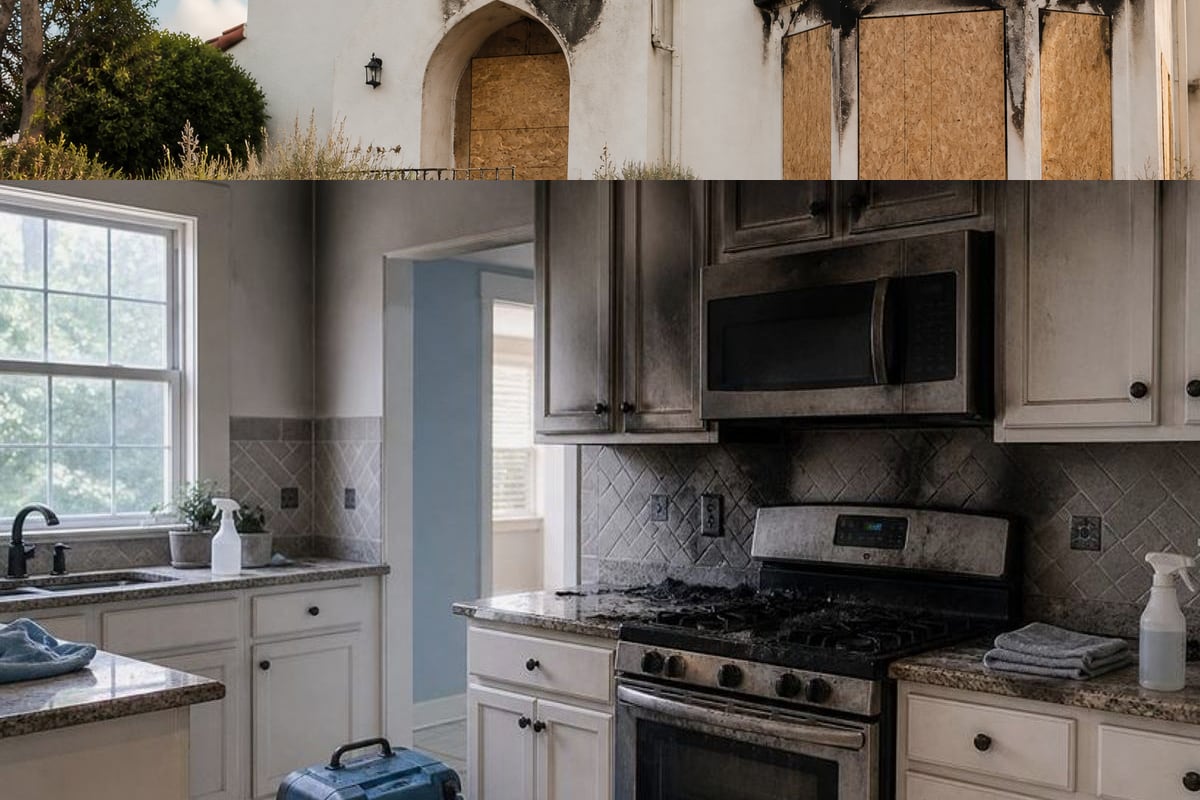
Fire safety planning tends to get split into two separate conversations. One is about equipment: smoke alarms and fire extinguishers. The other is about paperwork: insurance policies, deeds, and home inventories. In practice, both matter equally when a fire actually happens, and most home fire safety checklists only cover one half of the picture.
This guide brings both halves together, covering smoke alarm and extinguisher maintenance, common fire hazards, escape planning, the documents worth safeguarding before a disaster, and what to do in the hours immediately after a fire.
Smoke Alarm Testing and Maintenance Checklist
Smoke alarms should be tested monthly, have batteries replaced at least once a year, and be fully replaced roughly every 10 years regardless of how well they seem to be working. Skipping any of these steps meaningfully reduces how well an alarm can protect your household.
How Often to Test Smoke Alarms
Press the test button on every alarm in the home once a month. This confirms the alarm and, in interconnected systems, its connection to other units in the home are functioning. Testing takes less than five minutes for a typical home and is one of the highest-value, lowest-effort safety habits available.
Battery vs. Hardwired and Interconnected Alarms
Battery-powered alarms are the simplest to install but rely entirely on battery condition. Hardwired alarms draw power from the home's electrical system, typically with a battery backup for outages. Interconnected alarms, whether hardwired or wireless-linked, all sound together when one detects smoke, which matters significantly in larger homes where a fire in one room might not otherwise wake someone sleeping on the opposite end of the house.
When to Replace a Smoke Alarm Entirely
Replace the entire alarm unit roughly every 10 years, or sooner if the manufacturer's printed date on the unit indicates an earlier lifespan. Sensor sensitivity degrades over time in ways that battery replacement doesn't fix. If you don't know your alarms' age, check the manufacture date printed on the back of each unit.
Placement Guidelines by Room
Install a smoke alarm inside every bedroom, outside each sleeping area, and on every level of the home, including basements. Avoid placing alarms too close to kitchens or bathrooms where cooking steam or shower humidity can trigger nuisance alerts, since repeated false alarms are one of the most common reasons households end up disabling a unit entirely.
Fire Extinguisher Selection and Maintenance Checklist
Most homes benefit from a multipurpose ABC-rated extinguisher, which handles ordinary combustibles, flammable liquids, and electrical fires, checked monthly for pressure and physical condition.
Understanding Extinguisher Classes (A, B, C, K)
Fire extinguisher classes indicate what type of fire they're rated to handle safely.
| Class | Fire Type | Common Home Use |
|---|---|---|
| Class A | Ordinary combustibles (wood, paper, cloth) | General living areas |
| Class B | Flammable liquids (grease, gasoline, oil) | Garage, kitchen |
| Class C | Electrical equipment | Home office, utility rooms |
| Class K | Cooking oils and fats at high heat | Kitchens with heavy frying use |
An ABC-rated extinguisher covers the first three categories in one unit, which is why it's the standard recommendation for most homes.
Monthly Visual Inspection Steps
Check that the pressure gauge needle sits in the green zone, confirm there's no visible damage, corrosion, or a blocked nozzle, and make sure the pin and tamper seal are intact. This takes under a minute per unit and catches most problems before they become a "the extinguisher didn't work" moment during an actual emergency.
Professional Inspection and Recharge Schedule
Extinguishers generally need professional inspection or recharge on a schedule set by the manufacturer or a licensed inspector, and disposable units typically need full replacement rather than recharge once they're used or expired. [details pending verification]
Accessibility and Placement Best Practices
Mount extinguishers in visible, easily reached locations, particularly the kitchen, garage, and any workshop area, and make sure every adult in the household actually knows where each one is and how to use it before an emergency forces them to find out.
Common Home Fire Hazards to Check Regularly
The most common home fire hazards are outdated electrical wiring, unattended cooking equipment, and improperly stored flammable materials, and each deserves a regular check rather than a one-time inspection.
Electrical System Warning Signs
Flickering lights, warm outlet covers, a persistent burning smell with no obvious source, or breakers that trip repeatedly are all signs of an electrical issue that warrants a licensed electrician's attention rather than a wait-and-see approach.
Kitchen and Cooking Equipment Risks
Unattended stovetop cooking is one of the leading causes of home fires nationally. Keep flammable items like dish towels and paper towel rolls away from burners, and never leave active frying or high-heat cooking unattended, even briefly.
###### Safety Note: Never Use Water on a Grease or Electrical Fire
Water can cause a grease fire to explode outward, spreading flames rather than extinguishing them, and can create an electrocution risk on an electrical fire. Use a Class K extinguisher for a grease fire and a Class C or ABC extinguisher for an electrical fire, or smother a small grease fire with a metal lid if an extinguisher isn't immediately available.
Flammable Material Storage
Store gasoline, propane, paint thinner, and similar flammable materials in a detached garage or shed where possible, in approved containers, and away from any heat source or open flame, including a water heater's pilot light.
Family Fire Escape Planning and Drills
Every household should have at least two mapped exits from each room and should practice the full escape plan at least twice a year so it becomes automatic rather than something people are figuring out for the first time during an actual fire.
Mapping Two Exits Per Room
Identify a primary exit and a backup exit, such as a window, for every bedroom, and make sure any window used as an emergency exit can actually be opened easily by every household member, including children.
Practicing Your Plan Twice a Year
Walk through the escape plan as a family at least twice a year, including a designated outside meeting spot a safe distance from the home. Practicing this ahead of time removes the disorientation that often costs people critical seconds during a real fire.
Keeping a Home Fire Safety Record
A simple written or digital log of alarm and extinguisher inspection dates makes it easy to know at a glance what's current and what's overdue, rather than relying on memory.
Logging Alarm and Extinguisher Inspection Dates
Note the date of each monthly test, battery change, and professional inspection. This record also becomes useful documentation if an insurer ever asks about your home's fire safety maintenance history.
Sharing Records With Household Members
Keep the log somewhere every adult in the household can find and update it, whether that's a shared note on a phone or a printed sheet near the electrical panel, so the responsibility doesn't rest on just one person.
Recovery Document Checklist: What to Safeguard Before a Disaster
The documents worth safeguarding before any disaster are identity records, your insurance policy, financial account information, and a home inventory, ideally backed up digitally so a physical loss doesn't mean losing everything at once.
Identity and Legal Documents (ID, Deed, Insurance Policy)
- Government-issued identification for each household member
- Property deed or title
- Homeowners or renters insurance policy documents
- Birth certificates, passports, and similar identity records
Financial and Insurance Records
- Insurance agent or company contact information
- Bank and investment account summaries
- Mortgage or lease documents
- Recent tax returns
Home Inventory With Photos or Video
An itemized home inventory with photos, receipts where available, and approximate purchase dates significantly speeds up an insurance claim after a fire or other disaster, since insurers typically require documentation of what was lost. Walk through each room with your phone camera at least once a year and update the record after any major purchase.
Digital Backup and Off-Site/Cloud Storage
Keep digital copies of every document above in cloud storage or with a trusted contact outside the home, so a fire that destroys physical copies doesn't also destroy your ability to prove what you owned and owed.
Emergency Contact and Provider List
Keep a list of your insurance provider, a trusted restoration company, your bank, and key family contacts somewhere accessible even if your phone is lost or damaged. contact form request a callback
What to Do Immediately After a Home Fire
The first priorities after a home fire are staying out of the structure until officials clear it, contacting your insurance provider, and arranging a professional assessment of smoke, soot, and water damage from firefighting efforts.
Safety First: Structural, Electrical and Air-Quality Hazards
Fires can leave hidden structural damage, compromised electrical systems, and hazardous air quality from smoke and soot that isn't obvious just from looking at a room.
###### Do Not Re-Enter Until Cleared by Fire Officials
Wait for an official clearance from fire officials before going back inside, even if the fire looked contained to one room. Structural stability and air quality can both be compromised in ways that aren't visible from the doorway.
Contacting Your Insurance Provider
Contact your insurance provider as soon as it's safe to do so to begin the claims process, and ask specifically what documentation they'll need, since this varies by policy and insurer. RCV vs ACV: How Insurance Payouts Work After a Water Damage Claim
When to Call a Fire and Smoke Damage Restoration Company
Call a professional restoration company as soon as it's safe if there's smoke damage, soot, water damage from firefighting efforts, or any structural concern. [details pending verification] Indoor Humidity and Mold Prevention Guide for Greater Los Angeles Homes
Fire Safety Considerations for Los Angeles Homeowners
Wildfire-Adjacent Property Risk Factors
Homes near wildland-urban interface zones, common throughout the hillside communities and canyon-adjacent neighborhoods of Greater Los Angeles, face additional fire risk from embers and radiant heat during wildfire events, not just structure fires originating inside the home. Defensible space around the property and ember-resistant vent covers are worth researching specifically if you're in one of these areas.
Older Home Electrical System Considerations
Homes built before modern electrical codes, common throughout many established LA neighborhoods, may still have knob-and-tube wiring, undersized panels, or aluminum wiring that carries a higher fire risk than modern systems. If your home hasn't had an electrical inspection in years and its wiring age is unknown, it's worth having a licensed electrician assess it.
How LA Water Damage Supports Fire and Smoke Damage Recovery
Our Restoration Process
[details pending verification]
Certifications and Standards
[details pending verification]
Frequently Asked Questions About Fire Safety and Recovery Preparedness
How often should smoke alarms be tested and replaced?
Test smoke alarms monthly using the test button, replace batteries at least once a year, or use long-life sealed battery units, and replace the entire alarm unit roughly every 10 years, or per the manufacturer's stated lifespan printed on the unit. Never disable an alarm because of nuisance alerts.
What type of fire extinguisher do I need for my home?
Most homes benefit from a multipurpose ABC-rated extinguisher, which handles ordinary combustibles, flammable liquids, and electrical fires. Kitchens with significant cooking oil use may also warrant a Class K extinguisher. Check the label for the specific classes covered before purchasing.
How do I check if my fire extinguisher still works?
Visually inspect it monthly. Confirm the pressure gauge needle sits in the green zone, check for visible damage, corrosion, or a blocked nozzle, and make sure the pin and tamper seal are intact. Extinguishers generally need professional inspection or recharge on a schedule set by the manufacturer or a licensed inspector.
What documents should I keep safe in case of a house fire?
Prioritize identity documents, your homeowners insurance policy, property deed, financial account information, and a home inventory with photos or video of your belongings. Keeping digital copies in cloud storage or with a trusted contact protects them even if physical copies are destroyed.
Why do I need a home inventory before a disaster happens?
An itemized home inventory with photos, receipts where available, and approximate purchase dates significantly speeds up an insurance claim after a fire or other disaster, since insurers typically require documentation of what was lost. Building it before an incident is far easier than reconstructing it from memory afterward.
Is it safe to re-enter my home immediately after a fire is put out?
No. Do not re-enter until fire officials have cleared the structure. Fires can leave hidden structural damage, compromised electrical systems, and hazardous air quality from smoke and soot, so always wait for an official clearance before going back inside.
When should I call a professional restoration company after a house fire?
Call a professional as soon as it's safe to do so if there's smoke damage, soot, water damage from firefighting efforts, or any structural concern. [details pending verification] Contact LA Water Damage at request a callback for an assessment.
Get Fire and Smoke Damage Restoration Help
Fire preparedness reduces risk, but it can't eliminate it entirely. If your home has experienced fire, smoke, or soot damage, or firefighting water has left standing moisture behind, professional restoration support can help you understand what's actually salvageable and what needs replacement.
Contact LA Water Damage
Call request a callback or visit contact form for fire and smoke damage restoration support.
---