
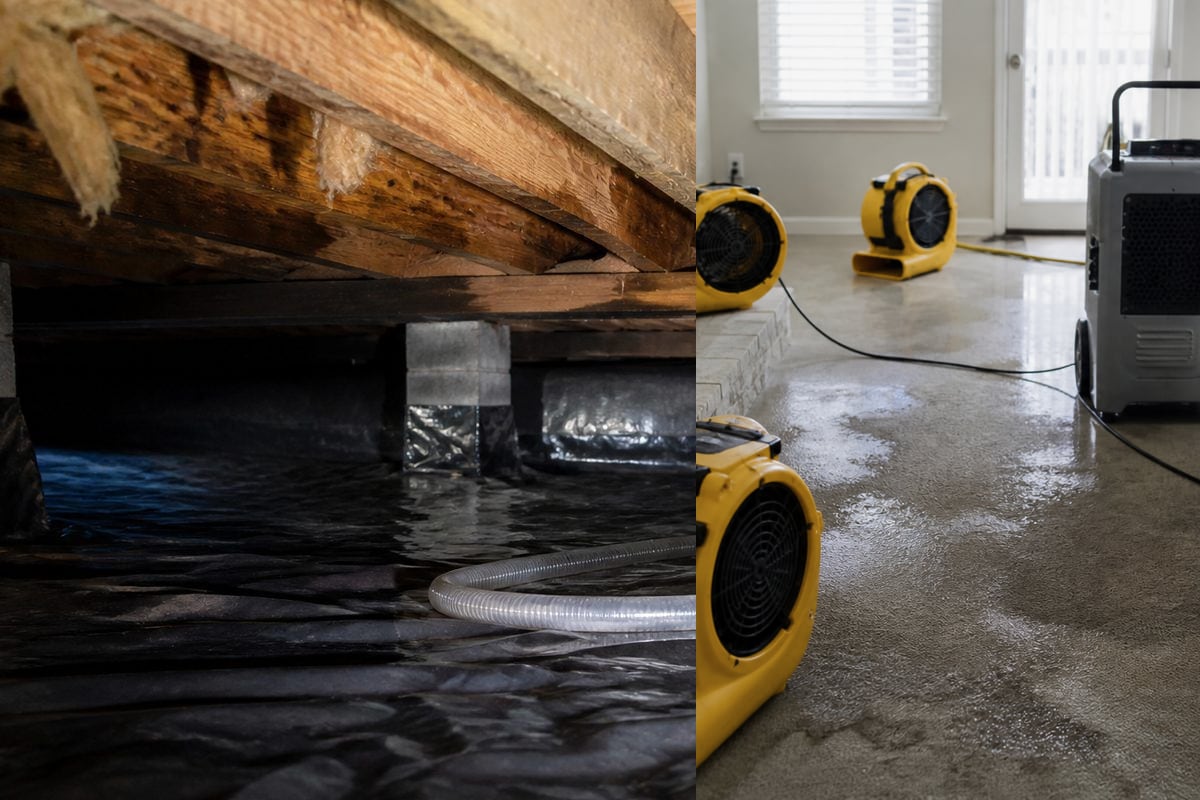
Most homeowners find out where their main water shutoff valve is at the worst possible moment, standing in an inch of water with a phone in one hand and no idea what to do with the other. It doesn't have to go that way. Knowing this one detail in advance, before anything is leaking, is one of the simplest things a property owner can do to limit water damage.
This guide covers exactly where to look based on your foundation type, what the valve looks like, and how to operate it safely, whether you're reading this calmly in advance or searching for answers mid-emergency.
Why Knowing Your Main Water Shutoff Valve Location Matters
Knowing your main water shutoff valve location matters because it's the fastest way to stop a plumbing failure from turning into major water damage, and every minute spent searching for it during an active leak is a minute of water continuing to spread. A burst pipe or failed appliance hose can release a significant amount of water in a short time, so the difference between finding the valve in ten seconds versus ten minutes is often the difference between a minor cleanup and a full-room repair. This is part of the same whole-property mindset covered in California Storm Preparation Checklist for Property Owners (2026 Winter Rain Season Guide), where interior shutoffs matter just as much as roof and gutter prep.
Where Is the Main Water Shutoff Valve Located?
Your main water shutoff valve is typically located where the water line enters your property, which varies by foundation type but is most often near the water heater, in the garage, under a front-facing exterior wall, or at a curb box near the street. The exact location depends on whether your home has a basement, crawl space, or slab foundation, so it helps to know which category your property falls into before you start searching.
Homes With a Basement
In homes with a basement, the shutoff valve is usually where the main water line enters the foundation wall, often near the water heater or utility area. Basements are less common in Southern California than in other parts of the country, but some older Los Angeles homes, particularly in hillside areas, do have them.
Homes With a Crawl Space
In homes with a crawl space, the valve is typically located just inside the crawl space access point, close to where the supply line enters from outside. If your crawl space is difficult to access, this is a case where marking the exterior access point clearly in advance saves real time later.
Homes With a Slab Foundation (Common in Greater Los Angeles)
Slab-on-grade construction is common throughout Greater Los Angeles, and since there's no below-grade space for the line to run through, the shutoff valve is usually near the water heater, along a garage wall, or near an exterior hose bib. Because there's no single standard location for slab homes, this is often the foundation type where owners have the hardest time finding the valve on the first try.
Outdoor Shutoff Valve Locations in Warm-Climate Areas
In warm-climate regions like Southern California, it's also common to find an additional shutoff at a curb box near the street, sometimes called a curb stop, which is separate from your water meter and controlled by a specific tool rather than by hand. This valve is often the utility's access point rather than the homeowner's primary control, so check with your water provider before relying on it as your main shutoff.
Commercial and Multi-Unit Properties
Commercial and multi-unit properties often have both a main building shutoff and individual unit shutoffs, and property managers should confirm both locations are clearly labeled and accessible to maintenance staff. In multi-tenant buildings, a single failed line can affect several units at once, so response speed matters even more.
What Does the Main Shutoff Valve Look Like?
Main shutoff valves generally come in two types, gate valves and ball valves, and telling them apart matters because they operate differently. A gate valve has a round wheel-style handle, while a ball valve has a straight lever handle. Knowing which one you have before an emergency means you won't waste time figuring out which direction to turn it.
| Valve Type | Appearance | Turn Direction | Common Age or Material |
|---|---|---|---|
| Gate valve | Round wheel handle | Clockwise until it stops | Common in older homes, brass or iron |
| Ball valve | Straight lever handle | Quarter turn perpendicular to pipe | Common in newer installs, brass with quarter-turn design |
Gate Valves
A gate valve uses a round handle that you turn clockwise, like a garden spigot, until it stops fully closed. Gate valves are more common in older homes and can become stiff or hard to turn if they haven't been operated in years, which is one reason regular testing matters.
Ball Valves
A ball valve uses a straight lever handle that you turn a quarter turn until it sits perpendicular to the pipe, which fully stops the flow. Ball valves are generally easier to operate quickly and are more common in newer installations and replacement work.
How to Turn Off Your Main Water Shutoff Valve Safely
To turn off your main water shutoff valve safely, locate it, confirm which type you have, and turn a ball valve a quarter turn until it's perpendicular to the pipe or a gate valve clockwise until it stops, without forcing a valve that feels stuck or corroded.
Step-by-Step Instructions
- Locate the valve based on your foundation type
- Confirm whether it's a gate valve or ball valve
- For a ball valve, turn the lever a quarter turn until it's perpendicular to the pipe
- For a gate valve, turn the handle clockwise until it stops
- Open a nearby faucet to confirm water flow has stopped
If the valve is corroded, stuck, or located near visible electrical equipment, do not force it. Forcing a corroded valve can crack it entirely, turning a manageable leak into a much larger one, so contact a licensed plumber instead.
How to Test Your Valve Before an Emergency
Test your shutoff valve twice a year by turning it fully closed and then back open, checking for smooth operation and any dripping around the valve body itself. This is the single most overlooked step in home maintenance. A valve nobody has touched in years is far more likely to be stuck or leak when you finally need it, which defeats the entire purpose of having one.
What to Do If You Can't Find or Operate Your Shutoff Valve
If you can't find your shutoff valve, check the most likely spots first: near the water heater, under sinks along exterior walls, in the garage, and near the street-facing curb box. If a thorough search still doesn't turn it up, or if you find it but can't operate it safely, a licensed plumber can identify the valve or install a new, accessible one. Many LA slab homes in particular have valves that are poorly labeled or awkwardly placed, and it's a fair and common reality that professional help is often the more practical answer than continued DIY searching.
How Much Does It Cost to Repair or Replace a Shutoff Valve?
The cost to repair or replace a main shutoff valve depends on the valve type, how accessible it is, and whether surrounding plumbing needs work as well. [details pending verification]
[details pending verification] Ranges
Because valve replacement costs vary so much by accessibility and property type, [details pending verification] is the most accurate way to describe pricing here. Contact LA Water Damage or a licensed plumber at request a callback for a property-specific quote.
When to Call a Licensed Plumber vs. Handling It Yourself
Most homeowners can safely locate and operate a functioning shutoff valve themselves, but valve repair, replacement, or installation of a new accessible valve is plumbing work that calls for a licensed professional. If your valve is corroded, doesn't fully stop water flow, or you're not confident identifying gate versus ball valve operation under pressure, that's the point to call a plumber rather than experiment during an active leak. [details pending verification]
What to Do After You've Shut Off the Water (Preventing Further Water Damage)
After shutting off the main valve, open a faucet to relieve remaining pressure in the lines, then shift focus to documenting and mitigating any water damage that already occurred. Shutting off the water stops the source, but it doesn't undo damage that's already happened, and what you do in the next hour matters for both drying and your insurance claim. If the failure came from an appliance connection rather than a supply pipe, Appliance Hose and Supply-Line Inspection Checklist explains how to prevent a repeat failure once the immediate issue is resolved.
When to Call LA Water Damage for Emergency Water Extraction
Call a water extraction professional as soon as the water is shut off and it's safe to do so, since even a short delay increases the risk of moisture soaking into flooring, drywall, and subfloor materials. [details pending verification]
Frequently Asked Questions
How often should I check my main water shutoff valve?
Test it twice a year, ideally at the start and end of California's rainy season. Turn it fully closed and then open, checking for smooth operation, leaks, or resistance. A valve that's stiff or won't fully close should be repaired before you need it in an emergency.
What if I can't find my main water shutoff valve?
Check near the water heater, under kitchen or bathroom sinks feeding exterior walls, in the garage, or near the street-facing curb in a ground box. If you still can't locate it after a thorough search, a licensed plumber can identify and, if needed, install an accessible valve.
Is my water meter the same as my main shutoff valve?
No. The water meter measures usage and is typically owned by the utility, while the main shutoff valve controls flow into your property and is usually located near where the water line enters the building, sometimes close to the meter but not the same fixture.
Can I turn off my main water valve myself?
In most cases, yes. Locate the valve, turn a ball valve a quarter turn perpendicular to the pipe, or turn a gate valve clockwise until it stops. If the valve is corroded, stuck, or you're unsure, contact a licensed plumber rather than forcing it.
How much does it cost to repair or replace a shutoff valve?
Costs vary based on valve type, accessibility, and whether additional plumbing work is needed. [details pending verification] Contact LA Water Damage or a licensed plumber for a property-specific quote.
What should I do immediately after shutting off the water during a leak?
Open a faucet to relieve remaining pressure in the lines, document the damage with photos, and begin removing standing water if it's safe to do so. Then contact a water damage restoration professional promptly, since even a short delay increases the risk of mold growth.
Do slab-foundation homes have shutoff valves in different locations than homes with basements?
Yes. Slab-on-grade homes, common throughout Greater Los Angeles, typically route the main shutoff near the water heater, garage wall, or exterior hose bib rather than in a basement, since there is no below-grade space to run the line through.
Get Help Now — Contact LA Water Damage
If you're dealing with active flooding right now, the priority order is safety, shutoff, then help. Shut off the water if you can do it safely, and don't waste time trying to diagnose the source before you do.
If water damage has already occurred, LA Water Damage can respond with emergency extraction and drying support for Greater Los Angeles properties. Call request a callback or visit contact form.
---