
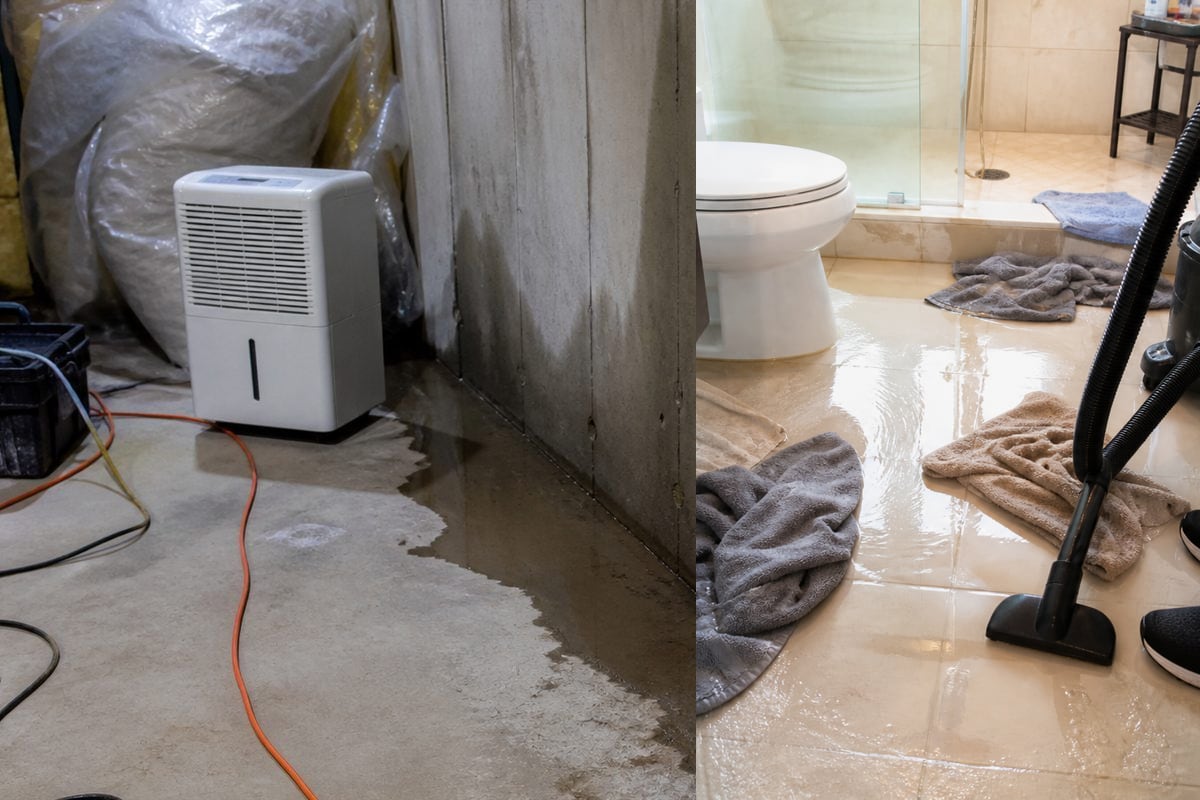
A homeowner dealing with a burst pipe under the kitchen sink and a property manager dealing with a burst supply line on the fourth floor of an occupied office building are facing the same basic problem with almost nothing else in common. The scale, the regulations, the equipment, and the insurance conversation all shift once a property crosses from residential to commercial. Understanding those differences matters whether you own both types of property or are simply trying to figure out what kind of provider you actually need.
Scale and Complexity of the Damage
The biggest difference between residential and commercial restoration is scale. Commercial properties are typically larger, often multi-story or multi-tenant, and involve more stakeholders than a single-family home, which changes nearly every part of how a restoration project is planned and executed.
| Factor | Residential | Commercial |
|---|---|---|
| Typical square footage | Single unit, hundreds to a few thousand sq ft | Often tens of thousands of sq ft or more |
| Occupants affected | One household | Multiple tenants, employees, or customers |
| Stakeholders | Homeowner, one insurer | Property manager, multiple tenants, multiple policies |
| Decision-making | Single point of contact | Often requires coordinated sign-off |
A single-family home restoration usually involves one homeowner and one insurance policy. A commercial loss can involve a property manager, several affected tenants, and coordination across departments before a decision even gets made.
Regulations and Compliance Requirements
Commercial restoration projects are more likely to be subject to workplace safety rules, accessibility requirements, and industry-specific codes that simply don't apply to a private residence. A restaurant kitchen, a healthcare facility, and a general office building can each carry different compliance obligations layered on top of standard building codes.
| Requirement | Residential | Commercial |
|---|---|---|
| OSHA workplace safety | Not applicable | Often applicable |
| ADA accessibility | Not applicable | Frequently applicable |
| Industry-specific codes (health, food service) | Rare | Common depending on property type |
| Local building permits | Standard | Standard, often with added occupancy review |
OSHA and Life-Safety Considerations for Commercial Properties
OSHA workplace safety rules apply to many commercial job sites, meaning restoration work happening around active employees needs to account for containment, air quality, and hazard communication in a way residential work generally does not. Life-safety considerations, including egress paths and occupied-space protocols, also carry more weight on a commercial site with ongoing foot traffic.
Equipment and Techniques Used
Commercial losses often require larger-capacity equipment simply because there is more square footage and volume of air to manage than a typical home. Industrial dehumidifiers, negative air machines, and large-loss drying equipment scale up to cover open floor plans, multiple stories, or large mechanical spaces, while the smaller portable equipment used in a residential job would take far too long to be effective.
The underlying drying science is the same in both settings. What changes is the capacity and coordination needed to apply it across a much larger footprint, sometimes while parts of the building remain occupied.
Timeline, Urgency, and Business Disruption
Commercial restoration timelines are shaped as much by business disruption and stakeholder coordination as by the physical scope of the damage itself, while residential timelines are driven mostly by the extent of the damage alone. A commercial project often has to account for phased work, off-hours scheduling, and coordination across multiple decision-makers, all of which residential jobs rarely need to consider.
Response coordination matters more too. On a commercial loss, the restoration provider may be coordinating with facilities staff, a property management company, and multiple tenants simultaneously, compared to a single homeowner making decisions directly. Ask any provider about [details pending verification] directly rather than assuming residential and commercial response times are identical. For a deeper look at minimizing disruption during the project itself, see Business Continuity During Property Restoration.
Multi-Stakeholder and Multi-Tenant Coordination
Multi-tenant commercial properties require restoration providers to coordinate access, scheduling, and communication across several parties at once, which adds a layer of project management that a single-household residential job simply doesn't need.
Insurance and Financial Considerations
Commercial insurance claims typically carry higher overall values, involve multiple policies, and can include business income coverage that residential claims almost never have, making the financial side of a commercial loss meaningfully more complex. A homeowner's claim usually resolves against a single homeowner's policy. A commercial claim might touch a general property policy, a business interruption rider, and sometimes a separate policy covering specialty risks.
Documentation requirements scale with that complexity. The full breakdown of what a commercial claim file needs is covered in Commercial Restoration Documentation Checklist.
Impact on Occupants: Families vs. Tenants, Employees, and Customers
A residential loss disrupts one household's daily life and sense of security in their own home. A commercial loss disrupts multiple tenants' livelihoods, employees' workplaces, and customers' access to a business, all at once, which changes the communication burden significantly.
Where a homeowner mainly needs empathetic, clear communication about their own home, a commercial property manager needs a communication plan that reaches every affected tenant or department fairly and consistently, ideally built ahead of time as part of Commercial Emergency Response Plan Template for Property Damage Emergencies.
How the Restoration Process Differs Step by Step
The core restoration process follows the same general sequence in both settings, but each step scales differently in a commercial environment.
Assessing the Damage
Residential assessment typically covers a single unit and can often be completed quickly. Commercial assessment may require walking multiple floors or units, reviewing building systems shared across tenants, and coordinating with facilities staff who know the property's history.
Mitigation and Removal
Mitigation equipment scales up on commercial jobs, and removal work may need to happen in phases to avoid disrupting unaffected tenants or operations, compared to a residential job where the whole space is typically treated as one zone.
Cleaning, Sanitizing, and Rebuild
Commercial rebuild work often has to meet additional code requirements depending on property type, such as food-service or healthcare-specific standards, while residential rebuild generally follows standard residential building code alone.
How to Choose the Right Restoration Company for Your Property Type
Choosing the right restoration company starts with confirming the provider has genuine experience with your specific property type, not just a general claim of restoration services. A company well-suited to residential jobs is not automatically equipped to coordinate a multi-tenant commercial loss, and the reverse is also true.
What to Look for in a Commercial Restoration Provider
- Documented experience with commercial-scale losses across relevant property types
- Familiarity with multi-stakeholder coordination and applicable regulations
- Local service coverage across Greater Los Angeles
- Confirmed licensing ([details pending verification]) and response availability ([details pending verification])
- Willingness to discuss past commercial project experience directly, covered further in How to Evaluate Commercial Restoration Case Studies and Track Records
What to Look for in a Residential Restoration Provider
- Clear, plain-language communication throughout the process
- Direct experience with the specific damage type, whether water, fire, sewage, or mold
- Transparent scope and estimate process
- Confirmed licensing and local service coverage
Whether your property is residential or commercial, reach out through contact form to discuss your specific situation directly.
Frequently Asked Questions About Residential vs Commercial Restoration
What is the biggest difference between residential and commercial restoration?
Scale and complexity. Commercial properties are typically larger, multi-story or multi-tenant, and involve more stakeholders, including property managers, multiple insurance policies, and sometimes government or health-code compliance, while residential restoration usually involves one homeowner and a single-family structure.
Do commercial and residential restoration projects follow different regulations?
Yes. Commercial properties are more likely to be subject to OSHA workplace-safety rules, ADA accessibility requirements, and industry-specific codes, such as healthcare or food service, that don't typically apply to a private residence. Requirements vary by property type and local jurisdiction.
Is commercial restoration more expensive than residential restoration?
Commercial projects generally involve higher overall costs due to scale, specialized equipment, and business income considerations, but per-project cost always depends on the extent of damage. [details pending verification] information should come directly from a scope assessment.
Can a business stay open during commercial restoration work?
Often yes, using phased or partial restoration that isolates the affected area. Whether it's possible depends on the extent of damage, life-safety considerations, and the type of business. This differs from most residential jobs, where the home is typically vacated during major work.
What equipment is used differently in commercial restoration?
Commercial losses often require larger-capacity dehumidifiers, negative air machines, and large-loss drying equipment to cover greater square footage, compared to the smaller portable equipment typically sufficient for a residential job.
How do I choose a restoration company for a commercial property?
Look for documented commercial-scale experience, familiarity with multi-stakeholder coordination and applicable regulations, and a provider that services your local area. Ask directly about licensing ([details pending verification]) and typical response availability ([details pending verification]).
Whether you're weighing a single-family home repair or coordinating a multi-tenant commercial loss, the right provider should be able to speak directly to your property type's specific demands. Contact LA Water Damage at request a callback or through contact form to discuss your property.
---