
Warehouse and Industrial Restoration in Los Angeles
A flooded warehouse doesn't just mean wet floors. It means pallets of inventory sitting in standing water, racking systems that may need structural assessment, and operations that can't resume until every affected zone is cleared. LA Water Damage handles large-scale water, fire, mold, and sewage restoration for warehouses and industrial facilities across Greater Los Angeles, with an approach built around the scale these buildings demand and the operational pressure to get back to work.
This guide covers the damage types most common in warehouse and industrial settings, how these facilities differ in their restoration needs, how to protect inventory and equipment, and what to document for large-loss insurance claims. For an emergency response, call request a callback or reach out through contact form.
Types of Warehouse and Industrial Property Damage We Restore
Warehouses and industrial facilities face the same fundamental damage categories as any commercial building, but the scale of these spaces means damage spreads faster and affects more square footage before anyone notices. Water, fire, mold, and sewage all require a different scale of response in a 50,000 square foot facility than in a small office.
Greater Los Angeles's industrial and logistics corridors include a mix of older buildings with aging plumbing infrastructure and newer facilities near freight and distribution routes. LADWP's water main network includes a significant share of pipe that's decades past its original design life, which raises the odds of a large-scale water event in older industrial buildings connected to that system.
Large-Scale Water Damage and Extraction
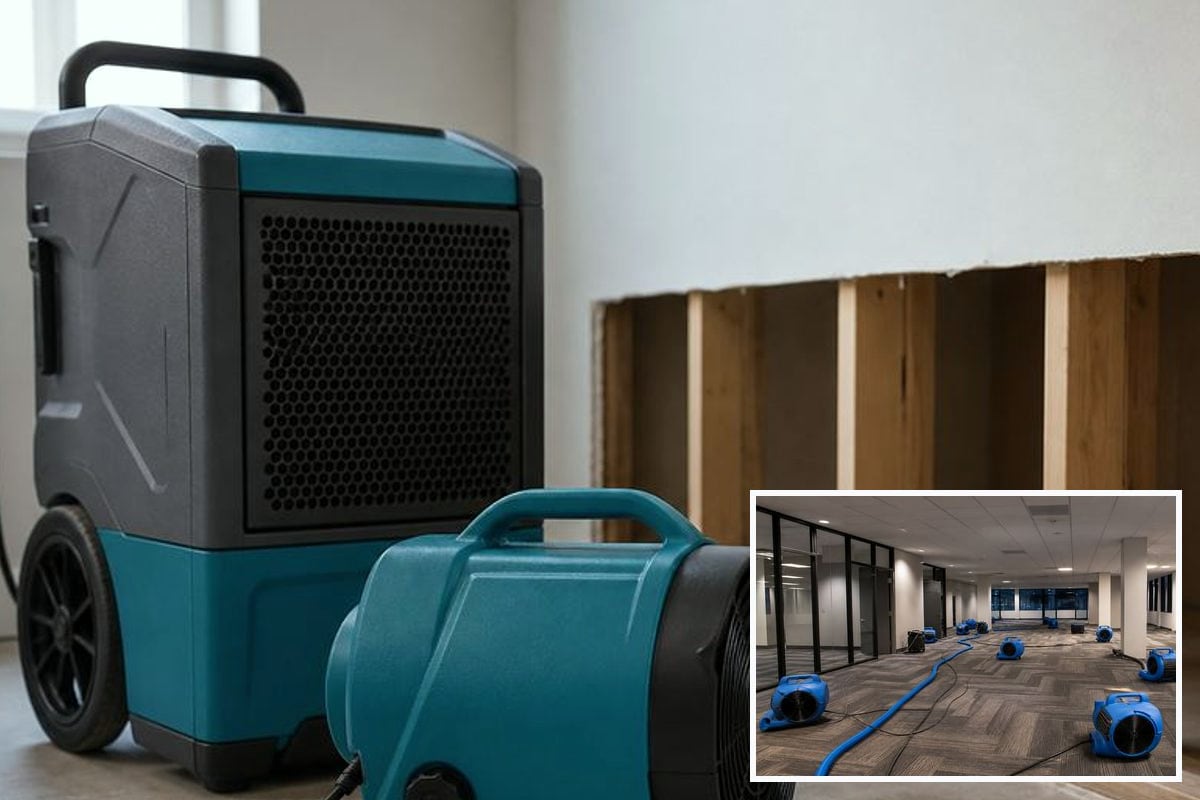
Water damage in a warehouse can quickly become a large-scale event because of the sheer square footage involved, whether from a broken sprinkler line, roof failure, or storm intrusion through loading dock doors. Large-scale extraction requires industrial-grade equipment and enough crew to cover the affected area before water spreads further into inventory and structural materials. Water Damage Restoration in Los Angeles
Fire and Smoke Damage in Industrial Facilities
Fire damage in industrial facilities can involve production equipment, chemical storage areas, or high-value inventory, all of which complicate both the fire response and the cleanup that follows. Smoke can travel far beyond the point of origin through open warehouse spaces and HVAC systems, affecting inventory and equipment throughout the building. Fire and Smoke Damage Restoration in Los Angeles
Mold Growth After Warehouse Water Damage
Mold typically develops when moisture from a leak, flood, or high humidity isn't fully dried out, especially in areas with limited airflow like storage racks, wall cavities, or the underside of pallets. A mold inspection after any water event can confirm whether remediation is needed before product or equipment is moved back into the space.
Sewage and Wastewater Backups
Sewage and wastewater backups in industrial facilities carry contamination risk that requires careful containment and disinfection, particularly in facilities with floor drains connected to shared municipal lines. These events need to be handled with the same urgency and caution as any biohazard situation, not treated as a routine spill. Sewage Cleanup and Backup Restoration in Los Angeles
Warehouse vs. Industrial Facility Restoration Needs
Warehouses and industrial facilities share many restoration needs, but the presence of production equipment and process areas in industrial settings changes what the restoration team needs to plan for. Understanding this distinction upfront helps set the right expectations for scope and timeline.
Warehouses generally focus on protecting stored inventory, racking, and loading areas, since the primary asset at risk is whatever's sitting on the shelves. Industrial facilities add another layer of complexity with manufacturing equipment and production-line areas, where restoration work has to account for what's inside the building, not just the building itself.
Storage, Racking, and Loading Dock Considerations
Racking systems exposed to significant water damage may need structural assessment before they're safe to reload, and loading dock areas often take the brunt of storm intrusion because of their exposure to the outside. Both areas require careful evaluation before operations resume in those zones.
Manufacturing Equipment and Production-Line Considerations
Restoration work around manufacturing equipment focuses on cleanup, drying, and structural repair. Complex equipment repair or recalibration typically falls outside restoration scope and should involve your equipment manufacturer or maintenance provider directly. Coordinating between these parties keeps the project moving without stepping on specialized equipment work.
Protecting Inventory and Equipment During Restoration
Inventory loss in a warehouse setting can run into significant dollar figures fast, simply because of the volume typically stored on site, which makes an organized salvage assessment a priority from day one of any project.
Salvage Assessment for Stored Goods
It depends on the material, packaging, and how long it was exposed to water whether stored inventory can be salvaged. Some goods can be cleaned and dried, while porous or contaminated items typically cannot be saved. A restoration assessment helps determine what's salvageable and documents losses for your insurance claim. Water Damage Restoration in Los Angeles
Heavy Equipment and Machinery Drying and Cleanup
Heavy equipment and machinery exposed to water need careful drying and cleanup to prevent corrosion and electrical damage, often requiring a different approach than standard structural drying. Coordinating with equipment specialists alongside the restoration crew helps make sure both the building and the machinery inside it get proper attention.
Emergency Response for Warehouse and Industrial Facilities
Every hour of downtime in a warehouse or industrial facility carries real operational and financial cost, from delayed shipments to idle production lines. LA Water Damage responds to large-scale commercial emergencies across Greater Los Angeles with equipment and crew sized to the scope of an industrial facility, not a residential job.
Response time depends on the scope of damage, location, and time of day, so ask about [details pending verification] before an incident occurs. Facilities running continuous operations benefit most from having this expectation documented well ahead of any emergency.
What Happens When You Call request a callback
The initial call establishes the scope of the emergency, including what's affected, how large an area is involved, and any immediate safety hazards. A technician schedules an on-site assessment to determine equipment needs, crew size, and a phased plan for addressing the damage, prioritizing the areas most critical to your operations.
Minimizing Downtime for Operations
Phased restoration, working around active operating areas, and clear communication with your restoration provider all help limit how much of your facility sits idle during a project. Discuss your operational priorities during the initial assessment so the areas most critical to keeping business running get addressed first where possible.
Insurance and Large-Loss Documentation
Large-loss claims for warehouse and industrial damage typically require far more documentation than a standard commercial claim, given the scale of inventory, equipment, and structural systems usually involved.
Documenting Damage for Large-Scale Commercial Claims
Most commercial property policies cover sudden water, fire, and storm damage, but large-loss claims often require detailed documentation, including photos, inventory records, and a written scope-of-damage report. Confirm your policy's specific documentation requirements with your insurance provider early in the process, since large-loss claims often move through a different review process than smaller ones. Property Management Emergency Restoration Guide
Preparing Your Facility Before a Disaster
Facility managers who set up a restoration relationship before an emergency happens consistently see faster, less chaotic response when something does go wrong, particularly in a facility this size where every hour of delay compounds.
Emergency Response Planning for Facility Managers
An emergency response agreement puts your site details, access information, and priority areas on file with a restoration provider in advance. This kind of planning matters even more in a warehouse or industrial setting, where the sheer size of the facility means a first responder without prior knowledge of the layout loses valuable time just getting oriented.
Frequently Asked Questions About Warehouse and Industrial Restoration
How quickly can a restoration company respond to a warehouse emergency?
Response time depends on the scope of damage, location, and time of day. Contact request a callback to confirm current availability. Facilities with continuous operations should ask about [details pending verification] in advance so downtime expectations are clear before an incident occurs.
Can stored inventory be salvaged after a warehouse flood?
It depends on the material, packaging, and how long it was exposed to water. Some goods can be cleaned and dried, while porous or contaminated items typically cannot be saved. A restoration assessment can help determine what is salvageable and document losses for your insurance claim.
How is industrial restoration different from warehouse restoration?
Warehouses generally focus on protecting stored inventory, racking, and loading areas, while industrial facilities may also involve production equipment and process areas. Both require fast water or fire cleanup, but the assessment and drying approach can differ based on what's inside the building.
Does insurance cover large-loss warehouse or industrial damage?
Most commercial property policies cover sudden water, fire, and storm damage, but large-loss claims often require more detailed documentation, including photos, inventory records, and a scope-of-damage report. Confirm your policy's requirements with your insurance provider early in the process.
How can we minimize downtime during warehouse restoration?
Phased restoration, working around active operating areas, and clear communication with your restoration provider can help limit disruption. Discuss your operational priorities with the restoration team during the initial assessment so critical areas are addressed first where possible.
What causes mold in a warehouse after a water event?
Mold typically develops when moisture from a leak, flood, or high humidity isn't fully dried out, especially in areas with limited airflow like storage racks or wall cavities. A mold inspection after any water event can confirm whether remediation is needed.
Is your company licensed and certified for industrial restoration work?
Ask any restoration provider directly for their current licensing and certification details, and request documentation for your records. [details pending verification]
Getting Your Facility Back Online
A warehouse or industrial event doesn't stay small for long, and neither should your response. LA Water Damage works with facility managers across Greater Los Angeles's industrial and logistics corridors to bring the scale of equipment and crew a large loss actually requires. Warehouse and Industrial Restoration in Los Angeles
Call request a callback or visit contact form to talk through your facility's situation, whether you're facing active damage right now or want an emergency response agreement in place before the next incident.
---