
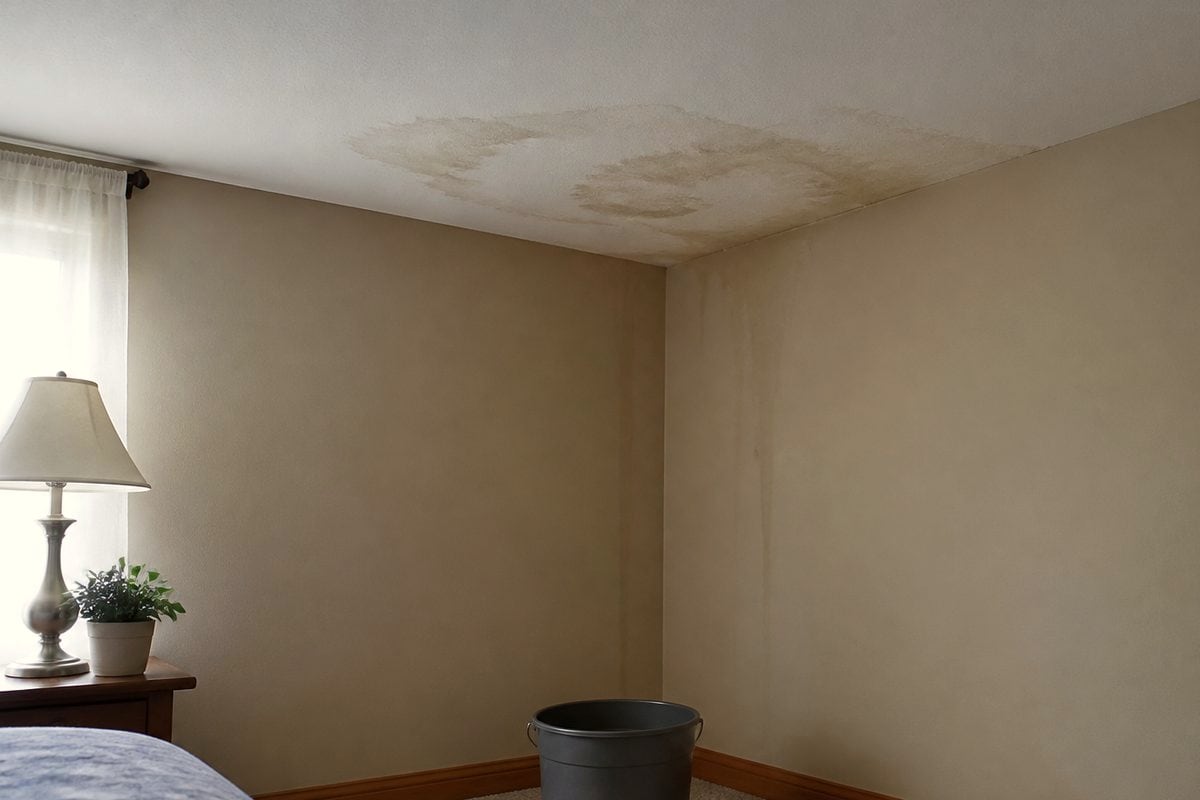
A roof leak rarely shows up where the actual problem is. Water can travel several feet from the point where it entered before it ever creates a visible stain on your ceiling, which means by the time you notice something's wrong, the damage has usually already worked its way through several layers of your home.
Knowing the order in which a roof leak damages materials, insulation first, then ceilings, then framing, then electrical systems, helps you understand how serious a given leak actually is and how urgently it needs attention. This guide walks through that sequence, what causes roof leaks in the first place, and what interior restoration actually involves once the roofing issue itself is fixed.
How Water Travels Once It Gets Past the Roof
Once water gets past the roof deck, gravity pulls it downward and outward, often traveling along rafters or sheathing before dripping at a point far from the actual entry location. This is why a stain on your ceiling doesn't necessarily sit directly below the failed shingle or flashing that let the water in.
Insulation in the attic absorbs water readily and holds onto it, which slows drying and extends how long surrounding materials stay damp. Water that isn't absorbed by insulation continues moving downward through ceiling drywall and can spread laterally along framing before it finally becomes visible inside the living space. That lag between entry and visibility is exactly why roof leaks often cause more damage than homeowners expect by the time they're discovered.
The path water takes also depends on your roof's structure. A low-slope or flat roof section, common on some Los Angeles homes and additions, can pool water in ways a steep pitched roof won't, changing where a leak eventually shows up inside. Roof decking material, the angle of the framing, and even the direction of prevailing wind during a storm all influence where water ultimately travels before gravity wins out. None of this is predictable enough to guess accurately from inside the house, which is part of why an attic inspection after a storm is worth the effort even when nothing looks wrong from the rooms below.
What Gets Damaged First (and Next) When a Roof Leaks
Insulation and attic materials are damaged first, followed by ceiling drywall, then structural framing, then electrical systems, with mold risk increasing at every stage the leak goes unaddressed. This sequence follows a predictable path because it's driven by gravity and by how different materials absorb water at different rates.
Insulation and Attic Materials
Insulation sits directly beneath the roof deck and absorbs moisture quickly, making it almost always the first material affected when a roof leak occurs. Wet insulation loses much of its effectiveness and can hold water against surrounding wood for extended periods, which slows the whole area's ability to dry out naturally.
Ceilings and Drywall
Water that passes through saturated insulation typically shows up next as staining, bubbling, or sagging in ceiling drywall directly below the leak point. This is usually the first visible sign homeowners actually notice, which means insulation damage has often already been happening for some time by the point a ceiling stain appears.
Framing and Structural Wood
If a leak continues undetected, rafters, joists, and other structural wood framing can begin absorbing moisture, which over time raises the risk of wood rot and weakened structural integrity. This stage generally takes longer to develop than insulation or drywall damage, but it's also the most serious, since it affects the home's actual structure rather than just finish materials.
Electrical Systems
Water reaching electrical wiring, fixtures, or junction boxes in the attic or ceiling creates a genuine safety hazard, not just a property damage issue. If you notice a roof leak near light fixtures, smoke detectors, or any visible wiring, treat it as more urgent and consider cutting power to that circuit if it's safe to do so.
Mold and Indoor Air Quality
Trapped moisture from a roof leak creates conditions where mold can begin developing, particularly in insulation, drywall, and wood framing that stay damp for an extended period. Mold growth can also affect indoor air quality well beyond the immediate area of the leak, which is one more reason a slow leak shouldn't be left unaddressed just because it isn't dripping visibly.
Common Signs of Roof Leak Water Damage Inside Your Home
Ceiling stains that grow or darken over time, a sagging or soft spot in the ceiling, a musty odor in an upstairs room or attic, and peeling or bubbling paint near the ceiling line are all signs of an active or recent roof leak. None of these should be dismissed as a one-time occurrence, even if the stain seems to have stopped spreading.
Discoloration on attic insulation, visible daylight through the roof deck when viewed from inside the attic, and higher than usual humidity in upstairs rooms are additional signs worth checking, especially after a heavy storm. Los Angeles's winter atmospheric river storms tend to expose roof leaks that stayed hidden through the dry months, so an inspection after a significant storm event is a reasonable precaution.
What Causes Roof Leaks?
Roof leaks are most commonly caused by damaged or missing shingles, failed flashing around chimneys and vents, clogged gutters that cause water to back up under the roofline, and general wear from an aging roof nearing the end of its service life. Any of these can let water past a roof that otherwise looks intact from the ground.
Ice damming isn't a meaningful factor in most of Greater Los Angeles given the climate, but wind-driven rain during atmospheric river storms can force water under shingles or flashing that would stay dry in calmer conditions. Poor attic ventilation can also contribute indirectly, since trapped humidity accelerates wear on roofing materials from underneath.
What Happens If a Roof Leak Is Left Untreated
An untreated roof leak generally leads to progressively worse damage over time, moving from insulation and drywall into structural framing and raising mold risk at every stage, though the exact timeline depends on the size of the leak and how much water is getting through. It's a risk that compounds rather than staying constant.
Left long enough, an untreated leak can also affect a property's resale value and complicate future insurance claims if damage is discovered during a home inspection or appraisal. None of this means every roof leak is a crisis, but it does mean postponing an assessment rarely makes the eventual repair simpler or cheaper.
Interior Restoration After a Roof Leak
Interior restoration after a roof leak follows assessment, drying, and repair, and it addresses the water damage inside your home rather than the roof itself, which is a separate trade. Coordinating both a roofer and a restoration company is common, since fixing the leak source and repairing the interior damage are two different jobs.
Assessment and Moisture Mapping
A restoration professional maps which materials absorbed water, using moisture meters to identify the true extent of damage beyond what's visible. This mapping guides both the drying process and the eventual repair scope.
Drying and Mold Prevention
Air movers and dehumidifiers are used to dry affected insulation, drywall, and framing, with progress tracked through moisture readings until materials return to a normal range. Getting this step right is what prevents the mold risk described earlier from becoming an actual problem.
Repairing Ceilings, Drywall, and Insulation
Once drying is verified, repair work replaces damaged insulation, drywall, and any affected finish materials. `Emergency Mitigation vs. Full Restoration: What's the Difference and Why Both Matter` explains how this repair phase relates to the earlier mitigation and drying work in more detail.
Preventing Roof Leak Damage
Scheduling a roof inspection annually, ideally before Los Angeles's winter storm season begins, catches damaged shingles and failing flashing before they turn into active leaks. Keeping gutters clear of debris throughout the year also prevents the water backup that's a common, avoidable cause of roof leaks.
Checking attic ventilation and insulation condition periodically helps catch slow-developing problems that wouldn't be obvious from a quick look at the roof from the ground. None of these steps require major expense, and all of them are far cheaper than the interior restoration work a neglected leak eventually causes.
Trimming overhanging tree branches near the roofline reduces debris buildup in gutters and lowers the chance of physical damage to shingles during high wind. If your roof is approaching the end of its typical service life, a professional roofing assessment before the next storm season can flag areas worth addressing proactively rather than reactively, which is almost always the cheaper path.
When to Call a Professional Restoration Company
Visible ceiling staining that's spreading, standing water in the attic, a persistent musty smell, or any sign of mold following a roof leak are all situations that call for a professional restoration assessment. When in doubt, an inspection can determine the actual extent of damage before it worsens.
If you've already had the roof itself repaired but haven't addressed the interior damage, that gap is worth closing sooner rather than later. Call request a callback to discuss what your property needs.
Frequently Asked Questions About Roof Leak Water Damage
What gets damaged first when a roof leaks?
Insulation and attic materials are typically affected first since they sit directly beneath the roof deck and absorb moisture quickly. From there, water often moves into ceiling drywall, then framing and electrical systems if the leak continues undetected.
How long can a roof leak go unnoticed?
A slow leak can go unnoticed for weeks or months, especially in attic spaces that aren't regularly inspected, since visible ceiling stains often appear only after materials are already saturated. Regular attic checks help catch leaks earlier.
Can a roof leak cause mold in my house?
Yes. Trapped moisture from a roof leak creates conditions where mold can begin developing, particularly in insulation, drywall, and wood framing that stay damp. A professional mold inspection is recommended if you suspect a leak has been present for a while.
Does a roof leak always mean structural damage?
Not always, but prolonged, untreated leaks can weaken framing and decking over time. The extent depends on how long the leak went undetected and how much water has been absorbed, which is why early professional assessment matters.
How do I know if roof leak damage is serious enough to call a professional?
Signs like sagging ceilings, spreading stains, a persistent musty smell, or visible mold suggest damage beyond a simple patch job. When in doubt, a professional inspection can determine the actual extent before it worsens.
Is roof leak restoration the same as roof repair?
No. Roof repair addresses the source of the leak on the roof itself, while restoration addresses the interior damage the leak caused, such as wet insulation, damaged drywall, and mold risk. Many situations require both a roofer and a restoration professional.
Next Steps
If a roof leak has already damaged your ceiling, insulation, or walls, LA Water Damage handles the interior restoration side across Greater Los Angeles, working alongside your roofer to get the structure dried out and repaired properly. Call request a callback or visit contact form for an assessment.
---