
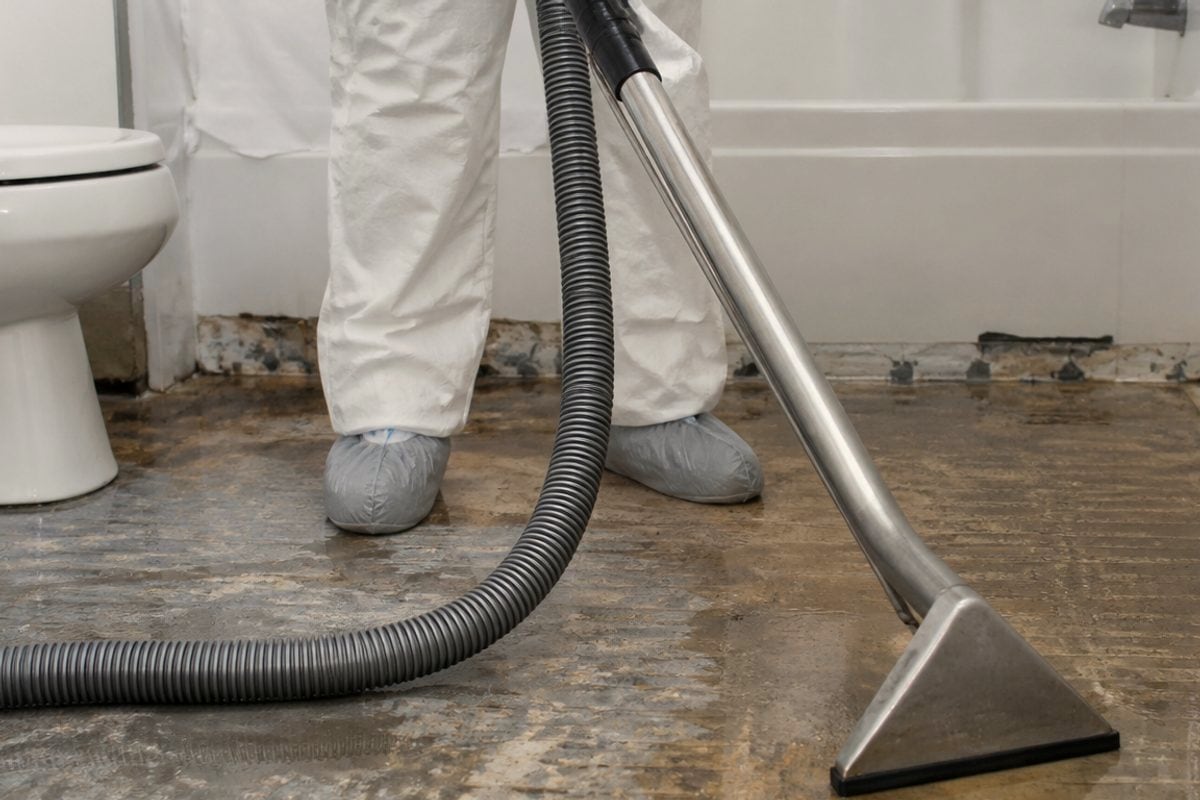
Kitchens flood quietly. It's rarely a dramatic burst pipe, it's usually a dishwasher supply line that's been dripping behind the cabinet base for weeks, or an ice maker line pinhole leak nobody noticed until the toe kick started to smell. By the time most homeowners spot kitchen water damage, it's already gotten into the places that are hardest and most expensive to fix, the cabinets, the subfloor, and whatever's underneath both. This guide walks through the most common causes, the early signs, what to do the moment you find it, and how professional restoration actually works on a kitchen specifically, since kitchens have their own repair challenges that a generic water damage guide doesn't cover.
Common Causes of Kitchen Water Damage
Most kitchen water damage traces back to an appliance or plumbing connection hidden behind cabinetry, which is exactly why it tends to go unnoticed until the damage is already significant.
Dishwasher and Sink Supply Line Leaks
Dishwasher supply and drain hose connections and the flexible supply lines under a kitchen sink are two of the most common failure points. A loose fitting or a cracked hose can drip steadily into the cabinet base for a long time before it's visible.
Refrigerator and Ice Maker Line Leaks
The small plastic or copper line feeding an ice maker is prone to kinks, cracks, and connection failures, especially where it runs behind or under the refrigerator, out of sight during normal use.
Garbage Disposal and Drain Leaks
Disposal seals and P-trap connections under the sink degrade over time. A slow drip here often goes unnoticed because the cabinet below the sink already smells a bit damp from normal use.
Appliance and Plumbing Failures Behind Cabinets
Any plumbing run hidden behind cabinetry, from a supply line to a drain pipe joint, shares the same problem: it's out of sight until the damage shows up somewhere else, like a warped cabinet floor or a soft spot in the adjacent flooring.
Signs Your Kitchen Has Water Damage
The earliest signs of kitchen water damage are usually warped or soft cabinet bases, bubbling paint or discoloration on nearby walls, and a musty smell that doesn't go away with normal cleaning.
- Cabinet bases that feel soft, swollen, or don't sit flush anymore
- Flooring near the sink, dishwasher, or refrigerator that feels spongy
- Peeling paint or bubbling on walls near plumbing fixtures
- Discoloration on the underside of cabinets when you open them
- A persistent musty odor, especially near the sink or dishwasher
- Visible mold, often dark spots, inside cabinets or along baseboards
Immediate Steps to Take When Your Kitchen Floods
The first priority when your kitchen floods is stopping the water at its source and protecting yourself from electrical hazards before doing anything else.
Shut Off the Water and Electricity
Locate the shut-off valve under the sink or the main water shut-off if the source isn't obvious, and turn it off first. If water is near outlets or appliances plugged into the wall, shut off power to that circuit at the breaker before you touch anything electrical, and never do this while standing in water.
Document the Damage
Photograph and video the affected area before you move anything, including cabinet interiors, flooring, and any visible source of the leak. This documentation matters for any insurance claim you may file later.
Begin Drying While You Wait for Help
Open cabinet doors to improve airflow, remove items from lower cabinets and drawers, and run a fan if it's safe to do so. This won't fully dry out saturated materials, but it slows the damage while you arrange for professional help. request a callback connects you with next steps if the damage is more than surface-level.
Repairing Water-Damaged Kitchen Cabinets
Whether a water-damaged kitchen cabinet can be saved depends almost entirely on what it's made of and how long it sat wet. Solid wood and plywood have a real chance at recovery, MDF usually doesn't.
MDF vs. Plywood: Why It Matters for Repair
Medium-density fiberboard, or MDF, is made of compressed wood fibers and glue. It swells, softens, and crumbles when it absorbs water, and once saturated it typically can't be restored to its original strength. Plywood, made of layered wood veneers, holds up better and can sometimes be dried, sanded, and refinished if it's caught early and hasn't delaminated.
Can Water-Damaged Cabinets Be Saved?
It depends on the material and how quickly the water is addressed. A cabinet base caught within a day or two of a small leak, made of plywood or solid wood, has a real chance of being dried and saved. An MDF cabinet base that's been wet for a week or more usually needs replacement, since the material itself has broken down structurally.
Repair vs. Replace Decision Points
Consider repair when the damage is limited to a small, accessible area, the material is solid wood or plywood, and there's no visible mold. Lean toward replacement when the cabinet is MDF, the swelling or warping is extensive, mold is present, or the damage extends to structural cabinet components rather than just a surface panel.
Kitchen Flooring and Subfloor Water Damage
Kitchen flooring and the subfloor beneath it absorb water differently depending on material, and the subfloor is often the part that determines whether a repair is simple or extensive.
Laminate, Hardwood, and Tile Considerations
Laminate flooring generally can't be dried and reused once water gets into the seams, since the core material swells permanently. Hardwood can sometimes be saved if it's dried quickly and hasn't cupped or buckled significantly. Tile itself usually survives water exposure fine, but the grout, subfloor, and any underlayment beneath it may not.
When Subfloor Replacement Is Necessary
A subfloor that's been saturated for an extended period can warp, soften, or delaminate, and once that happens it typically needs to be cut out and replaced rather than dried in place. A professional moisture assessment is the most reliable way to determine how far the water traveled beneath the visible flooring, since subfloor damage is frequently worse than what you can see from above. Bathroom Water Damage Restoration Guide
How Professional Kitchen Water Damage Restoration Works
Professional kitchen water damage restoration generally follows the same core process as any water damage job, inspection, extraction, drying, and monitoring, adapted to the tight, cabinet-heavy layout of a kitchen.
Inspection and Moisture Mapping
A technician uses a moisture meter and often a thermal imaging camera to map how far the water traveled, including behind cabinets and under flooring that looks dry on the surface.
Water Extraction and Structural Drying
Standing water is extracted first, followed by targeted drying with commercial dehumidifiers and air movers positioned to reach cabinet interiors, wall cavities, and subfloor areas, not just open floor space.
Mold Prevention and Monitoring
Because kitchens have enclosed cabinet spaces with limited airflow, moisture levels are monitored over several days to confirm materials have actually returned to a safe range, not just that the surface feels dry. [details pending verification]
If your kitchen has standing water or damage beyond what fans alone can dry, request a callback or contact form connects you with an assessment.
How to Prevent Future Kitchen Water Damage
- Replace flexible dishwasher and sink supply lines proactively rather than waiting for failure
- Install a water leak detector near the dishwasher, sink, and refrigerator
- Inspect the ice maker line annually for kinks or cracks
- Check under-sink cabinets periodically for early signs of moisture
- Have garbage disposal seals and connections checked during routine plumbing maintenance
- Know where your main water shut-off is located before you need it in an emergency
Frequently Asked Questions About Kitchen Water Damage Restoration
Can water-damaged kitchen cabinets be repaired, or do they need replacing?
It depends on the material and the extent of exposure. Solid wood and plywood can sometimes be dried, sanded, and refinished if caught early. MDF swells and crumbles when wet and typically cannot be restored once saturated, so replacement is usually the only option.
How long can water sit under kitchen cabinets before it causes real damage?
There's no universal timeframe since it depends on humidity, ventilation, and material, but moisture trapped in enclosed cabinet spaces tends to cause damage and mold risk faster than open, ventilated areas. Prompt drying and professional assessment reduce the risk significantly.
What's the most common cause of kitchen water damage?
Appliance and plumbing connection failures, including dishwasher supply lines, sink P-traps, garbage disposal seals, and refrigerator ice maker lines, are among the most frequently cited sources, since they're often hidden behind cabinets and go unnoticed until damage appears.
Do I need to replace my kitchen subfloor after a leak?
Not always. Minor exposure that's dried quickly may not compromise the subfloor, but prolonged saturation can cause warping, softening, or delamination that requires replacement. A professional moisture assessment is the most reliable way to determine this.
How much does kitchen water damage restoration cost?
Costs vary widely based on the extent of damage, materials affected, and whether cabinetry or flooring needs replacement. [details pending verification] Request an on-site assessment for an accurate estimate specific to your kitchen.
Will my homeowners insurance cover kitchen water damage?
Many policies cover sudden, accidental water damage, like a burst supply line, but may exclude damage from long-term leaks or lack of maintenance. Review your policy or contact your insurer to confirm what applies to your situation. Does Insurance Cover Water Damage in Los Angeles
Can I dry out my kitchen myself with fans, or do I need equipment?
Household fans can help with surface moisture, but water that's penetrated cabinets, flooring, or the subfloor often requires commercial-grade dehumidifiers, air movers, and moisture monitoring to fully dry. Incomplete drying is a leading cause of hidden mold.
Get Kitchen Water Damage Help in Greater Los Angeles
A kitchen leak rarely stays small on its own, and cabinets and flooring are two of the more expensive things to get wrong on a repair. If you've found water damage in your kitchen and aren't sure whether it's a quick fix or something bigger, a professional assessment gives you a straight answer.
LA Water Damage serves [details pending verification] across Greater Los Angeles. Call request a callback or visit contact form to get started. [details pending verification]
---