
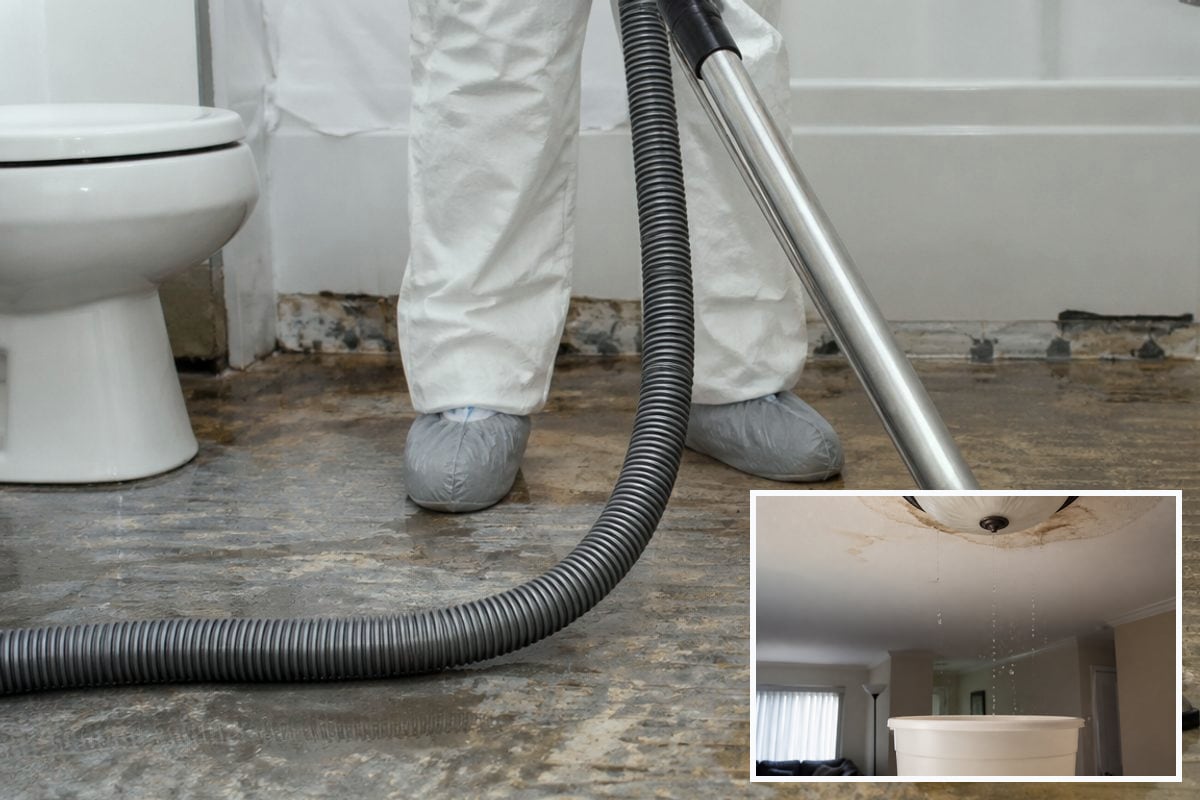
A burst supply line on the third floor of a Los Angeles office building does not wait for business hours. Neither does a grease fire in a restaurant kitchen or a sewer backup under a multifamily parking structure. When damage hits a commercial property, the person calling the shots is usually a facility manager, property owner, or business owner who has minutes, not days, to pick a vendor.
That pressure is exactly why vendor evaluation matters so much in commercial restoration. Choosing badly costs more than money. It can mean longer downtime, code violations, a denied insurance claim, or a second contractor called in to fix the first one's work. This guide breaks down what to actually check before you sign anything, using plain language instead of sales language.
What Does a Commercial Restoration Company Actually Do?
A commercial restoration company mitigates and repairs damage to business properties from water, fire, smoke, mold, or sewage, then coordinates the rebuild. The goal is to stop active damage first, then restore the space to its pre-loss condition.
Services typically fall into these categories:
- Water damage mitigation and structural drying
- Fire and smoke damage restoration
- Mold inspection and remediation
- Sewage and sewer backup cleanup
- Structural drying and dehumidification for large commercial spaces
- Reconstruction and rebuild coordination after mitigation is complete
Not every vendor offers every service in-house. Some handle mitigation only and hand off reconstruction to a separate contractor. Ask directly which model a vendor uses before assuming full-service coverage.
Commercial Restoration vs. Residential Restoration: Why It's Different
Commercial restoration differs from residential work mainly in scale, code compliance, and business impact. A single-family home restoration rarely involves tenant coordination, life-safety code review, or lost revenue calculations. Commercial projects almost always do.
A vendor experienced only in residential jobs may underestimate how complex a commercial loss really is. Larger square footage, multiple tenants, and stricter building codes change the entire scope of work.
| Factor | Residential Restoration | Commercial Restoration |
|---|---|---|
| Typical scale | Single unit or home | Multiple units, floors, or tenants |
| Code compliance | Standard residential code | Commercial building and fire code, ADA considerations |
| Decision maker | Homeowner | Property manager, owner, or facilities team |
| Business impact | Minimal | Potential business interruption and lost revenue |
| Documentation needs | Basic claim documentation | Detailed scope, COI requirements, sometimes multi-party sign-off |
| Crew and equipment needs | Smaller crew, standard equipment | Larger crews, industrial-grade drying equipment |
Scale, Compliance, and Downtime Stakes
The stakes get higher fast in commercial settings. A vendor working in a hospital or hotel has to account for life-safety code, infection control, or guest safety on top of the physical repair. A vendor working in a warehouse might need to coordinate around active shipping schedules. Ask any vendor how they plan around these constraints, not just how fast they can start.
Core Qualifications Every Commercial Restoration Vendor Should Have
The core qualifications to verify are active licensing, relevant industry certifications, adequate insurance and bonding, and demonstrated commercial project experience. Skipping this check is the single most common mistake property owners make under time pressure.
Licensing and Certifications to Verify
Ask for proof of active state contractor licensing, not a verbal assurance. Relevant industry certifications, such as those covering water damage restoration, fire and smoke restoration, and mold remediation, are a reasonable baseline to request as well. Specific certification requirements vary by service type and jurisdiction, so confirm what applies to your project directly. [details pending verification]
Commercial-Specific Experience and Track Record
Ask for examples of projects similar to yours in size, property type, and damage type. A vendor that has only ever restored single-family homes may not have the crew depth or equipment fleet a large commercial loss requires. Request references from recent commercial clients if the scope of your project justifies it.
Equipment and Crew Capacity
A vendor should be able to describe, in specific terms, how many technicians and how much drying equipment they can deploy to your site. Vague answers here are a warning sign. Commercial-scale water damage often requires far more air movers and dehumidifiers than a residential job, and a vendor without that capacity will simply take longer to dry your building.
How to Evaluate a Commercial Restoration Vendor: A Business Owner's Guide
Safety and OSHA Compliance Standards
A qualified commercial restoration vendor follows OSHA (Occupational Safety and Health Administration) standards for hazardous material handling, personal protective equipment, and site safety around active operations. OSHA sets the federal workplace safety rules that apply to restoration crews working in your building.
This matters more in commercial settings because the site often stays partially occupied during the work. Employees, tenants, or customers may be moving through the building while crews are actively mitigating damage nearby.
Hazardous Materials Handling
Sewage backups, mold growth, and fire debris can all involve contaminants that require specific handling procedures and protective equipment. A qualified vendor should be able to explain, without prompting, how they classify contaminated water (sometimes called category or class of water in industry terms) and what protective measures that classification triggers.
Site Safety Protocols During Active Business Operations
Ask how the vendor plans to separate the work zone from any areas that remain in use. This includes containment barriers, air scrubbing to control airborne particles, and clear signage. A vendor who has never worked around active business operations may not think to ask these questions on their own, which itself tells you something.
How Commercial Restoration Vendors Work With Insurance
Most commercial restoration vendors can document damage and prepare estimates that support an insurance claim, but the claim decision and payout remain the insurer's responsibility. Vendors are not insurance adjusters and cannot guarantee a claim outcome, no matter how the relationship is described.
The general process usually looks like this:
- The vendor inspects the damage and documents the scope
- The vendor prepares a written estimate based on that scope
- The estimate is shared with your insurance adjuster for review
- The adjuster compares the estimate to policy coverage and issues a settlement determination
- Work proceeds once payment terms are confirmed between you, the vendor, and your insurer
For a full breakdown of this process, see How the Property Damage Insurance Claim Process Works.
Direct Insurance Billing vs. Owner-Paid Estimates
Some vendors offer direct billing arrangements with insurers, while others require the property owner to pay and seek reimbursement. Ask which model a vendor uses before work begins, since this affects your cash flow during the project. Neither model is inherently better, but you need to know which one you are agreeing to.
Commercial Policy Considerations (Business Interruption, COI Requirements)
Commercial policies often include business interruption coverage, which can help offset lost income during downtime, separate from the property damage coverage itself. Vendors should also be able to provide a certificate of insurance, commonly called a COI, showing their own liability and workers' compensation coverage. Property managers frequently require a COI before allowing any contractor on site, so ask for this early rather than at the last minute.
Minimizing Business Downtime During Restoration
The fastest way to minimize downtime is choosing a vendor that can start mitigation quickly and structure the work in phases so unaffected areas stay operational. Downtime is often the real cost of a commercial loss, sometimes larger than the physical repair bill itself.
Consider a generic example: a retail tenant with water damage confined to a stockroom might be able to keep the sales floor open the entire time, provided the vendor can contain drying equipment and dust to the affected zone. A vendor without a phasing plan may instead treat the whole space as one project, closing more of the building than necessary.
Ask any vendor directly what their [details pending verification] looks like for commercial emergencies, and whether they can mobilize outside standard business hours.
Phased Restoration for Continued Operations
Phased restoration means completing work in sections so parts of a building can reopen before the entire project finishes. This requires more coordination from the vendor, including temporary containment walls, negative air pressure setups, and a sequencing plan. Ask whether a vendor has done this before and how they would sequence your specific space.
Vendor Capacity for Large-Loss and Multi-Site Projects
A vendor's capacity for large-loss work depends on crew scalability, equipment fleet size, and experience coordinating multiple locations at once. This matters for property management companies overseeing several buildings or businesses with multiple locations affected by the same event, such as a regional storm.
A vendor that handles single-property residential jobs well may not have the infrastructure to staff three commercial sites simultaneously. Ask directly about their largest completed project, how many crews they can run concurrently, and how they prioritize sites when multiple locations need attention at once. This question alone tends to separate vendors built for commercial scale from those that occasionally take a commercial job.
Property-Type Considerations
Different commercial property types carry different compliance, tenant, and operational considerations that affect how restoration work should be planned.
Multifamily and Property Management
Multifamily buildings often mean coordinating around multiple tenant units at once, with tenant notification and access scheduling as real logistical challenges. Los Angeles has a renter-majority housing market, which makes this especially relevant here. A vendor should be able to explain how they handle tenant communication and unit-by-unit scheduling, not just the physical repair.
Hotels and Hospitality
Hotels need restoration work that minimizes guest disruption and protects the brand experience. This often means overnight work windows, noise control, and strict containment so guests in unaffected rooms never notice active mitigation happening nearby.
Restaurants and Food Service
Restaurant losses often involve both structural damage and food safety concerns, particularly with fire, smoke, or sewage events. Health code compliance and equipment sanitation need to factor into the restoration plan, alongside the standard drying and rebuild work.
Healthcare Facilities
Healthcare facilities carry infection control and life-safety requirements that go well beyond a typical commercial job. Containment, air quality management, and coordination around active patient care are non-negotiable. A vendor without healthcare experience may not know these requirements exist.
Schools and Educational Facilities
Schools need restoration scheduled around student and staff safety, often with strict timelines tied to the academic calendar. Indoor air quality is a particular concern given the age of many buildings in Los Angeles's school system.
Retail
Retail spaces need restoration that protects merchandise and, wherever possible, keeps sales floors open. Phased work and clear containment matter most here, since foot traffic and revenue are directly tied to how much of the space stays accessible.
Warehouse and Industrial
Warehouse and industrial spaces often involve large square footage, high ceilings, and specialized equipment or inventory that changes the drying and cleanup approach. Coordination around active shipping and receiving schedules is a common operational constraint.
Office Buildings
Office buildings typically need work scheduled around business hours, IT infrastructure protection, and coordination with building management if the space is leased within a larger property. Data and equipment protection during mitigation is a common concern that's easy to overlook.
Questions to Ask Before Signing a Commercial Restoration Contract
Asking direct questions before signing protects you from vague scopes, surprise costs, and vendors who overpromise. Bring this list to any vendor conversation:
- What is included in the written scope of work, and what is explicitly excluded?
- How will you document the damage for insurance purposes?
- What is your estimated timeline, and what could extend it?
- Can you provide current proof of licensing, insurance, and a COI?
- How do you handle direct insurance billing versus owner-paid arrangements?
- What is your plan for minimizing business downtime during the work?
- Who is my single point of contact throughout the project?
- How do you handle unexpected or hidden damage discovered mid-project?
- What warranty or guarantee terms apply to completed work?
- Can you provide references from recent commercial projects similar to mine?
Get answers in writing wherever possible. A vendor confident in their work will not hesitate to put commitments on paper.
Red Flags: Signs of an Unqualified Vendor
The clearest warning signs are pressure to sign immediately, demands for large upfront cash payments, and an inability to produce current licensing and insurance documents. These patterns show up disproportionately after major storms and disasters, when displaced or stressed property owners are more vulnerable to rushed decisions.
Watch for:
- Demands for full payment in cash before any work begins
- Reluctance or refusal to provide license and insurance documentation
- High-pressure tactics urging you to sign on the spot
- No local business address or verifiable business history
- Vague or missing written scope of work
- Estimates that seem dramatically lower than every other quote you received
- Reluctance to name subcontractors who will actually be on site
None of these signs alone proves bad intent, but more than one should slow you down considerably.
Evaluating Commercial Restoration Vendors in Los Angeles
Evaluating a commercial restoration vendor in Greater Los Angeles means confirming local experience with the region's building stock, permitting process, and property density. Los Angeles includes everything from older pre-1960s commercial buildings with outdated plumbing to newer high-rise office towers, and vendor experience with your specific building type matters.
The region's density of multifamily corridors, hospitality districts, and healthcare campuses means a serious commercial vendor should be comfortable working across property types, not just one. LA Water Damage works with commercial property owners and managers across [details pending verification] in Greater Los Angeles. If you are comparing vendors for an active or upcoming commercial project, reach out at request a callback or contact form to discuss your specific property.
Frequently Asked Questions About Commercial Restoration Vendors
How long does commercial restoration usually take?
Timelines vary widely by damage type, building size, and material drying times, so there is no universal number. A qualified vendor should give you a written scope and phased timeline after inspection rather than a generic promise. Ask for [details pending verification] specifics before you sign anything.
Should a commercial restoration company be licensed and insured?
Yes. Confirm active licensing, general liability insurance, and workers' compensation coverage before work begins, and ask for documentation rather than a verbal assurance. This protects your property and limits your liability if something goes wrong during the job.
Can a commercial restoration vendor work directly with my insurance company?
Many vendors coordinate documentation and estimates with adjusters, but the claim decision and payout remain your insurer's responsibility. Confirm exactly what "working with insurance" means with any vendor, and verify your policy's specifics with your insurer directly.
What's the difference between mitigation and reconstruction?
Mitigation stops ongoing damage and removes water, smoke, or contamination. Reconstruction rebuilds the affected areas afterward. Some vendors handle both under one contract, while others hand off reconstruction to a separate contractor, so ask which model applies to your project.
Do I need a vendor experienced in my specific property type?
Experience matters more in some settings than others. Healthcare facilities, hotels, and multifamily buildings carry compliance, tenant-notification, and life-safety considerations that a generalist residential contractor may not routinely handle. Ask for examples of similar projects.
How many quotes should I get before choosing a vendor?
Most experienced facility managers get at least two to three quotes for non-emergency work, though an active loss often requires faster decisions. Compare scope detail and qualifications, not just price, since incomplete estimates often lead to costly change orders later.
What certifications should I look for in a commercial restoration company?
Relevant industry certifications and active state contractor licensing are reasonable baseline requests. Specific requirements vary by service type and jurisdiction, so confirm current requirements for your situation. [details pending verification]
Is emergency response available for commercial properties?
Many commercial restoration providers offer emergency response, though actual availability and response windows vary by company and location. Confirm response commitments in writing before an emergency happens, not during one. For LA Water Damage's response details, contact request a callback.
Next Steps
Vetting a commercial restoration vendor thoroughly, before an emergency happens, is the single best protection against downtime and disappointment later. If you manage commercial property in Greater Los Angeles and want to talk through your building's specific needs, contact LA Water Damage at request a callback or contact form.
---