
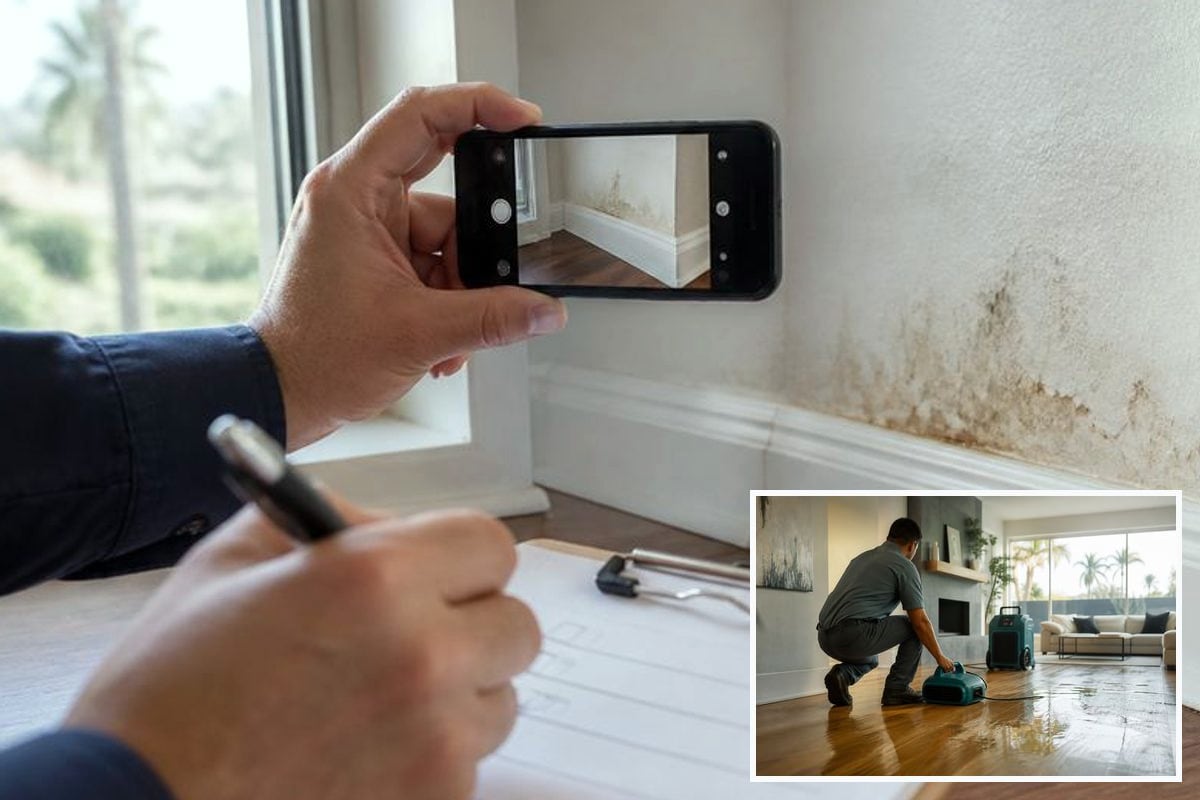
Filing an insurance claim after property damage can feel like navigating a maze blindfolded, especially while you're also dealing with the actual damage itself. Between unfamiliar terms, uncertain timelines, and the very real fear of a denial, it's no wonder property owners describe the claims process as one of the most stressful parts of a loss.
This guide breaks the process into plain, sequential steps. It is general information based on how property damage claims typically move through the system, not legal or insurance advice specific to your policy. Always confirm the details of your own coverage with your insurer.
What Counts as a Property Damage Insurance Claim?
A property damage insurance claim is a formal request to your insurer for compensation after your property suffers damage from a covered peril under your policy. A covered peril is the specific type of event, such as a burst pipe or fire, that your policy agrees to pay for.
Not every type of damage is automatically covered. Flood damage, for example, often requires separate flood insurance in many standard policies. Whether a specific incident qualifies depends entirely on your policy's language, so this general overview cannot substitute for reading your own coverage documents or asking your insurer directly.
The Property Damage Claim Process, Step by Step
The property damage claim process generally moves through six stages: ensuring safety, documenting the damage, notifying your insurer, meeting with an adjuster, reviewing the settlement offer, and completing repairs. Each stage has its own considerations worth understanding before you're in the middle of it.
Step 1: Ensure Safety and Prevent Further Damage
Address any immediate safety hazards first, such as shutting off water or electricity if it's safe to do so. Most policies also expect you to take reasonable steps to prevent further damage, like covering a broken window, once the immediate danger has passed.
Step 2: Document the Damage
Photograph and video the damage thoroughly before cleanup begins, since evidence can disappear quickly once mitigation starts. This step matters enough that it deserves its own detailed guide. See How to Document Property Damage Before Cleanup for a complete checklist.
Step 3: Notify Your Insurance Company
Report the damage to your insurer as soon as reasonably possible. Most policies have a notification requirement, though the specific timeframe varies. Have your policy number, a brief description of what happened, and your initial documentation ready when you call.
Step 4: Meet With the Claims Adjuster
An adjuster, typically assigned by your insurer, inspects the damage to verify coverage and estimate repair costs. Their assessment is not automatically the final word. You can ask questions, point out damage they may have missed, and provide your own documentation or independent estimates for comparison.
Step 5: Review the Settlement Offer
Your insurer will present a settlement offer based on the adjuster's findings and your policy terms, including whether your policy uses actual cash value or replacement cost value. Review this carefully against your own documentation and any restoration estimate you've gathered. Restoration Estimate vs. Insurance Estimate: Understanding the Difference explains why these numbers sometimes don't match and what to do about it.
Step 6: Complete Repairs and Restoration
Once payment terms are settled, restoration and repair work can move forward. Depending on your policy and vendor arrangement, payment may be issued directly to you, to your contractor, or in installments tied to project milestones.
Homeowners vs. Commercial Property Damage Claims
Commercial property damage claims typically involve more complexity than homeowners claims, including business interruption coverage, multi-tenant coordination, and stricter documentation requirements. A homeowner filing a claim usually deals with one policy and one property. A commercial claim often involves multiple stakeholders, from property management to individual tenants to a business owner's own separate policy.
| Factor | Homeowners Claims | Commercial Claims |
|---|---|---|
| Policy complexity | Generally standardized | Often customized by industry and risk |
| Business interruption coverage | Not applicable | Common add-on covering lost income |
| Stakeholders involved | Usually one owner | Property manager, tenants, business owner |
| Documentation depth | Standard | Often more detailed, sometimes multi-party |
| Timeline pressure | Personal displacement | Revenue loss and lease obligations |
For more on evaluating a restoration vendor for a commercial claim specifically, see How to Evaluate a Commercial Restoration Vendor: A Business Owner's Guide.
Common Challenges in the Claims Process
The most common claims challenges involve disputes over coverage or settlement amount, processing delays, and outright denials. None of these are automatically the end of the road, but each requires a different response.
Coverage or Amount Disputes
If you disagree with your insurer's coverage decision or settlement amount, you can request a detailed explanation, provide additional documentation, or ask for a re-inspection. Staying organized with your own records strengthens your position in any dispute.
Delays in Processing
Delays happen for many reasons, from adjuster caseloads to incomplete documentation on either side. If your claim seems to be stalling, follow up in writing and ask for a specific status update and next step, rather than an open-ended timeframe.
Denied Claims
A denial isn't necessarily final. Depending on your policy and the denial reason, you may be able to request clarification, submit additional documentation, or file a formal appeal. Understanding exactly why a claim was denied is the first step toward deciding what to do next.
When to Consult an Attorney or Public Adjuster
Consider consulting an attorney or public adjuster when a claim is denied, significantly underpaid, or involves a large commercial loss with complex coverage questions. A public adjuster is a licensed professional who works on your behalf, rather than the insurer's, to help document and negotiate a claim.
This is general information, not legal advice. LA Water Damage is a restoration company, not a law firm, and cannot advise you on legal strategy. If your situation feels beyond straightforward documentation and negotiation, a licensed attorney or public adjuster familiar with California property claims can help you understand your specific options.
How a Restoration Company Fits Into the Claims Process
A restoration company typically supports the claims process by documenting damage, providing a detailed repair estimate, and coordinating mitigation work, without controlling or guaranteeing your claim's outcome. This distinction matters. A restoration company's job is to fix the damage and provide accurate documentation of what that requires. Your insurer's job is to determine coverage and issue payment.
Good documentation from a restoration company can genuinely strengthen your claim by giving your insurer clear, professional evidence of the damage and the cost to repair it. But no restoration company can promise a specific claim outcome, and any that does should raise a flag. If you're dealing with active property damage in Greater Los Angeles and want documentation support alongside mitigation, reach out to LA Water Damage at request a callback or contact form.
Frequently Asked Questions About the Property Damage Claim Process
How long does a property damage insurance claim take to settle?
Timelines vary based on the insurer, damage complexity, and documentation completeness, so there's no fixed timeframe that applies to every claim. Straightforward claims can move faster than ones involving disputes or extensive damage. Contact your insurer directly for an estimated timeline on your specific claim.
What should I do immediately after discovering property damage?
Prioritize safety first, then take steps to prevent further damage if it's safe to do so. Document everything with photos and video before cleanup begins, and notify your insurance company as soon as reasonably possible. See How to Document Property Damage Before Cleanup for a full step-by-step checklist.
Do I have to use the contractor my insurance company recommends?
In most cases, you have the right to choose your own licensed contractor rather than one selected by your insurer, though policy terms vary. Confirm your specific rights and any requirements with your insurance company or an attorney before deciding.
What happens if my insurance claim is denied?
A denial isn't necessarily final. You may be able to request clarification, provide additional documentation, or file an appeal, depending on your policy and the denial reason. Consulting an attorney or public adjuster can help you understand your options in this situation.
What does a claims adjuster actually do?
An adjuster is typically sent by your insurer to inspect the damage, verify coverage, and estimate the cost of repairs. Their assessment isn't automatically the final word. You can question their findings and provide your own documentation or independent estimates for comparison.
Is a restoration company's estimate the same as my insurance settlement?
Not necessarily. A restoration company's estimate reflects the cost to actually repair the damage, while an insurance settlement reflects what your insurer agrees to pay under your policy terms. See Restoration Estimate vs. Insurance Estimate: Understanding the Difference for more detail.
Do I need an attorney for a property damage claim?
Most straightforward claims don't require legal representation, but disputes, denials, or large commercial losses sometimes benefit from legal guidance. This is general information, not legal advice, so consult a licensed attorney about your specific situation.
Next Steps
Understanding the claims process before you need it puts you in a stronger position if damage ever happens. This page explains the general process. Your specific policy governs the details. If you're facing active property damage in Greater Los Angeles and need mitigation support alongside your claim, contact LA Water Damage at request a callback or contact form.
---