
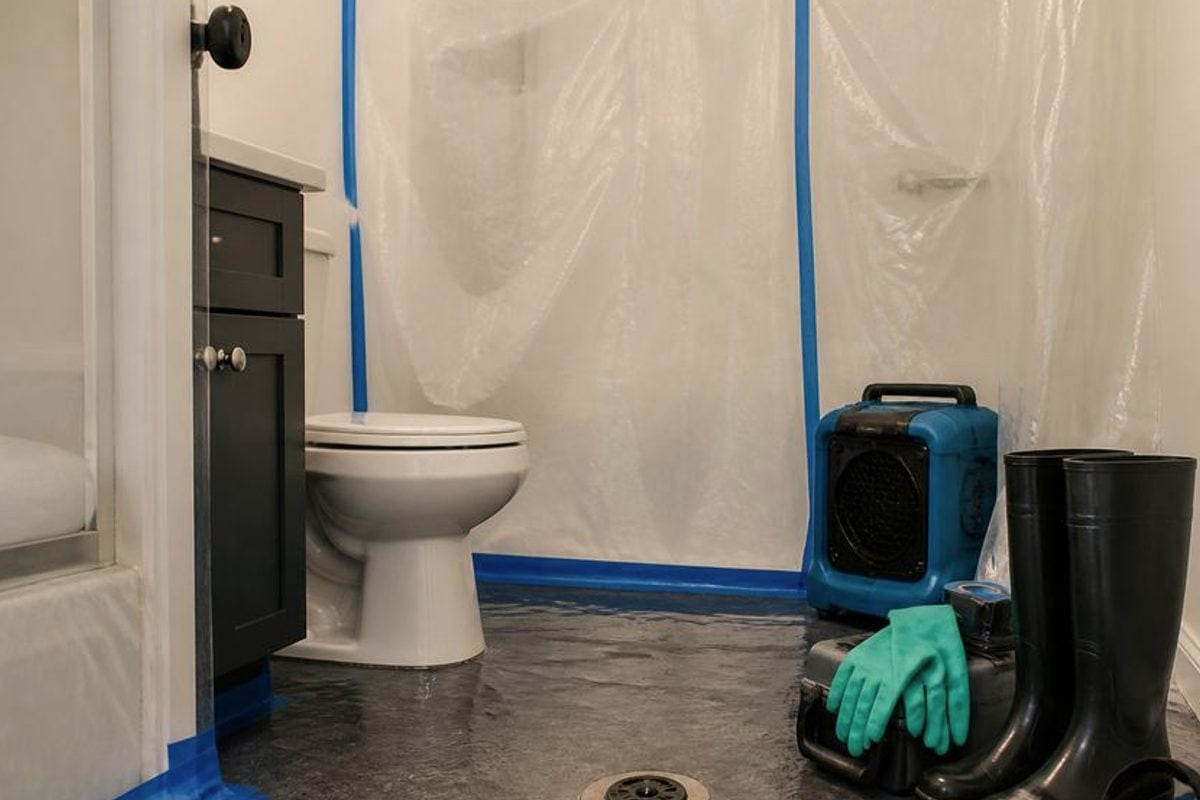
Most basement flooding advice online assumes every home has one. In Los Angeles, that assumption falls apart fast. This guide starts by addressing that mismatch directly, then covers why the basements, crawl spaces, and lower-level areas that do exist here flood, and exactly how cleanup works once they do.
Do Los Angeles Homes Even Have Basements?
Basements are less common in Greater Los Angeles than in much of the rest of the country, largely because slab-on-grade construction has been the dominant building method here for decades. That doesn't mean the flooding risks this guide covers don't apply locally.
Older homes, particularly Craftsman-style houses built before slab construction became standard, along with some hillside properties, do have basements or partial lower-level spaces. Crawl spaces, the shallow, unfinished space between the ground and the first floor, are far more common throughout the region and face nearly identical flooding risks to a basement. Everything in this guide applies to both, and if your home has a crawl space rather than a true basement, you can treat the two terms as interchangeable for the rest of this article.
Knowing which one you have matters before a storm hits, not after. A quick check under an exterior access hatch or through a floor vent will usually confirm whether you're dealing with a crawl space, a partial basement, or neither.
What Causes Basement and Crawl Space Flooding?
Basement and crawl space flooding in Los Angeles usually traces back to one of four causes: heavy rain overwhelming drainage, a plumbing failure, a sewer backup, or a structural issue with the foundation itself. Identifying which one you're dealing with is the first step toward actually fixing it instead of just cleaning it up again next season.
Heavy Rain and Poor Drainage
When exterior grading slopes toward the house instead of away from it, or gutters and downspouts are clogged, rainwater has nowhere to go but toward the foundation, and eventually inside it. This is especially relevant during the concentrated rain events atmospheric river storms bring to the region, when a normally quiet crawl space can take on water in a matter of hours.
Plumbing Failures
A burst or leaking supply line, a failed water heater, or a washing machine hose failure near a basement or crawl space can release a significant volume of water in a short amount of time, especially in older homes with aging galvanized or cast iron plumbing that's more prone to corrosion and failure as it ages.
Sewer Backups
Sewer backups push contaminated wastewater into the lowest point of a home, often a basement or crawl space, and represent one of the more serious contamination scenarios a homeowner can face, requiring careful handling and, in most cases, professional cleanup rather than a DIY response.
Foundation and Grading Issues
Cracks in a foundation wall or floor, combined with grading that channels water toward the house, create a path for water to enter even without a major storm or plumbing failure, sometimes as a slow, easy-to-miss seep rather than a dramatic flood. Older homes with decades of minor ground settling are especially prone to this kind of gradual foundation crack.
Is It Safe to Enter a Flooded Basement or Crawl Space?
Not until you've confirmed electricity is off in the affected area and there's no visible risk of electrical hazard or structural collapse. Basements and crawl spaces combine standing water with confined, often poorly lit spaces, which raises the stakes on basic safety checks.
- Confirm power is off to the affected area before entering, including any outlets or fixtures inside the space itself
- Watch for signs of structural stress, sagging joists, cracked foundation walls, before going further
- Assume standing water may be contaminated and wear protective equipment, since a basement or crawl space near a sewer line carries real contamination risk
- Avoid confined crawl spaces with poor ventilation until air quality and structural safety are confirmed
- Bring a flashlight rather than relying on any existing lighting in the space, since standing water and electrical fixtures don't mix
How to Clean Up a Flooded Basement or Crawl Space, Step by Step
Basement and crawl space cleanup follows six steps, from stopping the water source through a final structural and mold check, and the confined nature of these spaces makes skipping steps riskier than it would be in an open room.
Step 1: Stop the Water Source and Turn Off Electricity
Identify and stop the source if possible, whether that's a plumbing shutoff or waiting out a storm, and confirm electrical power is off to the area before doing anything else.
Step 2: Remove Standing Water
A wet vacuum handles smaller amounts, while a sump pump or professional pump is typically needed for larger volumes common in basement and crawl space flooding, where water can pool in a confined footprint with nowhere to drain on its own.
Step 3: Remove Damaged Items and Debris
Clear out anything sitting in standing water, storage boxes, furniture, debris, both to assess damage and to give the space room to dry properly. Basements and crawl spaces are common storage areas for sentimental and hard-to-replace items, so take a moment to separate what's genuinely ruined from what might still be salvageable before discarding anything.
Step 4: Dry the Space Completely
Air movers and dehumidifiers need to run until moisture readings return to normal, which often takes longer in a basement or crawl space than in an above-grade room due to limited natural airflow. Water Damage Restoration Services covers what that professional drying equipment and process look like.
Step 5: Clean and Disinfect
Surfaces exposed to standing water, particularly if contamination is a possibility, need cleaning and disinfecting before the space is considered fully restored.
Step 6: Inspect for Structural and Mold Damage
A final inspection checks for foundation damage, framing issues, and early mold growth, since basements and crawl spaces are exactly the kind of low-airflow, high-moisture environment where mold takes hold fastest. Can Water Damage Cause Mold? What Los Angeles Homeowners Need to Know covers that timeline and what to watch for.
When to Call a Professional for Basement or Crawl Space Flooding
A handful of situations make professional help the right call rather than an optional upgrade, particularly given how easily basement and crawl space flooding hides its full extent.
- Standing water beyond what a household wet vacuum can handle
- Any sewer backup or visibly contaminated water
- Water that's been sitting for more than a day
- Signs of structural damage to foundation or framing
- A musty smell that persists after drying, suggesting hidden moisture or mold
- Repeated flooding in the same space, which points to a drainage or grading problem worth diagnosing rather than cleaning up again next season
Cost is understandably a concern at this point, and it's a fair question to ask directly rather than tiptoe around. A professional assessment lets you understand the scope of the problem, and what's genuinely necessary to fix it, before committing to a specific repair path.
Call request a callback for a professional assessment of basement or crawl space flooding.
How to Prevent Future Basement and Crawl Space Flooding
Preventing repeat flooding usually comes down to managing water before it ever reaches the foundation, plus shoring up the foundation itself where needed.
Sump Pumps and Drainage Upgrades
A sump pump, paired with a French drain system where grading alone isn't enough, gives water a controlled path away from a basement or crawl space instead of letting it pool against the foundation.
Grading, Gutters, and Downspouts
Regrading soil to slope away from the house, keeping gutters clear, and extending downspouts well away from the foundation are some of the lowest-cost, highest-impact prevention steps available, especially ahead of the rainy season.
Foundation Crack Sealing
Sealing foundation cracks closes off one of the most common slow-entry points for water, particularly in older homes where minor settling has created small gaps over time.
Frequently Asked Questions About Basement and Crawl Space Flooding
Do most Los Angeles homes have basements?
Basements are less common in Greater Los Angeles than in many other parts of the country because slab-on-grade construction is widespread. Some older homes, hillside properties, and homes in certain neighborhoods do have basements or lower-level spaces, and crawl spaces are common throughout the region and face similar flooding risks.
Why does my basement or crawl space keep flooding?
Common causes include heavy rainfall combined with poor exterior drainage, plumbing leaks or failures, sewer backups, foundation cracks, and grading that directs water toward the house instead of away from it. Identifying the specific source is the first step to fixing it.
Is it safe to enter a flooded basement?
Not until you've confirmed electricity is off in the affected area and there's no visible risk of electrical hazard or structural collapse. Standing water can also be contaminated, so protective equipment is recommended even after confirming basic safety.
How do I get rid of the musty smell after a flooded basement?
A persistent musty smell usually signals trapped moisture or early mold growth. Thorough drying with dehumidifiers and fans, combined with disinfecting affected surfaces, typically resolves it. If the odor persists, a professional mold inspection can identify hidden moisture sources.
Will homeowners insurance cover basement flooding?
Coverage depends on the cause. Water damage from an internal source like a burst pipe is often treated differently than flooding from external groundwater or heavy rain. Review your policy or speak with your insurance provider to confirm what's covered. Flood Damage vs Water Damage: What Is the Difference? explains that distinction in more depth.
Can basement or crawl space flooding affect my home's resale value?
Unresolved water intrusion, mold, or structural damage can affect buyer confidence and inspection results. Prompt, professional cleanup and repair helps limit long-term impact on the property.
Get Basement and Crawl Space Flood Cleanup Help in Los Angeles
Whether it's a true basement or a crawl space, standing water in the lowest part of your home needs a fast, thorough response. LA Water Damage handles basement and crawl space flood cleanup across Greater Los Angeles, from water extraction through structural drying and repair. [details pending verification]
Call request a callback or visit contact form to schedule an assessment.