
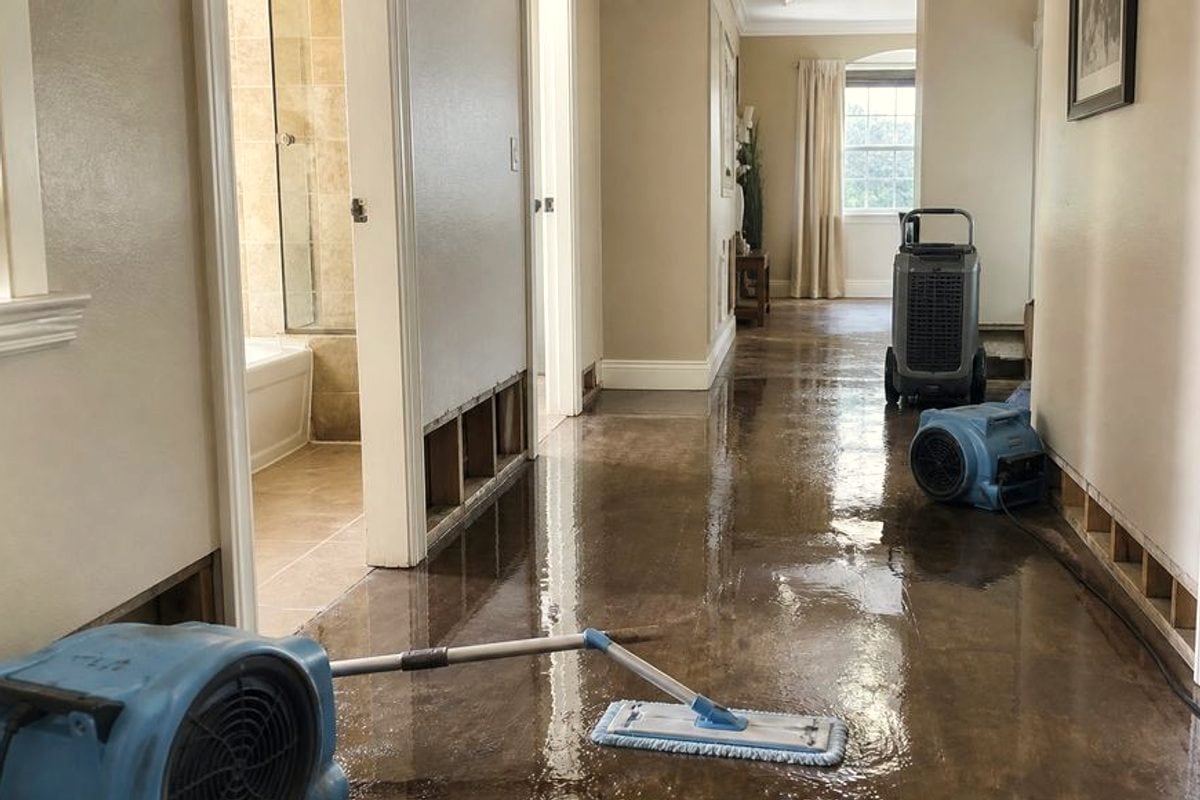
Most basement flooding advice is written for the Midwest or the East Coast, where a finished basement rec room is standard. That's not most of Greater Los Angeles. But below-grade garages, hillside home foundations, sunken living rooms, and the occasional true basement in an older property all face the same flooding risks and need the same cleanup approach. This guide is written for what actually exists in Southern California, covering what causes flooding here, how to assess severity, the safety steps that come before anything else, and the full cleanup process from start to finish.
Does Your Los Angeles Home Have a Basement? What This Guide Covers
True basements are less common in Greater Los Angeles than in much of the country, but they're not absent, and several related below-grade spaces face the exact same flooding risks this guide addresses.
Basements, Below-Grade Garages, and Sunken Rooms in Southern California
Hillside neighborhoods and older homes are more likely to have a true basement, while below-grade garages, sunken living rooms, and converted below-grade ADUs are more common across the region generally. Everything in this guide applies to any of these spaces, since the water doesn't care what you call the room.
What Causes Basement Flooding
Basement flooding in Greater Los Angeles is driven primarily by heavy rain events, poor drainage or grading, sewage backups, and less commonly, foundation cracks that let groundwater in.
Heavy Rain and Atmospheric River Storms
Southern California's rainy season, roughly November through March, brings atmospheric-river storms capable of dropping a large volume of rain in a short window. A below-grade space with any drainage weakness is especially vulnerable during these events.
Poor Drainage, Grading, and Hillside Runoff
Homes built on or below a hillside can face significant runoff during storms if grading directs water toward the foundation instead of away from it. This is a distinctly Southern California version of the basement flooding problem, tied to the region's terrain rather than a flat, saturated water table.
Sewage Backups and Storm Drain Overload
During intense storms, municipal storm drains and sewer systems can become overwhelmed, occasionally causing backups into low-lying connected plumbing. This water is contaminated and requires different handling than clean rainwater. Sewage Backup Cleanup Guide
Foundation Cracks and Groundwater
Cracks in a foundation wall or slab can let groundwater seep in during and after heavy rain, particularly in older homes where the foundation has settled or shifted slightly over time.
How Severe Is the Flooding? Assessing Minor, Moderate, and Major Damage
Basement flooding severity generally falls into three tiers, minor, moderate, and major, and the right response depends heavily on which one you're dealing with.
Minor flooding typically involves a shallow layer of clean water covering a small area, caught quickly. Moderate flooding involves more standing water, a larger affected area, or water that's been sitting long enough to start soaking into materials. Major flooding involves significant standing water, contamination risk from sewage or storm drain backup, or visible damage to structural materials, flooring, and belongings. The more severe the flooding, the more strongly professional assessment is recommended rather than handling it alone.
Immediate Safety Steps Before You Do Anything Else
Before you touch anything in a flooded basement, confirm the electricity is off and there's no gas leak, since these two hazards matter more than the water itself in the first few minutes.
- Do not enter standing water until power to the area is shut off from a dry location, such as the main breaker panel
- If you smell gas, leave the area immediately and call your gas utility or 911 before doing anything else
- Treat any water from a storm drain or sewage backup as contaminated
- Wear rubber boots and gloves if you must enter the space before help arrives
- Keep children and pets away from the area until it's been assessed
Step-by-Step Flooded Basement Cleanup Process
Cleaning up a flooded basement generally follows six steps, stopping the source, removing standing water, drying, disinfecting, and repairing the underlying cause so it doesn't happen again.
Turn Off Electricity and Check for Gas Leaks
This is the same safety step from above and it comes first for a reason. Nothing else matters if the space isn't safe to enter.
Identify and Stop the Water Source
Determine whether the water is coming from an external source like rain or runoff, or an internal source like a burst pipe or sewage backup, since this affects both the cleanup approach and what needs to be repaired afterward.
Remove Standing Water
Standing water needs to be extracted before drying can meaningfully begin. Small amounts can sometimes be managed with a wet vacuum, while larger volumes typically require pump-out equipment.
Dry and Dehumidify
Commercial-grade dehumidifiers and air movers are typically needed to fully dry a below-grade space, since basements and similar rooms have naturally poor airflow and higher ambient humidity than the rest of the house.
Clean and Disinfect
Any surfaces that contacted contaminated water, particularly from a sewage backup, need to be cleaned and disinfected, not just dried. Porous materials that absorbed contaminated water often can't be fully disinfected and may need to be discarded.
Repair the Cause and Prevent Recurrence
Drying the space without fixing what caused the flood just resets the clock until the next storm. Whether that means regrading, sealing a foundation crack, or installing a sump pump, the underlying cause needs addressing as part of the same project.
Mold Risk After a Flooded Basement
Flooded basements carry a meaningfully higher mold risk than most other water damage scenarios, largely because below-grade spaces already run more humid and have less natural airflow than the rest of the house.
Mold needs moisture, an organic food source, and time, and a flooded basement typically provides all three unless drying happens quickly and thoroughly. Water involved in a sewage backup, classified as Category 3 water, carries additional contamination concerns beyond mold alone. Musty odors, visible discoloration, or dampness returning after the space appeared dry are all signs worth having professionally checked. Mold From Water Damage: What to Know
If you're seeing any of these signs after a flood, request a callback connects you with an assessment.
DIY Cleanup vs. Calling a Professional Restoration Company
Small, clean-water incidents caught quickly can sometimes be managed with fans and a wet vacuum. Larger volumes of water, contaminated water such as sewage backup, or standing water present for more than a short period are best handled by a professional restoration company.
The line isn't always obvious in the moment, and there's no harm in getting a professional opinion even for something that turns out to be manageable yourself. What matters more is not underestimating a below-grade space's tendency to trap moisture invisibly behind walls and under flooring long after the surface looks dry. [details pending verification]
How to Choose a Water Damage Restoration Company
- Confirm they carry appropriate licensing for water damage and mold work
- Ask what their assessment and documentation process looks like for insurance purposes
- Get a clear explanation of the drying and monitoring process, not just a one-time cleanup
- Be cautious of anyone pressuring an immediate decision or demanding payment before any work is scoped, a real concern after major storms when opportunistic scams increase
- Ask directly how they'll communicate progress and timelines throughout the project
Does Homeowners Insurance Cover Basement Flooding?
Standard homeowners insurance often excludes flood damage from external sources like storm surge, groundwater, or general flooding, which typically requires separate flood insurance. Damage from an internal source, like a burst pipe, may be covered differently under the same policy.
This distinction surprises a lot of homeowners, and it's worth understanding before a storm rather than during one. The National Flood Insurance Program (NFIP) and private flood insurers offer coverage specifically for flood events that standard homeowners policies typically exclude. Given California's evolving insurance market, including the ongoing FAIR Plan situation and the 2026 AB 1680 reform effort aimed at stabilizing coverage availability, reviewing your specific policy with your insurer is more useful than assuming standard coverage applies. Does Insurance Cover Water Damage in Los Angeles
How to Prevent Future Basement Flooding
- Improve grading around the foundation so water flows away from the house, not toward it
- Keep gutters and downspouts clear and directed away from the foundation
- Install a sump pump where the space and drainage design support one
- Consider a backwater valve to prevent sewage backup during storm drain overload
- Seal visible foundation cracks before the rainy season
- Have drainage and grading professionally assessed if flooding has happened more than once
Frequently Asked Questions About Basement Flooding Cleanup
Do homes in Los Angeles actually have basements?
True basements are less common in Greater Los Angeles than in many other U.S. regions, though they do exist, particularly in hillside neighborhoods and older homes. Below-grade garages, sunken living rooms, and similar spaces face comparable flooding risks and the same cleanup principles apply.
Is it safe to walk into a flooded basement?
Not until electricity to the area is shut off from a dry location and you've confirmed there's no gas leak. Standing water can conduct electricity from submerged outlets or appliances, and floodwater from storm drains or sewage backups may be contaminated. Treat it as unsafe until assessed.
Does homeowners insurance cover basement flooding?
Standard homeowners insurance often excludes flood damage from external sources like storm surge or groundwater, which typically requires separate flood insurance. Damage from an internal source, like a burst pipe, may be covered differently. Review your specific policy or contact your insurer to confirm.
How do I know if my flooded basement has mold?
Look for musty odors, visible discoloration, or a return of dampness after drying. Since mold can grow in wall cavities and under flooring, professional moisture testing is the most reliable way to confirm hidden growth after a flood.
What's the difference between minor and major basement flooding?
Minor flooding is typically shallow, clean water covering a small area, while major flooding involves significant standing water, contamination risk, or damage to structural materials and belongings. The more severe the flooding, the more strongly professional assessment is recommended.
Should I hire a professional or clean up a flooded basement myself?
Small, clean-water incidents caught quickly can sometimes be managed with fans and a wet vacuum. Larger volumes of water, contaminated water such as sewage backup, or any standing water for more than a short period are best handled by a professional restoration company.
How can I prevent my basement or below-grade space from flooding again?
Common prevention measures include improving grading and drainage around the foundation, maintaining gutters and downspouts, installing a sump pump or backwater valve where applicable, and sealing foundation cracks. A professional can assess which measures fit your specific property.
Get Basement Flooding Help in Greater Los Angeles
Flooded below-grade spaces trap moisture in ways that aren't always obvious from a quick look, and the underlying cause usually needs fixing alongside the cleanup itself. If a storm or a plumbing failure has left your basement, below-grade garage, or sunken room flooded, a professional assessment tells you exactly what you're dealing with.
LA Water Damage serves [details pending verification] across Greater Los Angeles. Call request a callback or visit contact form to get help. [details pending verification]