
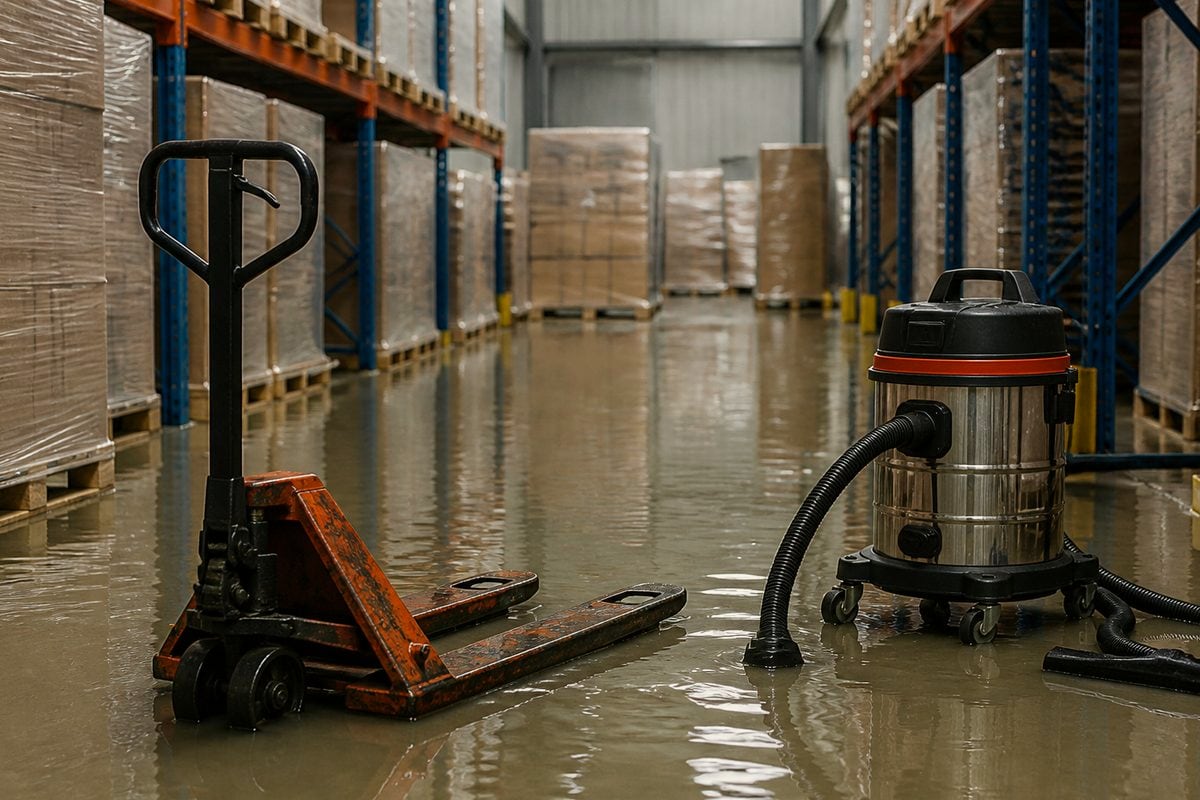
Water damage and flood damage sound like the same problem, but the distinction changes everything from your insurance coverage to how a restoration crew approaches the cleanup. Water damage comes from an internal source inside your home. Flood damage comes from an external source of water affecting land that's normally dry.
That single difference, internal versus external source, drives nearly every other difference between the two: how contaminated the water is, how insurance treats the claim, and what restoration actually involves. This guide breaks down both terms plainly, so you know exactly what you're dealing with and what to do about it.
What Is Water Damage?
Water damage is harm to a structure or its contents caused by water from a source inside the building, such as a burst pipe, a failed appliance, or a roof leak. It's classified by restoration professionals into water categories that describe contamination level, from clean water to grossly contaminated water.
Category 1 water starts clean, such as a supply line break. Category 2, or gray water, carries some contamination, like water from a washing machine or dishwasher. Category 3, or black water, is grossly contaminated, such as sewage backup. A clean water event can also degrade into a more contaminated category if it sits too long, which is one reason restoration professionals treat response time as part of the classification, not just the initial source.
Los Angeles adds a specific wrinkle to this picture. A large share of the region's housing stock predates modern plumbing codes, and aging galvanized steel, cast iron, and even older clay supply and drain lines are still common in homes built before the 1960s. Metal pipes corrode from the inside out over decades, and a pinhole leak inside a wall can go unnoticed for weeks before it turns into a visible water damage event.
Common Causes of Water Damage
- Burst or leaking supply pipes, especially common in older homes with galvanized or cast iron plumbing
- Water heater failures, often after years of sediment buildup weakens the tank
- Washing machine hose or dishwasher line leaks, frequently traced to a worn rubber supply hose
- Roof leaks during rain, particularly around aging flashing or clogged gutters
- HVAC condensation line clogs, which can slowly leak into ceilings or closets near an air handler
- Toilet or plumbing fixture overflows
What Is Flood Damage?
Flood damage is damage caused by water from an external source affecting normally dry land, such as heavy rainfall, storm runoff, or rising groundwater. The Federal Emergency Management Agency generally defines a flood as a general and temporary condition of partial or complete inundation of normally dry land from an external water source, a definition that matters directly for how insurance treats a claim.
Common Causes of Flood Damage in Los Angeles
Los Angeles floods are driven largely by atmospheric river storms that arrive during the rainy season, typically November through March, dumping heavy rain in short, intense bursts after long dry stretches. Storm drains built for smaller, steadier rainfall can back up during these events, sending water into streets and low-lying properties faster than the system can move it out to the ocean. Hillside and canyon neighborhoods face additional runoff risk as water moves downhill faster than saturated or fire-affected soil can absorb it, and properties below a recent burn scar face elevated debris-flow risk during the first rainy seasons after a wildfire. Renters make up a large share of Los Angeles households, and flood damage in a rented unit raises its own set of questions about who's responsible for what, since a landlord's building policy and a renter's own policy usually cover different things.
How Much Water Counts as a "Flood"?
There's no single depth requirement. What matters for the flood-versus-water-damage distinction is the source, not the volume. Even a few inches of water entering from outside, through a door, foundation crack, or window well, is generally treated as flood damage rather than water damage.
Key Differences Between Flood Damage and Water Damage
The clearest way to compare flood damage and water damage is side by side, across contamination, severity, insurance treatment, and restoration process, since those are the four areas homeowners actually need to plan around.
| Factor | Water Damage | Flood Damage |
|---|---|---|
| Source | Internal (pipe, appliance, roof leak) | External (rain, storm runoff, rising water) |
| Contamination | Often clean or lightly contaminated (gray water) | Frequently contaminated with soil, debris, or chemicals |
| Insurance | Typically standard homeowners policy | Typically requires separate flood insurance |
| Restoration | Extraction and structural drying | Extraction, disinfection, and contaminated material removal |
Contamination and Health Risk
Water damage from a clean internal source generally carries lower contamination risk than flood damage, which often picks up soil, chemicals, and debris as it travels across land. That contamination difference is why flood cleanup usually calls for more protective equipment and more aggressive disinfection.
Severity and Scope
Water damage is often contained to a single room or area near its source. Flood damage frequently affects multiple rooms, exterior areas, and sometimes an entire ground floor at once, simply because of how external water enters and spreads.
Insurance Treatment
Standard homeowners insurance and flood insurance are two separate products, and this is the single biggest practical difference between these two terms. Confirming which one applies to your situation early avoids a painful surprise during a claim.
Restoration Process
Water damage restoration typically centers on extraction and drying. Flood damage restoration adds contamination cleanup, disinfection, and often disposal of porous materials that can't be safely cleaned.
How to Tell Which Type of Damage You Have
Look at where the water came from first. If it originated inside your home, from a pipe, appliance, water heater, or roof, it's water damage. If it entered from outside due to rain, storm runoff, or rising water on the ground, it's flood damage.
- Check for an obvious internal source, like a wet spot under a sink or near an appliance
- Look at entry points, doors, foundation, window wells, for outside water intrusion
- Note whether neighboring properties or the street were also affected
- When the source isn't obvious, a professional inspection can confirm it before you file a claim
An accurate diagnosis matters for your insurance claim, so if you're unsure, request an inspection at contact form before assuming either way.
Does Insurance Cover Flood Damage or Water Damage?
Insurance coverage depends heavily on which type of damage you have and the specific terms of your policy, so this is exactly the moment to confirm details with your provider rather than assume. Coverage details vary by insurer and by policy, and nothing here should be treated as a guarantee of what your specific plan covers.
Standard Homeowners Insurance
Standard homeowners insurance typically covers water damage from a sudden, internal source, such as a burst pipe, though it often excludes damage from gradual leaks that went unaddressed for a long time. It generally excludes flood damage from external sources entirely, which is where a separate flood policy comes in. Many homeowners only discover this gap after filing a claim, which is exactly why confirming coverage before a storm season, not during one, is worth the time it takes.
Flood Insurance (NFIP)
The National Flood Insurance Program, or NFIP, provides flood insurance separate from a standard homeowners policy, and many private insurers also offer flood coverage as an alternative or supplement. Whether you need it often depends on your property's FEMA flood zone designation and your own risk tolerance, something worth checking directly with your insurance provider or FEMA's flood map resources. California's property insurance market has been under real strain in recent years, with more homeowners shifting toward the state's FAIR Plan for certain coverage gaps, which makes it worth confirming exactly what your specific policy does and doesn't cover for flood and water damage before a storm season arrives, not after a loss.
How the Restoration Process Differs
Water damage restoration and flood damage restoration share a foundation, extraction and drying, but flood cleanup adds steps that address contamination.
- Water extraction removes standing water in both scenarios, using pumps and wet vacuums sized to the volume involved
- Structural drying with air movers and dehumidifiers follows in both cases, monitored with moisture meters until readings return to normal
- Flood cleanup typically adds disinfection of affected surfaces to address contamination the water carried in from outside
- Flood cleanup more often requires removing and disposing of porous materials like carpet padding or drywall exposed to contaminated water, since those materials can't be safely cleaned
- Clean water damage restoration can often preserve more original materials, which usually means a faster and less disruptive repair timeline
For a deeper look at each process individually, see Storm Flood Cleanup Guide for Los Angeles Homeowners and What to Do After a House Flood: A Step-by-Step Guide.
When to Call a Professional Restoration Company
Any water event involving more than a small, easily contained spill is worth a professional assessment, and a few specific situations make that call urgent rather than optional.
- Water from an external source, storm, runoff, or rising water
- Water that's been standing for more than a few hours
- Any water with a foul odor or visible contamination
- Damage affecting more than one room or level of the home
- Uncertainty about whether the source is internal or external
Call request a callback to get a professional read on the situation before you make decisions that affect your insurance claim or your family's safety.
Frequently Asked Questions About Flood vs Water Damage
What is the main difference between flood damage and water damage?
Water damage comes from an internal source, such as a burst pipe, leaking appliance, or roof leak. Flood damage comes from an external source of water affecting normally dry land, such as heavy rainfall, storm runoff, or overflowing storm drains. The distinction matters most for insurance coverage and restoration steps.
Does homeowners insurance cover flood damage?
Standard homeowners insurance typically excludes flood damage from external sources, and separate flood insurance is usually required for that coverage. Water damage from an internal source, like a burst pipe, is more commonly covered. Always confirm details directly with your insurance provider.
How do I know if I have water damage or flood damage?
Check the source. If water entered from outside your home due to rain, storm runoff, or rising water, it's flood damage. If it originated inside your home from a plumbing, appliance, or roof failure, it's water damage.
Is floodwater dangerous?
Floodwater often carries contaminants from outside sources such as soil, chemicals, or debris, which is why it typically requires more cautious handling and protective equipment than a clean internal water leak.
Does the restoration process differ between flood and water damage?
Yes. Flood damage restoration often requires additional contamination cleanup, disinfection, and disposal of affected porous materials, while water damage restoration from a clean source may focus more directly on extraction and drying.
Do I need flood insurance in Los Angeles?
Flood insurance needs depend on your property's flood zone designation and individual risk tolerance. Check your property's FEMA flood zone status or speak with your insurance provider to determine what coverage makes sense.
Get Help With Flood or Water Damage in Los Angeles
Whether your home took on water from a burst pipe or storm runoff, sorting out flood versus water damage correctly from the start protects both your home and your insurance claim. LA Water Damage responds to both types of water events across Greater Los Angeles. [details pending verification]
Call request a callback or visit contact form for an assessment of your specific situation.
---