
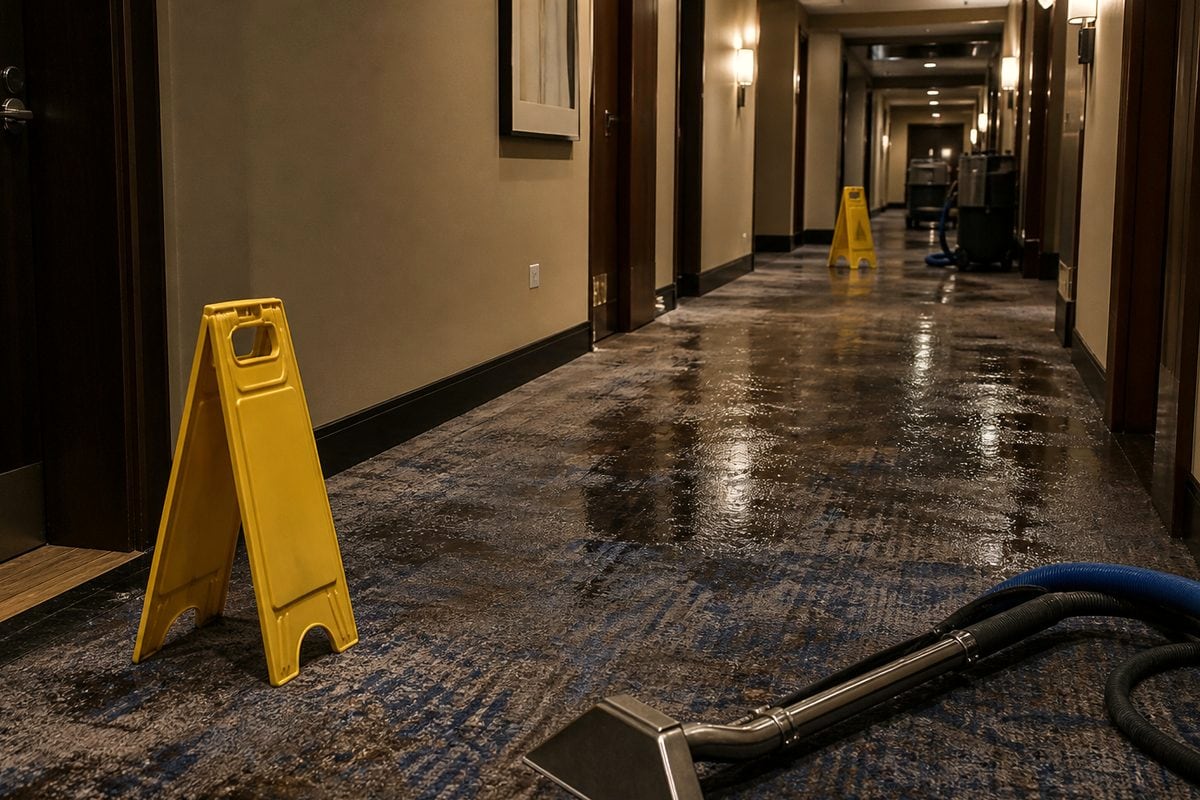
This article covers hazard recognition only. It is not a guide to inspecting, repairing, or restoring power to any electrical system yourself. All electrical repair and power restoration work after flooding should be performed by a licensed electrician.
The Most Important Rule: Never Re-Enter a Flooded Area With Active Power
Never enter a room with standing water while the electrical power to that area is still on. Water conducts electricity, and even a shallow puddle near an outlet, appliance, or breaker panel can carry a lethal current. If you're unsure whether the power is off, treat the area as live and stay out until your utility company or a licensed electrician confirms it's safe.
Why Floodwater and Electrical Systems Are a Dangerous Combination
Floodwater and electrical systems are dangerous together because water is an efficient conductor, meaning electrical current can travel through standing water well beyond the immediate area of a submerged outlet or appliance. This is why the danger from a flooded room extends past whatever is directly touching water.
Submerged outlets, extension cords, and appliances all become potential conduction points once water reaches them. Even wiring inside walls can carry current into standing water on the floor below if the flooding reached high enough. A breaker panel that has taken on water is particularly dangerous, since it's the point where your entire home's electrical supply originates. None of this is something to assess visually from a distance. If there's any doubt, stay out and call for help.
Before You Turn the Power Back On
Do not attempt to restore power to a flooded home yourself. Contact your utility company or a licensed electrician before flipping any breaker or switch, even if the water has receded and the area looks dry.
- Confirm the main breaker panel itself is dry and accessible without stepping through any standing water.
- If the panel is wet or you'd need to cross water to reach it, do not touch it. Call your utility company immediately.
- Contact a licensed electrician to inspect wiring, outlets, and the panel before any power is restored.
- Wait for professional confirmation before assuming any circuit is safe to use again.
- Keep the power off for the entire affected area until inspection is complete, not just the specific room where flooding occurred.
Signs You Should Not Attempt to Restore Power Yourself
If you see scorch marks, smell burning, notice the breaker panel itself was submerged, or simply aren't certain how far the water traveled inside your walls, treat this as a job exclusively for a licensed electrician. None of these situations should be assessed or handled by a homeowner.
What to Inspect Before Restoring Power After Flooding
Before any power restoration, a licensed electrician typically needs to inspect outlets, the breaker panel, and any appliances that were submerged for visible corrosion, water intrusion, or damage. This inspection determines whether components need cleaning, replacement, or are safe to use again.
- Outlets and switches in any area that had standing water
- The breaker panel, especially if water reached its base or interior
- Any appliance that was partially or fully submerged
- Visible corrosion on wiring, connectors, or metal components
- Extension cords or power strips that were in contact with water
This list describes what an electrician looks for during inspection. It is not a checklist for a homeowner to personally clear or repair electrical components. Final power restoration should always be handled by a licensed electrician.
Why "Dry" Doesn't Mean Safe
A room that looks and feels dry can still have unsafe electrical components, because water causes corrosion and insulation breakdown inside outlets, switches, and wiring that isn't visible from the outside. This delayed damage is one of the most misunderstood risks in post-flood electrical safety.
Corrosion inside a wire's insulation or a switch's internal contacts can develop gradually, sometimes creating a fire or shock risk weeks or months after the flooding occurred, even though everything appeared to work normally in the meantime. This is exactly why a professional inspection matters even when a space looks completely recovered.
Common Mistakes Homeowners Make During Post-Flood Electrical Cleanup
Homeowners make a predictable set of electrical safety mistakes during flood cleanup, and most stem from underestimating how much damage water can cause to systems that aren't visibly wet anymore.
- Trying to restore power before drying and inspection are fully complete
- Using an appliance that was submerged without having it professionally checked first
- Assuming a system is safe simply because it looks or feels dry
- Standing in damp areas while testing outlets or switches
- Using an extension cord or power strip that was previously in contact with water
Every one of these carries real shock or fire risk. None of them should be treated as acceptable shortcuts during cleanup.
Long-Term Risks of Ignoring Hidden Electrical Damage
Unaddressed electrical damage from flooding can create a fire risk that develops slowly, since corrosion inside wiring and components doesn't always cause an immediate, visible failure. A system can appear to function normally for an extended period before hidden damage results in a short circuit or electrical fire.
This delayed-failure pattern is precisely why skipping a professional inspection after significant flooding is a genuine long-term risk, not just an overly cautious recommendation. The cost and inconvenience of a proper inspection is small compared to the risk of an electrical fire months later.
When to Call a Licensed Electrician vs. a Restoration Company
A licensed electrician inspects, repairs, or clears the electrical system itself, while a restoration company handles water extraction, structural drying, and coordinates the safe timing of that work around the electrical inspection. LA Water Damage does not perform electrical repairs. Our role is water extraction, drying, and coordinating safe assessment timing so your electrician can do their work efficiently.
If your home has flooded and you're unsure where to start, our team can begin the water extraction and drying process while helping coordinate the timing of a licensed electrician's inspection, since drying and electrical safety often need to happen in the right sequence. For safe assessment support and restoration coordination, call request a callback or visit contact form. For the electrical work itself, always use a licensed electrician.
Dos and Don'ts of Post-Flood Electrical Safety
| Do | Don't |
|---|---|
| Stay out of any room with standing water and active power | Enter a flooded room without confirming the power is off |
| Contact your utility company or a licensed electrician before restoring power | Flip breakers or switches yourself after flooding |
| Have submerged appliances professionally inspected before use | Assume an appliance is safe because it looks dry |
| Keep power off for the entire affected area until inspection is complete | Restore power to just the "dry-looking" parts of the house |
| Call a restoration team for water extraction and drying | Wait to address standing water while sorting out electrical concerns |
Electrical Safety Preparation Before a Flood
A small amount of preparation can reduce electrical risk if flooding occurs, though this guide's core focus is what to do after flooding has already happened.
- Know the location of your main breaker panel and confirm it's accessible without needing to cross water.
- Keep a basic emergency kit with a flashlight, since you may need to navigate without power.
- Have your utility company's contact information saved somewhere accessible offline.
- Consider having a licensed electrician evaluate whether panel elevation makes sense for your specific property, particularly in flood-prone areas.
How to Prepare Your Home's Electrical System Before a Flood
Electrical Safety Considerations for Los Angeles Properties
Electrical safety after flooding carries added complexity across Greater Los Angeles given the region's mix of property types, from older single-family homes with original wiring to large multifamily buildings, hotels, healthcare facilities, restaurants, retail spaces, and offices. [details pending verification] Commercial and multifamily properties often involve multiple electrical panels, shared systems, and in some cases life-safety systems that require even more careful coordination between electrical inspection and restoration work. Commercial Building Electrical Safety After Flooding
Frequently Asked Questions About Electrical Safety After Flooding
Is it safe to enter a flooded room if the power is still on?
No. Never enter a flooded area while electrical power is active. Water conducts electricity, and even a few inches of standing water near an outlet or appliance can be lethal. Leave the area, avoid contact with water, and contact your utility company or a licensed electrician before going back in.
Should I turn off my own breaker panel if my home floods?
Only if the panel itself is dry and accessible without standing in water. If floodwater has reached the panel or you must step through water to get to it, do not attempt it yourself. Contact your utility company or a licensed electrician immediately instead.
How do I know if it's safe to turn the power back on after a flood?
You generally shouldn't restore power yourself after significant flooding. A licensed electrician should inspect the wiring, outlets, and breaker panel for water intrusion and corrosion before power is safely restored. Looking dry is not a reliable indicator of safety.
Can water-damaged outlets and appliances be reused after they dry out?
Not without inspection. Moisture can cause corrosion and insulation breakdown inside outlets, switches, and appliances that isn't visible from the outside, creating a delayed fire or shock risk. Have a licensed electrician evaluate any electrical component that was submerged before using it again.
What's the difference between what an electrician handles and what a restoration company handles after a flood?
A licensed electrician inspects, repairs, or clears the electrical system itself. A restoration company like LA Water Damage handles water extraction, drying, and structural restoration, and coordinates safe assessment timing around the electrical work, but does not perform electrical repairs.
What are the most common mistakes homeowners make with electrical systems after a flood?
Common mistakes include trying to restore power before drying and inspection are complete, using wet appliances without having them checked, and assuming a system is safe simply because it looks dry. Any of these can create serious shock or fire risk.
How long can hidden electrical damage go unnoticed after a flood?
Corrosion and insulation damage inside wiring or outlets can develop gradually and may not cause a visible or functional problem for weeks or months. This is why a professional inspection after any significant flooding is strongly recommended, even if everything appears to work normally.
Next Steps
Electrical safety after flooding is not the place to guess or take shortcuts. If your Greater Los Angeles home has flooded, our team can begin water extraction and drying while helping coordinate the timing of a licensed electrician's inspection. Call request a callback or visit contact form. For all electrical repair and power restoration, contact a licensed electrician directly.