
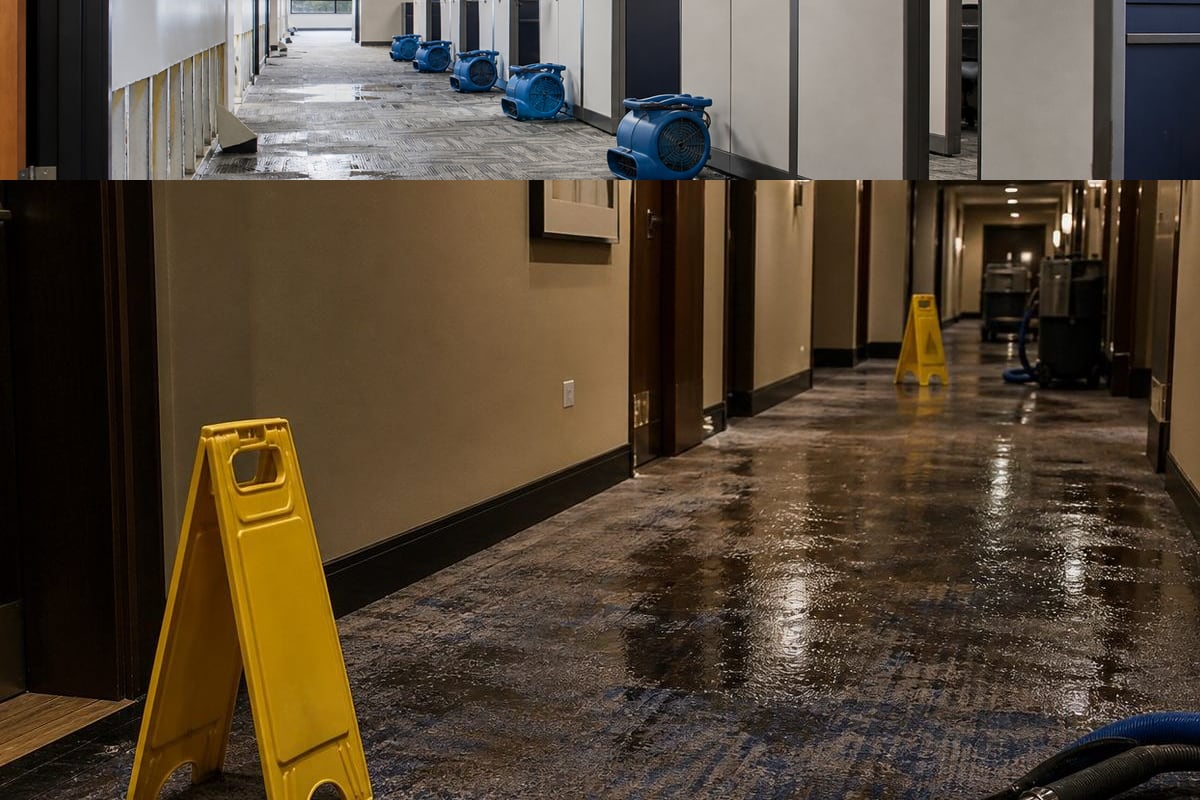
A tenant calls at 9 PM about water coming through the ceiling, and now you're deciding in real time whether this is an emergency or something that can wait until morning. Property managers across Los Angeles field these calls constantly, often across multiple properties with different tenants, different lease terms, and different levels of urgency. This guide walks through what actually qualifies as a property emergency, how to handle one step by step, and how to work with a restoration provider so the next call is less stressful than this one. For emergency assistance, call request a callback or reach out through contact form.
Los Angeles's rental market compounds this pressure, since a majority of the region's households rent rather than own, which means property managers are handling emergency response at a scale most single-family homeowners never encounter.
What Counts as a Property Emergency?
A property emergency is any issue that threatens health, safety, or the structure itself and needs immediate attention rather than routine scheduling. Active water leaks, sewage backups, fire damage, and loss of essential utilities like heat or working plumbing all fall into this category.
Emergencies vs. Routine Maintenance Requests
Routine maintenance, like a slow drain, a dripping faucet, or a minor cosmetic repair, usually doesn't require an immediate emergency response and can be scheduled through normal channels. The distinction matters because treating every maintenance call as an emergency burns resources fast, while under-responding to a genuine emergency risks the property, the tenant's safety, and your liability exposure. When in doubt, ask whether the issue is actively getting worse right now. If yes, it's likely an emergency.
Common Property Emergencies That Require Restoration
Managed properties across Greater Los Angeles face a predictable set of emergencies, and knowing what they look like before they happen helps you respond faster when they do.
Older multifamily buildings and rental properties throughout the region often still run original galvanized or cast iron plumbing, which increases the likelihood of pipe failures compared to newer construction. Winter atmospheric river storms add another seasonal pressure point, particularly for properties with aging roofs or drainage systems.
Water Damage and Pipe Failures
A pipe failure inside a wall or under a unit can flood not just the source unit but units below it in a multifamily building, turning one problem into several tenant complaints at once. Fast water extraction limits how far the damage spreads to neighboring units. Water Damage Restoration in Los Angeles
Sewage and Plumbing Backups
A sewage backup carries contamination risk that goes well beyond a standard water leak, and it requires immediate containment and professional cleanup rather than a maintenance team handling it in-house. Sewage Cleanup and Backup Restoration in Los Angeles
Fire and Smoke Damage
Fire damage in a managed property, even a small, contained incident, typically causes smoke damage well beyond the unit of origin, especially in buildings with shared hallways, stairwells, or HVAC systems. Fire and Smoke Damage Restoration in Los Angeles
Mold After Undetected Water Damage
Mold after an undetected leak is one of the most common disputes between tenants and property managers, since it often surfaces weeks after the original water event and raises habitability questions. A mold inspection settles the question of scope and remediation need before it becomes a bigger dispute. Mold Inspection and Remediation in Los Angeles
A Step-by-Step Process for Handling a Property Emergency
Having a repeatable process for every emergency call removes the guesswork and speeds up your response, regardless of which property or which type of damage is involved.
Assessing the Damage
Start by gathering the basics from whoever reported the issue: what's happening, where, and whether it's actively getting worse. This determines how urgently you need to act and what kind of help to call in.
Immediate Action to Limit Further Damage
Shutting off the water source or power to the affected area, if it's safe to do so, limits how much damage accumulates before help arrives. This single step often makes the biggest difference in total loss for a water event.
Contacting a Restoration Vendor
Contact a restoration provider as soon as damage is discovered rather than waiting to see if it resolves on its own. Property Management Emergency Restoration Guide A provider who already has your properties and contact information on file can move faster than one starting from zero.
Communicating With Tenants
Tenants need timely, clear updates about what's happening, what to expect, and any temporary relocation or access restrictions during restoration work. Poor communication here is one of the fastest ways an emergency turns into a tenant relations problem.
Documenting the Damage
Take dated photos and video of the damage before cleanup begins, and keep a written record of when the issue was reported and when action was taken. Documentation for Commercial Insurance Claims This documentation protects you if the incident becomes an insurance claim or a legal question later.
For direct help with any of these steps, call request a callback or visit contact form.
Emergency Response Time Expectations
How fast a restoration company should respond depends on the severity of the damage, its location, and current availability, which is why setting expectations in advance matters more than chasing a specific promised number after the fact. Contact request a callback to confirm current availability, and ask about [details pending verification] so you have a documented benchmark for your properties before an emergency happens.
Working With a Restoration Vendor as a Property Manager
A good restoration vendor relationship for a property manager looks different than a one-off homeowner interaction. It's built on repeat trust, consistent documentation, and a provider who understands you're managing risk across multiple units or sites, not just one home.
What a Restoration Provider Should Do When You Call request a callback
A restoration provider should ask clear questions about the damage, confirm safety concerns, and schedule an assessment promptly, all while keeping you informed at each step. If a provider can't clearly explain their process when you call, that's worth noting before you commit to using them again.
Coordinating Across Multiple Properties
Many restoration companies work with property managers across multiple sites through a single point of contact. Confirm with your provider how they prioritize and communicate across properties, especially during widespread events like a major storm affecting several buildings in your portfolio at once.
Documentation for Insurance Claims
Take dated photos and video of the damage before cleanup begins, keep records of tenant communications, and request a written scope of damage from your restoration provider. Thorough documentation helps support a smoother insurance claims process and protects you if a dispute arises later about the timeline or cause of the damage.
Legal Considerations for Landlords and Property Managers
Requirements around emergency repairs vary by state and local jurisdiction, so this section is general guidance, not legal advice specific to your properties. Consult your lease terms and local landlord-tenant law, or legal counsel, for specifics that apply to your situation.
Generally, prompt response to habitability-related emergencies, such as water intrusion or loss of essential services, is expected of landlords and property managers. Documenting your response time and actions taken helps demonstrate that expectation was met if the issue is ever questioned later.
Preparing Your Portfolio Before an Emergency Happens
Property managers who put a restoration plan in place before an emergency happens consistently handle the actual event with less scrambling and fewer mistakes.
Setting Up an Emergency Response Agreement
An emergency response agreement documents your properties, contact information, and expectations with a restoration provider in advance. This removes one major source of delay during an actual emergency and gives you a documented process you can point to if a tenant or owner asks how the situation was handled.
Frequently Asked Questions About Property Management Emergency Restoration
What qualifies as a property emergency versus routine maintenance?
A property emergency typically threatens health, safety, or the structure itself, such as active water leaks, sewage backups, fire damage, or loss of essential utilities. Routine maintenance, like a slow drain or a minor cosmetic repair, usually doesn't require an immediate emergency response.
How quickly should a property manager contact a restoration company after damage occurs?
Contact a restoration provider as soon as damage is discovered to limit further loss. Contact request a callback to confirm current availability, and ask about [details pending verification] so you have a documented expectation for your properties.
Can one restoration provider handle emergencies across multiple properties in a portfolio?
Many restoration companies work with property managers across multiple sites through a single point of contact. Confirm with your provider how they prioritize and communicate across properties, especially during widespread events like a major storm.
How should a property manager document damage for an insurance claim?
Take dated photos and video of the damage before cleanup begins, keep records of tenant communications, and request a written scope of damage from your restoration provider. Thorough documentation helps support a smoother insurance claims process.
What are a landlord's legal obligations when a tenant reports an emergency?
Requirements vary by state and local jurisdiction, so consult your lease terms and local landlord-tenant law or legal counsel for specifics. Generally, prompt response to habitability-related emergencies, such as water intrusion or loss of essential services, is expected.
Should tenants contact 911 or their landlord first during an emergency?
For anything involving immediate danger, such as fire or gas leaks, tenants should contact emergency services first, then notify the property manager or landlord. For non-life-threatening property damage, like a water leak, contacting the landlord or property manager directly is usually the first step.
How can property managers prepare for after-hours emergencies in advance?
Establishing a relationship with a restoration provider before an emergency happens, keeping tenant contact information current, and having a documented emergency contact plan all help reduce response delays when something does go wrong.
Building Your Emergency Response Plan
Managing property emergencies well isn't about reacting faster in the moment. It's about having the process, contacts, and documentation habits already in place before the call comes in. LA Water Damage works with property managers and landlords across Greater Los Angeles to handle water, fire, sewage, and mold emergencies across single properties and full portfolios alike. Warehouse and Industrial Restoration in Los Angeles
Call request a callback or visit contact form to set up an emergency response agreement for your portfolio, or to get help with a property emergency happening right now.