
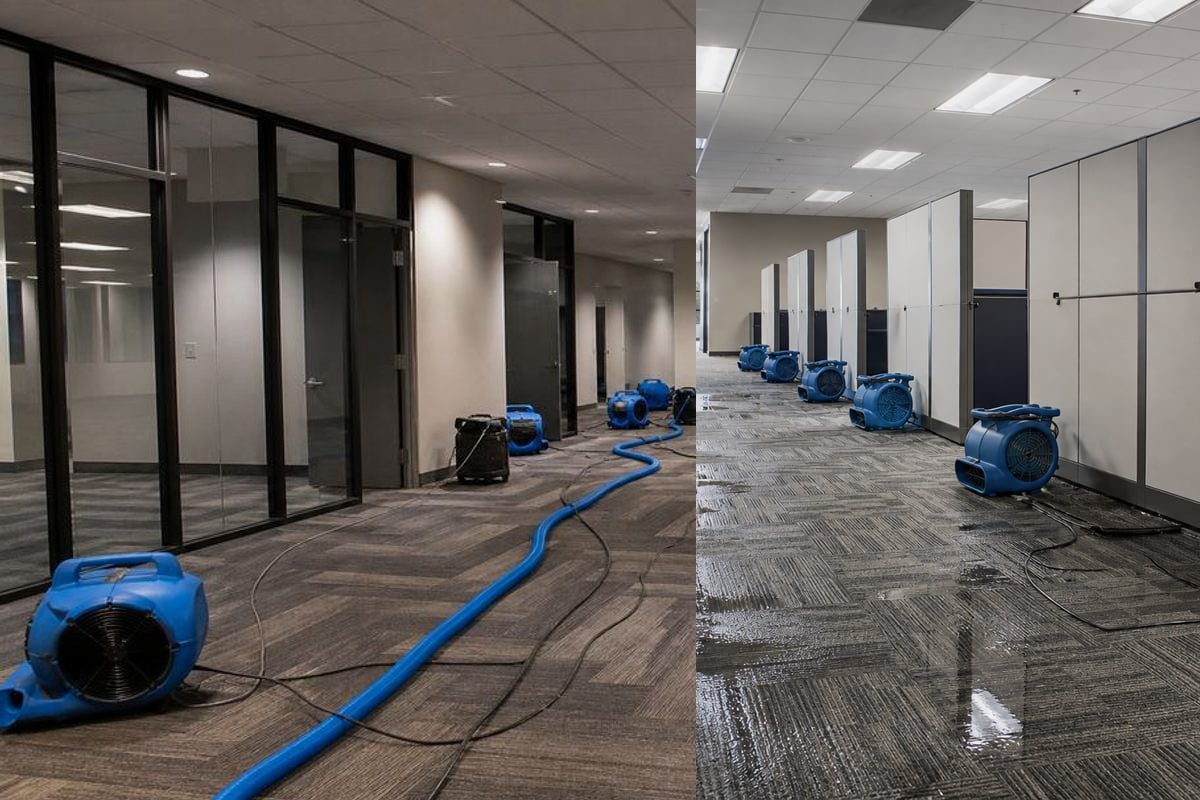
Office Building Restoration in Los Angeles
A search for "office building restoration" often turns up general contractors offering remodels and cosmetic upgrades, which isn't the same thing as what happens after a pipe breaks over a conference room or smoke damage spreads through a shared HVAC system. LA Water Damage restores office buildings across Greater Los Angeles after water, fire, mold, and sewage events, working with property managers, building owners, and multi-tenant coordinators to limit disruption to the businesses operating inside.
This guide clarifies what restoration actually covers, walks through the damage types most common in office buildings, explains how work gets scheduled around business hours, and covers what to prepare before the next incident happens. For an emergency response, call request a callback or reach out through contact form.
Restoration vs. Renovation: What We Do (and Don't Do)
Restoration and renovation are not the same service, even though search results often blur the line between them. LA Water Damage focuses specifically on restoring a building after a damage event such as water, fire, mold, or sewage, not on discretionary cosmetic upgrades or new construction.
If your office needs a planned remodel unrelated to any damage event, whether that's updated finishes, a new layout, or a build-out for a new tenant, a general contractor is the better fit for that work. Restoration exists to return a damaged space to its pre-loss condition, not to reimagine it. Knowing this distinction upfront saves time for property managers searching for the right kind of help.
Types of Damage We Restore in Office Buildings
Office buildings face the same core damage categories as other commercial properties, but shared systems like HVAC and multiple tenant spaces raise the complexity of nearly every event. Water, fire, sewage, and mold each require a response that accounts for who else in the building might be affected.
Greater Los Angeles's office building stock ranges from older low-rise buildings with original plumbing systems to newer high-rise towers with more complex mechanical infrastructure. Older buildings across the region are more likely to still have galvanized supply lines or aging HVAC components, both of which raise the odds of a water event during any given year.
Water Damage from Pipe Breaks, Roof Leaks, and HVAC Failures
Water damage in office buildings commonly comes from a pipe break inside a wall, a roof leak during winter storms, or a failure in the HVAC system itself, particularly the condensate lines that run through ceilings above office space. Fast extraction and drying limit how far the water spreads into flooring, drywall, and shared ceiling systems. Water Damage Restoration in Los Angeles
Fire and Smoke Damage
Fire and smoke damage in an office setting often spreads through shared HVAC and ceiling plenum spaces well beyond the room where the fire started, affecting neighboring offices and even other floors. Smoke odor removal requires specialized techniques to fully clear the smell from carpet, furniture, and drywall.
Sewage and Plumbing Backups
Sewage and plumbing backups in office buildings typically originate in restrooms or break rooms and carry contamination risk that requires careful containment and disinfection. These areas need to be closed off immediately and handled by trained technicians, not general cleaning staff. Sewage Cleanup and Backup Restoration in Los Angeles
Mold Growth in Office HVAC Systems and Wall Cavities
Mold typically develops after unresolved moisture from leaks, HVAC condensation issues, or flooding, especially in wall cavities, ceiling tiles, and carpeted areas. A mold inspection can confirm whether remediation is needed and determine the appropriate scope of work. Mold Inspection and Remediation in Los Angeles
Emergency Response for Office Buildings
A fast, well-organized response limits how much an office building disruption affects the businesses operating inside it. LA Water Damage responds to office building emergencies across Greater Los Angeles with a process built around minimizing tenant impact.
Response time depends on the severity and location of the damage, so ask about [details pending verification] before an incident occurs. Facility managers who document this expectation in advance can communicate more confidently with tenants when something does go wrong.
What Happens When You Call request a callback
The first call establishes what happened, where in the building, and how many tenants or floors are affected. A technician confirms safety concerns and schedules an on-site assessment to determine the scope of work, equipment needs, and a plan for minimizing disruption to occupied spaces.
After-Hours and Weekend Response
Many of the most disruptive phases of an office restoration project, like major equipment setup or demolition, can be scheduled for evenings or weekends when the building has lower occupancy. This kind of scheduling requires the restoration team to understand the building's typical occupancy patterns from the start.
Minimizing Business Disruption During Restoration
Office tenants run active businesses inside these buildings, and restoration work needs to account for that reality rather than treating the space like an empty structure.
Working Around Business Hours and Tenant Schedules
It depends on the extent of the damage and which areas are affected whether employees can continue working nearby. Restoration may be phased so unaffected areas of the building remain usable, with affected zones sectioned off using barriers and signage. This gets assessed during the initial inspection based on the specific layout and severity involved.
Multi-Tenant Office Building Coordination
Work in a multi-tenant building is typically coordinated with the building owner or property manager, who then communicates with affected tenants directly. A single point of contact and consistent documentation keep multiple tenants informed and reduce the number of conflicting messages during a restoration project. Property Management Emergency Restoration Guide
Working With Property Managers and Building Owners
Property managers and building owners are often the ones coordinating a restoration project on behalf of multiple tenants, which means clear, proactive communication matters as much as the physical repair work itself.
Documentation for Commercial Insurance Claims
Most commercial property policies cover sudden water, fire, and storm damage, though coverage details and business-interruption terms vary by policy. A written scope of damage, dated photos, and organized records of tenant communication all support a smoother claims process. Confirm specifics with your insurance provider or broker before restoration begins.
Preparing Your Office Building Before a Disaster
Property managers who establish a restoration relationship before an emergency happens consistently move through the response process with less confusion and fewer delays.
Emergency Response Planning for Facility Managers
An emergency response agreement puts your building's contact information, access details, and tenant communication protocols on file with a restoration provider in advance. This kind of planning is especially valuable in a multi-tenant building, where coordinating a response across several businesses takes more upfront structure than a single-occupant space.
Frequently Asked Questions About Office Building Restoration
Does LA Water Damage handle office renovations or remodeling?
No. LA Water Damage focuses on restoration after damage events such as water, fire, mold, and sewage incidents, not discretionary renovation, cosmetic upgrades, or new build-outs. If your office needs a planned remodel unrelated to damage, a general contractor is a better fit.
How quickly can you respond to office water or fire damage?
Response time depends on the severity and location of the damage. Contact request a callback to confirm current availability. Facility managers who want a documented expectation in advance should ask about [details pending verification].
Can employees continue working during office restoration?
It depends on the extent of the damage and which areas are affected. Restoration may be phased so unaffected areas of the building remain usable, with affected zones sectioned off. This is assessed during the initial inspection.
How do you coordinate restoration in a multi-tenant office building?
Work is typically coordinated with the building owner or property manager, who communicates with affected tenants. Clear documentation and a single point of contact help keep multiple tenants informed throughout the restoration process.
Does commercial insurance cover office building water or fire damage?
Most commercial property policies cover sudden water, fire, and storm damage, though coverage details and business-interruption terms vary by policy. Confirm specifics with your insurance provider or broker before restoration begins.
What causes mold in office buildings?
Mold typically develops after unresolved moisture from leaks, HVAC condensation issues, or flooding, especially in wall cavities, ceiling tiles, and carpeted areas. A mold inspection can confirm whether remediation is needed.
What should a property manager do immediately after discovering office building damage?
Shut off the water source or power to the affected area if it's safe to do so, restrict access, document the damage with photos, and contact both a restoration provider and your insurance carrier as soon as possible.
Getting Your Building Back to Normal
Office building damage affects more than one company's bottom line. It disrupts every tenant relying on that space to run their own business. LA Water Damage works with property managers and building owners across Greater Los Angeles to restore damaged office space with the coordination a multi-tenant environment requires. Retail Property Damage Restoration in Los Angeles
Call request a callback or visit contact form to discuss your building's situation, whether you're managing active damage or want a response plan on file before the next incident.
---