
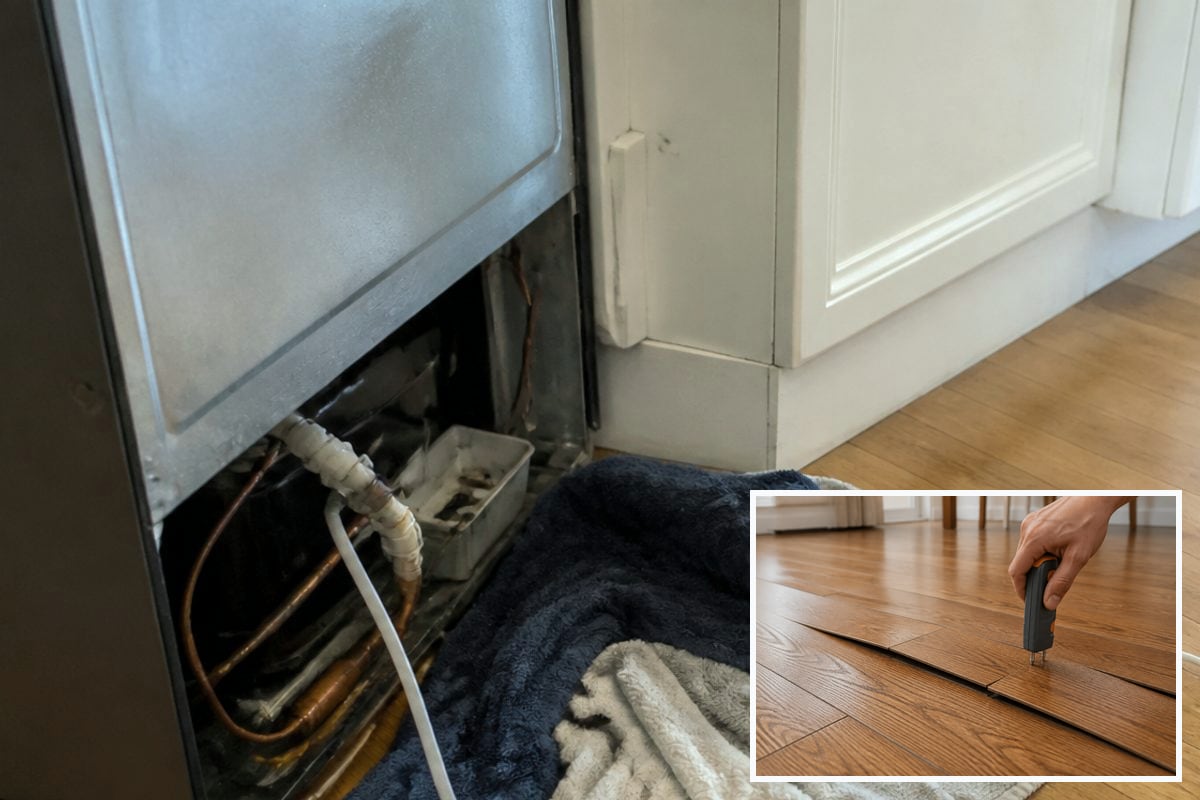
Search for almost any restoration company and you'll find the same thing: dramatic before-and-after photos, glowing testimonials, and vague claims about years of experience. Some of it is real. A meaningful amount of it isn't. This page exists to help you tell the difference, because knowing what credible evidence actually looks like is one of the most useful things you can learn before hiring anyone to work on your property.
Why "Case Studies" in Restoration Are Easy to Fake
Restoration case studies are easy to fake because the industry's most common proof points, dramatic photos and glowing testimonials, are also the easiest content to stage, mismatch, or write without ever completing real work. A dramatic "before" photo of water damage can come from anywhere online. A "customer testimonial" can be written by the company itself. Neither one requires proof that a specific project actually happened the way it's described.
This isn't a claim that every restoration company fabricates its marketing. Many don't. But the format itself offers very little built-in accountability, which is exactly why it's worth learning to evaluate the evidence yourself rather than taking any company's case study at face value, including this one.
What Credible Before-and-After Photo Evidence Looks Like
Credible before-and-after photo evidence uses consistent angles and lighting, includes visible timestamps or clear date documentation, and matches the specific tasks described in a written scope of work rather than standing alone as a dramatic image.
Consistent Angles, Lighting, and Timestamps
Real project photos are taken from roughly the same position and angle across the timeline of a job, because that's what documentation actually requires, not because it makes for a better marketing image. Timestamps, whether embedded in the photo file or visibly noted, are a basic sign that a photo was taken when and where it's claimed to have been taken.
Photos That Match the Written Scope of Work
A trustworthy set of before-and-after photos lines up with the tasks listed in the project's scope of work. If a photo shows demolition in a room the scope doesn't mention, or shows equipment that doesn't match the documented drying plan, that mismatch is worth questioning rather than ignoring because the image looks convincing.
How Documentation Supports Real Evidence of Work Performed
Documentation supports real evidence of restoration work through records that are difficult to fabricate convincingly, specifically daily moisture readings, drying logs, and a detailed written scope of work, because these require consistent, ongoing detail rather than a single polished image.
Moisture Readings and Drying Logs as Evidence
A drying log that tracks daily moisture readings against a dry standard, as covered in How Moisture Readings and Drying Logs Support Your Restoration Project, is far harder to fake convincingly than a photo. It requires numbers that trend logically over time and stay internally consistent with the environmental conditions of the space.
Scope of Work as Evidence
A detailed scope of work, described fully in What a Restoration Scope of Work Should Include, gives you a specific list of tasks to compare against what you actually see happen on your property. Vague or missing scopes make it much harder to verify that documented work matches real work.
How to Verify What a Restoration Company Tells You
You can verify what a restoration company tells you by asking for documentation samples, checking licensing directly, and treating specific, checkable claims as more trustworthy than general praise.
Questions to Ask Before You Hire
Ask to see an anonymized example of a drying log or scope of work so you understand how the company documents a typical project. Ask about [details pending verification] directly, and ask whether you can speak to a past customer as a reference. A company confident in its process should walk you through these details without hesitation.
Reading Reviews and Testimonials Critically
Look for reviews with specific, verifiable details, like the type of damage, the general timeline, or how a problem was communicated, rather than generic five-star praise with no substance. Watch for patterns too. A large cluster of vague, glowing reviews posted within a short window is worth a second look. Genuine reviews on platforms like Google or Yelp tend to accumulate more naturally over time, and a company that responds professionally to both positive and negative reviews is generally a better sign than one with a suspiciously spotless record.
Warning Signs of Weak or Fabricated Evidence
The clearest warning signs of weak or fabricated restoration evidence are stock-looking photography, testimonials with no verifiable specifics, before-and-after images that don't match any written documentation, and reluctance to provide real references.
- Before-and-after photos that look staged, stock, or inconsistent in style
- Testimonials with vague praise and no specific project details
- No willingness to provide a documentation sample or reference
- Claims of results with no dates, locations, or checkable context
- Pressure to trust the company's word instead of reviewing paperwork
What LA Water Damage Can and Cannot Claim
LA Water Damage does not publish fabricated case studies, invented outcomes, or dramatized before-and-after stories, because the whole point of documentation is that it has to hold up under real scrutiny, from you and from your insurance carrier. What LA Water Damage can offer instead is a clear explanation of how projects are documented, using a drying log and scope of work process aligned with industry standards and [details pending verification]. If you'd like to see how that documentation process works before you hire anyone, [details pending verification] once you reach out. Ask about our documentation process: request a callback / contact form.
Frequently Asked Questions About Evaluating Restoration Evidence
Why don't more restoration companies publish detailed case studies?
Real restoration projects involve private homes, sensitive insurance claims, and confidential customer information, so many companies limit what they publish for privacy reasons. A lack of published case studies is not automatically a red flag, but it does mean you should ask for documentation directly.
What should I ask a restoration company to prove they've done quality work?
Ask to see anonymized examples of moisture logs, scope of work documents, or references you can contact directly. A company confident in its process should be able to walk you through how it documents a typical project without needing invented before-and-after stories.
Are before-and-after photos reliable proof of restoration quality?
Photos help, but they can be staged, mismatched, or taken out of context. Credible photo evidence includes consistent angles, visible timestamps, and photos that correspond to a written scope of work, not isolated dramatic images.
How do I know if online reviews for a restoration company are trustworthy?
Look for reviews with specific, verifiable details rather than generic praise, and check whether the company responds professionally to both positive and negative feedback. A pattern of vague five-star reviews posted in a short window can be a red flag.
What documentation should I expect from a legitimate restoration project?
At minimum, expect a written scope of work and, for water damage, moisture readings and drying logs that track progress until materials reach a safe dry standard. These documents are also useful evidence for your insurance claim.
Is it reasonable to ask for references from a restoration company?
Yes. Asking to speak with a past customer, ideally one with a similar type of loss, is a reasonable request. A company unwilling to provide any way to verify past work is worth further questioning.
The best evidence any restoration company can give you isn't a dramatic photo. It's a documentation process that holds up when you actually look closely at it. If you want to see what that looks like before you commit to anything, reach out to LA Water Damage at request a callback or contact form.
---