
Quick answer: Many water-damaged hardwood floors can be saved if the water is caught early, the exposure was brief, and the floor is dried professionally with proper moisture mapping. Floors are more likely to need replacement when the water was contaminated, sat for an extended period, or reached the subfloor and multiple layers of an engineered floor's core.
A wet hardwood floor puts homeowners in a tough spot right away. Floors are expensive to replace, and the visible damage, cupped boards, dark staining, a spongy feel underfoot, does not always tell you whether the wood underneath is salvageable. This guide covers how water actually affects hardwood, what determines whether a floor can be dried and saved, and what the professional restoration process looks like when it can.
How Water Affects Hardwood Flooring
Hardwood flooring is installed as a layered assembly, not a single solid surface, and water moving through that assembly behaves differently at each layer. Understanding that layered structure explains why a floor can look fine on top while hiding serious moisture underneath.
How Water Penetrates the Flooring Assembly
Water typically enters through gaps between boards, spreads across the subfloor beneath, and gets wicked upward into the wood fibers from below. This means the underside of the boards and the subfloor are often wetter than the visible surface, which is part of why surface appearance is not a reliable way to judge the damage.
Why a Finished Floor Isn't Waterproof
A polyurethane or wax finish slows water absorption but does not stop it, especially at seams, edges, and any spot where the finish has worn thin from foot traffic. Standing water given enough time will find its way past the finish regardless of how well maintained the floor looks.
Signs of Water Damage in Hardwood Floors
Hardwood floors show water damage through three characteristic types of movement in the wood, cupping, crowning, and buckling, each of which indicates a different stage or type of moisture exposure.
Cupping
Cupping is when the edges of each board rise higher than the center, creating a slightly concave shape across each plank. This is usually the earliest visible sign of moisture and often the most likely to improve once the floor is professionally dried.
Crowning
Crowning is the opposite of cupping, where the center of the board rises higher than the edges. It often develops after cupped boards are sanded too early, before the wood has fully dried and equalized in moisture content.
Buckling
Buckling is the most severe stage, where boards actually lift away from the subfloor, sometimes dramatically. This typically indicates prolonged, significant water exposure and is far less likely to fully reverse with drying alone.
Solid vs. Engineered Hardwood: How Each Responds to Water
Solid hardwood and engineered hardwood respond differently to water because of how they are constructed, and that difference matters when deciding whether a floor can be saved. Solid hardwood is a single piece of wood through its full thickness, giving it more material to potentially sand and refinish after drying. Engineered hardwood has a thin wood veneer over a plywood or composite core, and that core is vulnerable to delamination, where the layers separate, if water reaches it. Whether engineered hardwood can be saved depends heavily on how far water penetrated into that core.
What to Do Immediately After Water Reaches Hardwood Flooring
The first priorities are stopping the water source and removing standing water quickly, without reaching for shortcuts that can make the damage worse. Speed matters here, but so does using the right approach.
Immediate Safety and Containment Steps
- Stop the source of the water if you can do so safely, whether that means shutting off a supply valve or moving a leaking appliance.
- Remove standing water promptly with towels or a wet vacuum rather than letting it sit on the floor.
- Avoid walking heavily on saturated boards, since wet wood is more prone to damage under pressure.
- Photograph the affected area for documentation before cleanup begins.
Mistakes to Avoid
Avoid using space heaters or heat guns directly on wet hardwood, since rapid, uneven heating can cause additional warping rather than helping the wood dry evenly. Avoid sanding or refinishing a floor before it is confirmed fully dry, since sanding boards that are still cupped often leads to crowning once the wood eventually equalizes. Avoid relying on standard household fans alone for anything beyond very light surface dampness, since they do not address moisture trapped in the subfloor.
Water Damage to Carpet and Padding
Can Your Water-Damaged Hardwood Floors Be Saved?
Whether your specific floor can be saved depends on the water category, how long the exposure lasted, and whether the subfloor was affected, and a professional assessment is the only way to get a definitive answer. That said, there are general patterns that hold true across most cases.
When Restoration Is More Likely
Floors exposed to clean water, dried within roughly 24 to 48 hours, and showing only mild cupping without buckling are the strongest candidates for successful drying and refinishing rather than replacement.
When Replacement Is More Likely
Floors exposed to contaminated water, left wet for an extended period, or showing buckling or subfloor involvement are more likely to require full or partial replacement, since drying alone cannot reliably restore severely warped wood or a compromised subfloor.
Partial Replacement as a Middle Option
In some cases, only the most affected boards need replacement, while the rest of the floor can be dried, sanded, and blended in during refinishing. This middle option depends on how localized the damage is and whether matching materials are available.
How Professionals Dry and Restore Water-Damaged Hardwood Floors
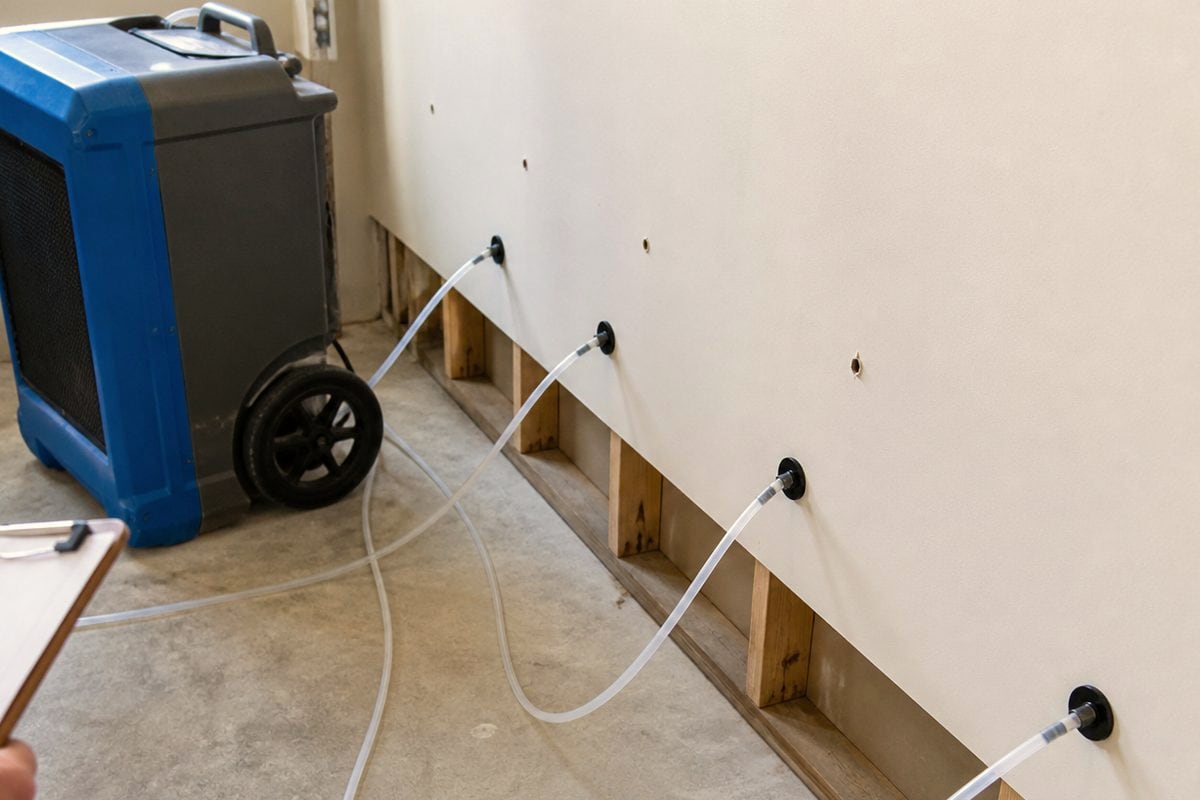
Professional hardwood drying uses specialized equipment designed specifically for flooring, since standard air movers alone are not enough to reach moisture trapped beneath the boards.
Water Extraction and Moisture Mapping
Standing water is extracted first, then technicians use moisture meters to map how far water has spread across the floor and into the subfloor, since damage often extends beyond what is visible.
Controlled Structural Drying
Drying systems designed for hardwood, including specialized drying mats or injection systems, pull moisture out from beneath the boards in a controlled way, following the drying principles laid out in the IICRC S500 standard.
Sanding, Refinishing, and Repairs
Once moisture readings confirm the wood has returned to a normal range, boards can be sanded to remove residual cupping and refinished. Any boards beyond saving are replaced and blended into the existing floor.
How Long Does It Take for Hardwood Floors to Dry and Be Refinished?
Drying time for water-damaged hardwood floors typically ranges from several days to a few weeks, depending on how much water was involved, how long it sat, humidity levels, and subfloor type. Floors generally are not ready for sanding or refinishing until moisture readings confirm the wood has returned to a normal moisture range, since refinishing too early risks crowning.
Can Mold Grow Beneath Water-Damaged Hardwood Floors?
Yes, mold can grow beneath hardwood flooring when moisture is trapped in the subfloor or underlayment for an extended period without proper drying. Because this type of mold growth is not visible from above, a moisture and mold check after any significant water event is the safest way to rule it out.
Crawl Space Water Damage and Drying
Documenting Hardwood Floor Damage for an Insurance Claim
Good documentation, dated photos of the damage, moisture meter readings, and a professional assessment report, gives you the strongest foundation for an insurance claim involving hardwood floors. This is general guidance rather than insurance or legal advice, and reviewing your specific policy or speaking directly with your adjuster is the best way to understand your coverage.
Insurance Claims for Water Damage
How to Prevent Future Hardwood Floor Water Damage
A few consistent habits meaningfully reduce the odds of future hardwood water damage:
- Place mats or rugs at entry points to catch tracked-in rain and moisture
- Wipe up spills promptly rather than letting them sit on the finish
- Maintain appliances near hardwood flooring, like dishwashers and refrigerators with water lines, to catch slow leaks early
- Monitor indoor humidity, since extreme swings can stress hardwood over time even without a direct leak
- Address plumbing issues promptly rather than waiting to see if they worsen
Water-Damaged Hardwood Floors in Greater Los Angeles Homes
Many homes in Greater Los Angeles, particularly those built before the 1960s, still have their original hardwood flooring, which makes water damage a higher-stakes issue since matching materials can be harder to source. Common local sources of hardwood water damage include dishwasher and water heater leaks, slab leaks common in the region's older plumbing, and the area's winter storm season. [details pending verification]
Frequently Asked Questions About Water-Damaged Hardwood Floors
Can cupped hardwood floors return to normal after drying?
Mild to moderate cupping often improves significantly once the floor and subfloor are professionally dried, though the boards may not return to perfectly flat in every case. Boards with severe cupping or that have started to crown may need sanding and refinishing after drying, or in some cases replacement, depending on the extent of the warping.
How long does it take for water-damaged hardwood floors to dry?
Drying time depends on how much water was involved, how long it sat, humidity, and subfloor type, and can range from several days to a few weeks with professional drying equipment. Floors are typically not ready for sanding or refinishing until moisture readings confirm the wood has returned to a normal range.
Should I use fans on wet hardwood floors myself?
Fans can help with airflow for very minor, recently wet areas, but they don't address moisture trapped beneath the floor or in the subfloor. Relying on fans alone for anything beyond light surface dampness often allows hidden moisture to persist and increases the risk of mold or further warping.
Does engineered hardwood need to be replaced if it gets wet?
Not always, but engineered hardwood is generally more vulnerable to water than solid hardwood because of its layered plywood core, which can delaminate. Whether it can be saved depends on how much water reached the core layers and how long it was exposed.
How do I know if water reached the subfloor under my hardwood?
Signs include a soft or spongy feel when walking on the floor, boards that have separated or lifted at the seams, or a musty smell coming from beneath the flooring. A moisture meter reading taken by a professional is the most reliable way to confirm subfloor involvement.
Can mold grow underneath hardwood flooring?
Yes, especially if moisture is trapped beneath the boards or in the subfloor for an extended period without proper drying. Because this mold isn't visible from above, a moisture and mold check after any significant water event is the safest way to rule it out.
Will homeowners insurance cover water-damaged hardwood floors?
Coverage depends on the cause of the water damage and the specific terms of your policy. Sudden, accidental events are typically more likely to be covered than damage from gradual leaks or lack of maintenance. Keeping dated photos and a professional moisture assessment can help support a claim.
Should hardwood flooring be replaced immediately after a leak, or is drying worth trying first?
In most cases, drying is worth attempting first, since many water-damaged hardwood floors can be saved if addressed quickly with proper equipment. Replacement becomes more likely when the water was contaminated, the exposure was prolonged, or the subfloor and multiple layers of the flooring assembly were affected.
Get a Professional Assessment of Your Water-Damaged Hardwood Floors
The only reliable way to know whether your hardwood floor can be saved is a moisture reading from someone who does this regularly. LA Water Damage assesses water-damaged hardwood floors throughout Greater Los Angeles and walks you through your drying, repair, or replacement options honestly. Our technicians are [details pending verification].
Call request a callback or visit contact form to schedule an assessment.
---