
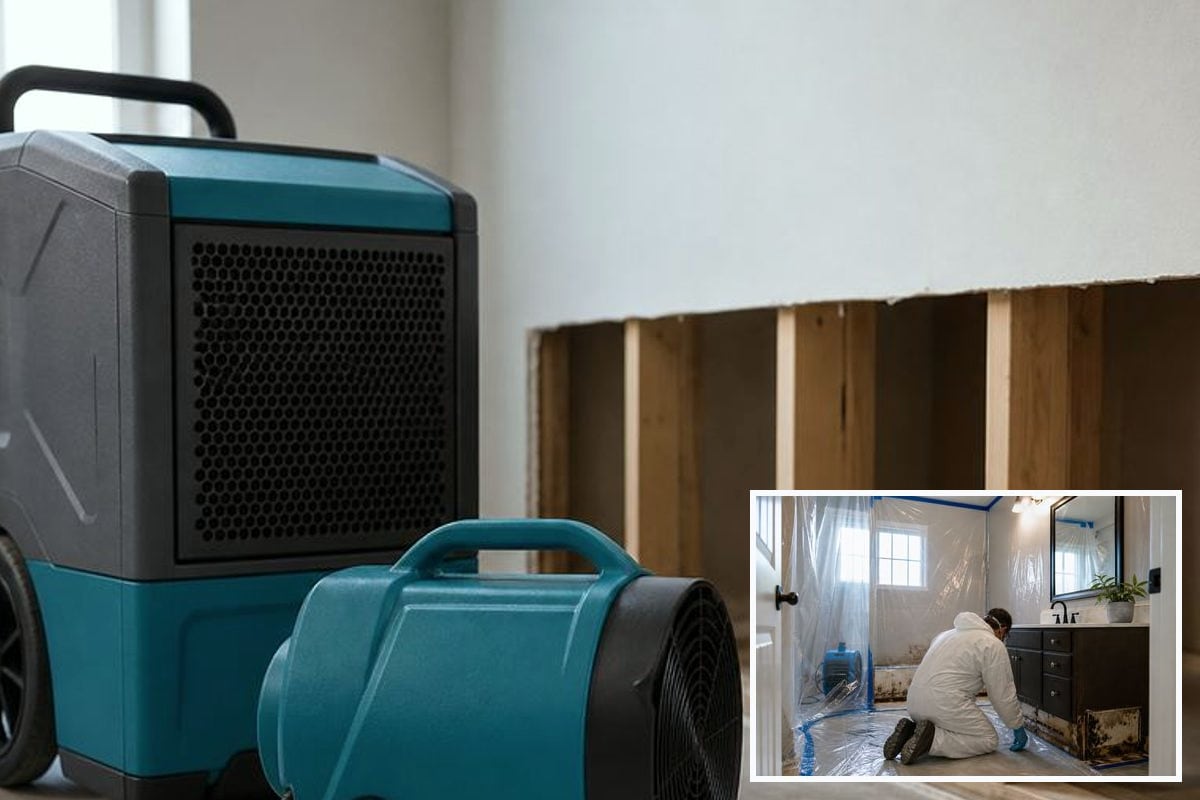
Mitigation vs. Remediation vs. Restoration: What's the Difference?
Somewhere between the moment you discover water pooling in your hallway and the moment your home looks normal again, you're probably going to hear three words used almost interchangeably by three different people: mitigation, remediation, and restoration. Your insurance adjuster might use one. Your contractor might use another. A quick web search will use all three, sometimes in the same sentence, without ever explaining how they're different.
They're not the same thing, and knowing the difference actually changes how you manage a claim, not just how you talk about it.
The Short Answer
Mitigation stops the damage from getting worse. Remediation removes hazards like mold or contamination once they're present. Restoration rebuilds the property back to its condition before the loss happened. They typically happen in that order, though not every loss requires all three.
What Is Mitigation?
Mitigation is the emergency response phase that happens immediately after damage occurs, focused entirely on preventing the situation from getting worse. It's reactive by design. Nobody schedules mitigation for next week, because the entire point is stopping active damage right now, whether that's water still spreading, a roof still open to the weather, or fire debris still smoldering risk.
What Mitigation Actually Involves (Water, Fire, Storm)
For water damage, mitigation means extracting standing water, removing unsalvageable wet materials like soaked carpet padding, and setting up drying equipment. For fire damage, it means board-up and tarping to secure the structure, plus soot and smoke containment to stop residue from spreading further. For storm damage, it often overlaps with both, securing a damaged roof while also addressing any water intrusion that came with it.
How Fast Mitigation Needs to Happen
Timing matters more here than in almost any other phase of a restoration project. Water left sitting for roughly 48 to 72 hours starts to shift from Category 1 clean water toward Category 2 contamination, and mold can begin developing in that same window under the right conditions. That's not a scare tactic, it's basic drying science, and it's the reason mitigation companies treat the first day differently than any other day of the project.
What Is Remediation?
Remediation is the process of safely removing hazardous contaminants, most commonly mold, but also including sewage contamination or other biohazards, once they've been identified on a property. Unlike mitigation, remediation isn't automatic. It only becomes necessary when a specific hazard is actually present, not for every water or fire loss.
What Remediation Actually Involves (Mold, Contaminants, Hazards)
Remediation of mold, asbestos, or other contaminants should be handled by a qualified, certified technician, since improper handling can spread contamination or create health risks rather than resolving them. The process typically involves setting up containment and negative air pressure, physically removing affected materials that can't be treated in place, applying antimicrobial treatment to surfaces that can be saved, and verifying air quality afterward. Property Damage Restoration Glossary defines negative air pressure and containment in more depth if those terms are new to you.
How Remediation Differs From Cleaning
Cleaning is scheduled, surface-level, and handles everyday dirt and grime. Remediation is triggered by a specific hazard, goes beyond the surface into affected materials, and follows safety protocols designed to prevent contamination from spreading during the process itself. A cleaning crew wiping down a countertop and a remediation crew tearing out mold-affected drywall behind that same countertop are doing fundamentally different jobs, even though both might get loosely called cleanup by someone describing the project casually.
What Is Restoration?
Restoration is the rebuilding phase that returns a property to its pre-loss condition once it's stable, dry, and free of any hazards that needed remediation. This is the phase most people picture when they imagine getting their home back, new drywall, fresh paint, replaced flooring, a kitchen that looks like nothing ever happened.
What Restoration Actually Involves (Repairs, Rebuilding)
Restoration covers everything from patching and repainting a small drywall section to full reconstruction of a room that had to be gutted down to the studs. It includes replacing flooring, cabinetry, and trim, reinstalling fixtures, and any finish work needed to bring the space back to how it looked and functioned before the loss. Cleanup vs Repair vs Reconstruction goes deeper into exactly where repair ends and full reconstruction begins.
How Long Restoration Typically Takes
Restoration timelines vary enormously depending on how much of the property was affected and whether structural work is involved. [details pending verification]. A single damaged room with only cosmetic repairs needed moves much faster than a multi-room loss that required demolition and rebuilding.
How the Three Stages Fit Together (Mitigation → Remediation → Restoration)
These three stages form a sequence, not a menu you pick from randomly. Mitigation stabilizes the property first, because nothing else can safely proceed while damage is still actively spreading. Remediation follows if a hazard was identified during or after mitigation, since it would be counterproductive to rebuild over a contamination problem. Restoration comes last, once the property is both stable and safe to work in.
| Stage | Goal | Timing | Typical Tasks | When It's Needed |
|---|---|---|---|---|
| Mitigation | Stop further damage | First 24-48 hours | Water extraction, board-up, tarping, drying setup | Every water, fire, or storm loss |
| Remediation | Remove hazards safely | After mitigation, if hazards found | Containment, HEPA filtration, mold or contaminant removal | Only when contamination or hazardous material is present |
| Restoration | Rebuild to pre-loss condition | After the property is stable and safe | Repairs, replacement, finishing work | Nearly every loss involving material damage |
Example Timeline for a Typical Water Damage Job
[details pending verification]. In general terms, a clean-water loss with no contamination and no structural damage might move from mitigation straight into a short restoration phase without any remediation step at all, while a loss involving Category 3 water or discovered mold would add a remediation phase in between.
Do You Always Need All Three?
No, you don't always need all three stages, and that's worth knowing before anyone tries to sell you a bundled package you don't actually need. A clean, quickly addressed Category 1 water leak might only require mitigation and a short restoration phase, with no remediation necessary at all since no contamination or hazardous material was ever present. Remediation only enters the picture when an actual hazard, mold growth, sewage contamination, asbestos, or similar, is identified. Being upfront about which stages your specific situation actually needs, rather than defaulting to the full sequence, is part of what a trustworthy restoration company should offer.
Frequently Asked Questions
Is mitigation the same as restoration?
No. Mitigation is the emergency response that stops damage from getting worse, extracting water, boarding up a broken window, tarping a roof. Restoration is the later phase that rebuilds and repairs the property. Mitigation typically happens within the first 24 to 48 hours, restoration can take days to weeks depending on damage scope.
What comes first: mitigation, remediation, or restoration?
Mitigation comes first because it stabilizes the property and prevents further loss. Remediation follows if contaminants like mold or sewage are present, since those hazards must be safely removed before rebuilding. Restoration is last, returning the property to its pre-loss condition once it's safe and dry.
Do I need a remediation company if I only have water damage?
Not always. If the water is clean, Category 1, and addressed quickly, mitigation and drying may be all that's needed. Remediation becomes necessary when contamination, like mold growth or sewage backup, is present and needs to be safely removed by a qualified technician.
Can one company handle mitigation, remediation, and restoration?
Many restoration companies offer all three services, which can simplify coordination and insurance documentation. [details pending verification]. Always confirm what's included in writing before work begins, especially for the transition between stages.
Why does my insurance adjuster use these three terms differently than my contractor?
Insurance policies and restoration companies don't always define these stages identically, which can cause confusion during a claim. Ask your provider to define, in writing, exactly what mitigation, remediation, and restoration cover under your specific policy and scope of work before authorizing work.
Who Handles Mitigation, Remediation, and Restoration in Greater Los Angeles
Los Angeles's mix of aging infrastructure and atmospheric-river winter storms means all three stages show up regularly here, not as rare emergencies but as a fairly routine part of owning or renting property in the region. A pre-1960s building with galvanized supply lines and an unexpected pipe failure can move through all three stages in a single claim. A renter dealing with a landlord's plumbing failure faces a different set of questions about who's responsible for which stage, which is worth raising directly with your property manager or landlord early rather than assuming.
What LA Water Damage Covers at Each Stage
[details pending verification]
Get Help Now
If you're trying to figure out which of these stages your situation actually needs, call request a callback or visit contact form for a straightforward assessment.
---