
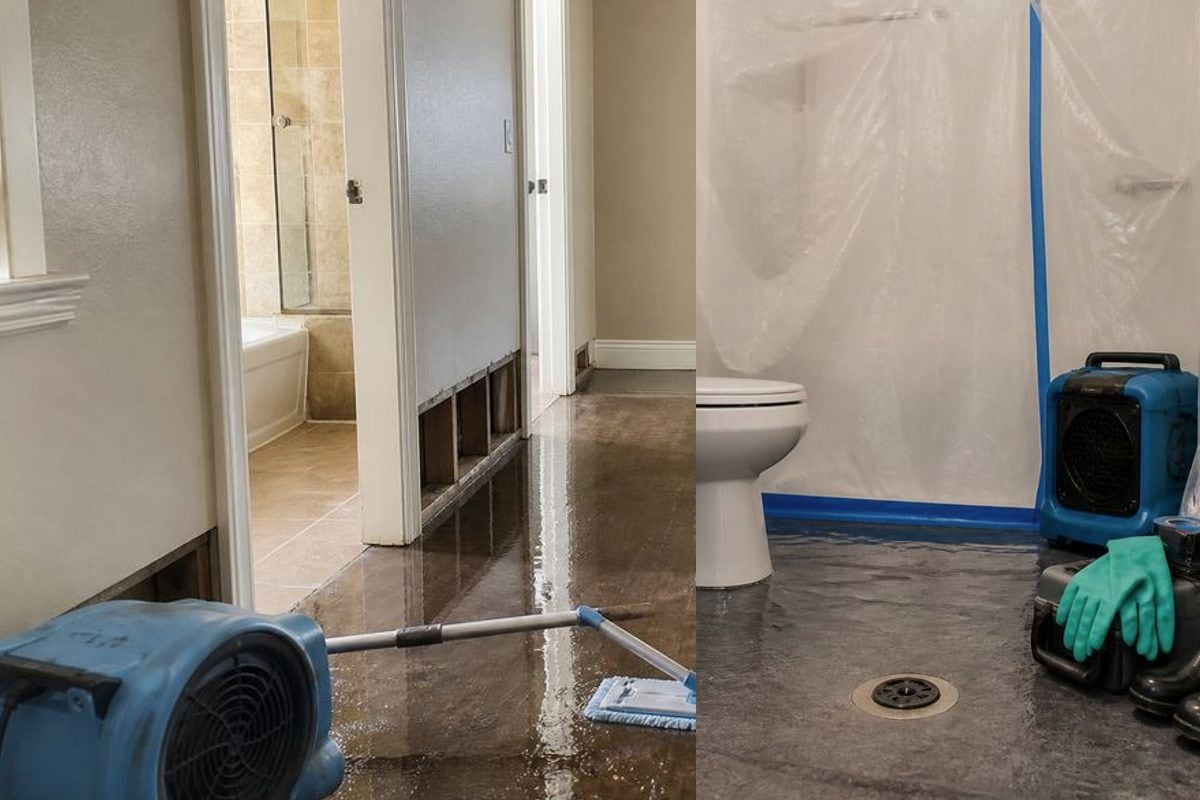
Cleanup vs. Repair vs. Reconstruction: How to Know Which One You Actually Need
Standing in a damaged room trying to figure out who to call first is one of the more disorienting moments in dealing with property damage. Do you need a cleaning service? A handyman? A general contractor? A full restoration company? The terms cleanup, repair, and reconstruction get used loosely enough that most people have no reliable way to tell which one actually matches what happened to their home.
This breaks it down clearly, with a comparison table you can use to figure out exactly where your situation falls.
The Short Answer
Cleanup handles surface-level mess with no structural damage. Repair fixes a specific, localized problem. Reconstruction rebuilds entire sections of a property that are damaged beyond repair. The right call depends almost entirely on how deep the damage actually goes, not how big the mess looks on the surface.
What Is Cleanup?
Cleanup is the removal of dirt, debris, and surface-level mess without addressing any underlying structural or material damage. It's the lightest-touch category of the three, appropriate when nothing beneath the surface actually needs to be fixed or replaced.
When Cleanup Alone Is Enough
Cleanup alone is enough for situations like a minor appliance overflow that was caught quickly, light soot residue from a small kitchen fire that never spread, or general post-construction dust and debris removal. If moisture never got into subfloors or wall cavities, and nothing was structurally compromised, cleanup may genuinely be the whole job. The mistake to avoid is assuming a mess looks minor just because it's dry on the surface, when moisture has already traveled somewhere you can't see.
What Is Repair?
Repair is the fix for a specific, localized problem, a patch of drywall, a leaking pipe fitting, a section of damaged flooring, without requiring demolition of surrounding structural elements. Repair work stays contained to the actual damaged area rather than expanding into a full room or system replacement.
When Repair Is Enough
Repair is enough when the damage is limited to a small, well-defined area and the surrounding materials are structurally sound and dry. A cracked section of drywall from a slow, quickly caught leak is a repair. A few water-stained ceiling tiles from a one-time roof leak that's since been fixed is a repair.
How Repair Differs From Restoration
Repair fixes an isolated problem. Restoration is the more comprehensive process of returning an entire affected space, sometimes an entire property, back to its pre-loss condition after a significant loss, and it may include multiple repairs as part of a larger, coordinated project. Mitigation vs Remediation vs Restoration explains how restoration fits into the broader mitigation-to-rebuild sequence.
What Is Reconstruction?
Reconstruction is the rebuilding of entire sections of a property that are too extensively damaged to repair, involving demolition, structural work, and full system replacement rather than patching. It's the most intensive of the three categories and the one most likely to require permits and inspections.
When Reconstruction Is Required
Reconstruction following structural damage should only proceed after a qualified inspector confirms the building is structurally safe to work in. Reconstruction becomes necessary when framing, subflooring, or load-bearing elements have been compromised, or when materials have been saturated or burned long enough that they're unsalvageable rather than simply damaged. If more than a small, contained area is affected, reconstruction is usually the more durable path even when a partial repair looks technically possible in the short term.
Building Codes and Permits
Reconstruction work typically triggers building code and permit requirements that repair work often doesn't, since you're rebuilding structural elements rather than patching existing ones. [details pending verification]. Skipping permits on structural reconstruction isn't just a compliance risk, it can also create problems later when you sell the property or file a future insurance claim.
Where Remediation and Restoration Fit In
Cleanup, repair, and reconstruction describe the physical scope of work. Remediation and restoration describe two additional processes that often run alongside or before them, and understanding how all five terms relate to each other is where most confusion actually starts.
Remediation (Hazard Removal)
Remediation is the safe removal of hazardous contaminants, most often mold, sometimes asbestos or sewage contamination, that must happen before repair or reconstruction can safely proceed. Property Damage Restoration Glossary defines remediation and its related terms in full.
Restoration (Comprehensive Recovery)
Restoration is the umbrella term for the full recovery process, often encompassing repair and reconstruction work together, aimed at returning a property comprehensively to its pre-loss condition rather than fixing one isolated element.
Key Differences at a Glance
| Term | Scope | Typical Cost Range | Timeline | Who to Call |
|---|---|---|---|---|
| Cleanup | Surface-level mess, no structural damage | [details pending verification] | Hours to 1-2 days | Cleaning company |
| Repair | Isolated, localized fix | [details pending verification] | Days | Handyman or general contractor |
| Remediation | Hazard containment and removal | [details pending verification] | Days to about a week | Certified remediation technician |
| Reconstruction | Full rebuild of damaged sections | [details pending verification] | Weeks to months | Disaster restoration company or general contractor |
| Restoration | Comprehensive recovery to pre-loss condition | [details pending verification] | Days to months | Disaster restoration company |
Who Should You Actually Call? A Decision Framework
The right call depends on scope, contamination, and structural involvement, not on how dramatic the damage looks. Use this simple framework before picking up the phone.
Cleaning Company
Call a cleaning company when there's no structural damage, no hidden moisture, and no contamination, just surface mess that needs to be removed. If you're not sure whether moisture got into a wall cavity or subfloor, that uncertainty itself is a sign to call a restoration company instead for an assessment, since a cleaning company generally isn't equipped to check.
General Contractor
Call a general contractor for isolated repair or reconstruction work where there's no active emergency, no ongoing contamination risk, and no need for the specialized drying or hazard-containment equipment a restoration company brings. A scheduled bathroom remodel is a general contractor job. An active pipe burst usually isn't.
Disaster Restoration Company
Call a disaster restoration company for anything involving an active water, fire, or storm event, any suspected contamination or mold, or any situation where you're not sure how far the damage actually extends. Restoration companies bring the assessment tools, moisture meters and mapping, that tell you definitively whether you're looking at a repair or a reconstruction before you commit to either path.
Cost and Timeline Considerations
Money concerns deserve to be addressed head-on rather than avoided, especially when you're staring down a decision between a cheaper repair and a more expensive reconstruction. [details pending verification]. In general, reconstruction costs substantially more than repair because of the demolition, structural materials, and code-driven requirements involved, but attempting a repair on damage that actually needs reconstruction can end up costing more in the long run if the underlying problem, hidden moisture or compromised framing, resurfaces later. Insurance coverage also varies by scope, and reconstruction often triggers different documentation requirements than a simple repair claim.
Frequently Asked Questions
What's the difference between repair and reconstruction?
Repair fixes a specific, localized problem, a patch of drywall, a leaking pipe fitting. Reconstruction rebuilds entire sections of a property that are beyond repair, involving demolition, structural work, and full system replacement. If more than a small area is compromised, reconstruction is usually the safer, more durable path.
Is a cleaning company enough after water damage?
Only for very minor, non-structural incidents. Cleaning companies handle surface sanitation on a scheduled basis but generally aren't equipped for emergency contamination handling, moisture behind walls, or structural drying. For anything beyond a small, contained spill, a licensed restoration company is the safer choice.
Can restoration prevent future mold growth?
Proper restoration includes thorough drying and moisture verification, which significantly reduces mold risk compared to a surface-level repair. However, no process eliminates risk entirely if hidden moisture is missed. Ask your provider how they verify moisture levels are fully resolved before closing out a job.
Does insurance cover reconstruction the same way it covers repair?
Coverage varies significantly by policy and cause of loss. Reconstruction, being more extensive, often triggers different claim documentation requirements than a simple repair. [details pending verification].
How do I know if I need full reconstruction instead of restoration?
If the structural integrity of framing, subflooring, or load-bearing elements is compromised, or if materials have been saturated long enough to be unsalvageable, reconstruction is typically required. A qualified inspector should assess structural safety before any rebuild work begins.
Can I live in my home during repair or restoration work?
It depends on the scope and location of the work. Minor repairs often don't require you to leave. Larger restoration or reconstruction projects, especially those involving contamination, structural work, or utility shutoffs, may require temporary relocation. [details pending verification].
Getting the Right Help in Greater Los Angeles
Los Angeles's older housing stock, much of it built before 1960 with original clay pipe, cast iron, or galvanized supply lines, means the line between repair and reconstruction gets crossed more often here than in newer construction. A leak that would be a simple repair in a modern building can reveal decades of hidden corrosion or prior water intrusion once a wall is opened, turning what looked like a small job into something larger. Getting an honest assessment upfront, rather than a repair estimate for a problem that actually needs reconstruction, protects both your budget and your timeline.
What LA Water Damage Covers
[details pending verification]
Get Help Now
If you're not sure whether your situation calls for cleanup, repair, or full reconstruction, call request a callback or visit contact form for an assessment.
---