
Commercial Fire Recovery and Business Continuity in Los Angeles
A fire at your business is never just a property problem. It is a revenue problem, a staffing problem, and often a tenant or customer trust problem all at once. Commercial fire recovery in Los Angeles has to solve for all four at the same time, which is why it looks nothing like a residential cleanup job.
This guide walks through how commercial fire recovery actually works, what makes it different from a house fire, and how business owners and property managers in Greater Los Angeles can keep operating, or reopen faster, while the work happens around them.
What Makes Commercial Fire Recovery Different From Residential Restoration?
Commercial fire recovery differs from residential restoration mainly because of business interruption pressure, multiple stakeholders, and larger, more complex facilities. A homeowner mainly needs their house made livable again. A business needs to keep generating revenue, protect its employees and tenants, and often meet code requirements before it can legally reopen its doors.
Business Interruption and Revenue Risk
Every day a commercial space stays closed is a day of lost income, payroll obligations that don't pause, and customers who may go elsewhere. Business interruption insurance can offset some of this, but only if the claim is well documented from day one. Fire Damage Insurance Claim Documentation Guide covers how to build that documentation properly.
Multiple Stakeholders (Owners, Tenants, Employees, Customers)
A single commercial fire can affect a property owner, several tenants, dozens of employees, and a customer base that needs to know what's happening. Coordinating restoration work across all of them takes more planning than a residential job, where the household is usually the only party involved.
Complex Facility, Equipment and Inventory Requirements
Commercial buildings often contain specialized equipment, inventory, and systems that residential fires never touch, from commercial kitchen equipment to server rooms to warehouse racking. Assessing and restoring that equipment requires different expertise than drying out a living room.
The Commercial Fire Recovery Process, Step by Step
Commercial fire recovery generally moves through emergency response, damage assessment, smoke and soot remediation, water mitigation from firefighting efforts, and finally structural drying, demolition and reconstruction. The exact order can shift depending on the severity of the fire and what parts of the building are safe to enter.
- Emergency response and securing the property. Once the fire department clears the site, the first priority is boarding up openings, tarping damaged roof sections, and controlling access to prevent further loss or safety hazards. For emergency response, Contact LA Water Damage as soon as the property is cleared for entry, with a typical response window of [details pending verification].
- Damage assessment and scope documentation. Technicians walk the entire affected area, documenting structural damage, smoke penetration, and water intrusion. This assessment becomes the foundation for both the restoration plan and the insurance claim.
- Smoke, soot and odor remediation at commercial scale. Commercial buildings often have larger HVAC systems, more square footage, and more porous materials like carpet and acoustic ceiling tile that trap smoke odor. Remediation at this scale usually requires industrial air scrubbers, thermal fogging, and sometimes duct cleaning throughout the affected zones.
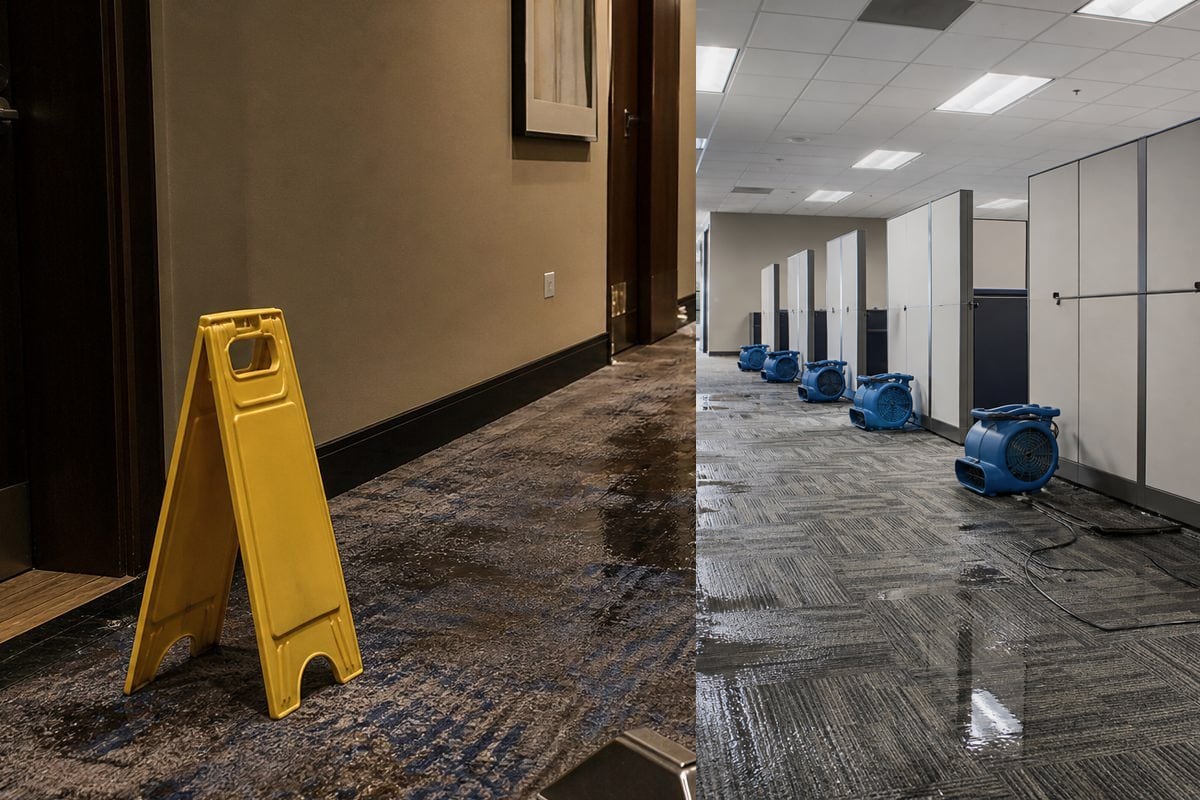
- Water damage from fire suppression efforts. Fighting a commercial fire often means large volumes of water hitting multiple floors. This water needs to be extracted and the structure dried quickly to prevent mold growth, which can start within 24 to 48 hours in warm, humid conditions. Cleaning, Restoration and Reconstruction After a Fire explains the drying process in more depth.
- Structural drying, demolition and reconstruction. Once the space is dry and stable, crews remove unsalvageable materials and begin rebuilding damaged structural elements, working toward a space that meets current building and fire code.
Request emergency response by contacting LA Water Damage at request a callback or contact form.
How Long Does Commercial Fire Recovery Take?
Commercial fire recovery timelines vary widely based on the size of the property, the severity of the fire, and how much reconstruction is required, so there is no single standard timeframe. A contained fire affecting one storage room might be remediated in a matter of weeks. A fire that compromises structural elements across an entire floor can take several months from assessment through final reconstruction.
Factors that affect the timeline include the extent of smoke and water damage, permitting requirements, availability of specialty materials, and whether the business needs a phased reopening plan built into the schedule. A restoration provider can give a project-specific estimate only after an on-site assessment, since no two commercial fires produce the same scope of damage.
Industries We Restore After a Fire
LA Water Damage restores commercial properties across multiple industries, each with its own compliance requirements and operational pressures. A restaurant kitchen fire and a hotel guest-room fire both need fire and smoke remediation, but the health code, life-safety, and reopening requirements are entirely different.
Multifamily and Apartment Communities
Apartment fires often affect multiple units and shared systems like hallway HVAC or fire suppression lines. Recovery has to account for displaced tenants and California's renter-heavy housing market, where many residents have limited alternative housing options nearby.
Hotels and Hospitality Properties
Guest safety, brand reputation, and continued operations in unaffected wings all factor into a hotel fire recovery plan. Phased restoration by floor or wing is common so the property can keep welcoming guests in unaffected areas.
Restaurants and Food Service
Kitchen fires bring health department involvement in addition to fire and building inspections. Equipment, ventilation hoods, and food storage areas all need assessment before a restaurant can legally reopen.
Healthcare Facilities
Healthcare properties require infection-control protocols during restoration, not just structural repair. Work often has to be sequenced around patient care areas that remain in operation.
Schools and Educational Facilities
School fire recovery is typically scheduled around the academic calendar where possible, with extra attention to air quality testing before students and staff return.
Retail Locations
Retail fires bring inventory loss on top of structural damage, and many retailers want a fast, safe path back to being open for customers during peak sales periods.
Warehouses and Industrial Facilities
Large open floor plans, racking systems, and stored inventory make warehouse fires logistically complex, often requiring coordination with insurance adjusters on inventory valuation.
Offices and Commercial Buildings
Office fires often center on smoke and odor remediation more than structural rebuild, since fires in office settings are frequently contained before spreading widely.
Get help now for any of these property types at request a callback.
Inventory, Contents and Equipment Recovery
Recovering commercial contents after a fire starts with a full inventory of what was damaged, followed by an assessment of what can be cleaned, restored or must be replaced. This matters financially, since restoring salvageable inventory and equipment is almost always less expensive than full replacement.
Inventory Assessment and Documentation
Every damaged item should be logged with a description, condition, and estimated value before anything is discarded. This documentation supports the insurance claim and helps prioritize what to restore first.
Equipment and Machinery Restoration
Specialized equipment, from commercial kitchen appliances to manufacturing machinery, often needs technical cleaning to remove corrosive soot residue before it's usable again. Not every piece of equipment can be saved, and an honest assessment upfront prevents wasted time on items that need replacement.
Document and Records Recovery
Paper records, files, and sometimes electronic media can be damaged by both fire and firefighting water. Specialized drying and cleaning techniques can recover some of these materials, though success varies by material type and exposure.
A basic contents checklist to start with:
- Photograph everything before it's moved or discarded
- Separate salvageable items from total losses
- Keep receipts or records of item value where available
- Note which items need specialized restoration versus standard cleaning
Insurance and Documentation for Commercial Fire Claims
Commercial fire insurance claims typically involve property coverage, business interruption coverage, and sometimes equipment breakdown coverage, each with its own documentation requirements. Understanding which policies apply to your loss is the first step toward an accurate claim.
Types of Commercial Policies Involved
Most commercial property policies cover the physical structure and contents. Business interruption coverage, if included, can help offset lost income during closure. Some businesses also carry equipment breakdown or specialty inventory coverage that applies separately.
Documentation Insurers Require
Insurers generally want photo and video documentation, an itemized contents inventory, financial records showing lost revenue, and a professional damage assessment. Fire Damage Insurance Claim Documentation Guide covers exactly what to gather and how to organize it.
Working With Adjusters and Public Adjusters
Your insurer's adjuster will inspect the property and evaluate the claim. For larger or more complex commercial losses, some property owners choose to hire a licensed public adjuster to help document damage and negotiate with the insurer. This is a decision to make with your insurance and legal advisors based on claim size and complexity. Talk to our team before your adjuster visit so your documentation is thorough from the start.
Maintaining Business Continuity During Restoration
Keeping a business running during fire restoration usually depends on how much of the property was affected and whether operational areas can be separated from the damaged zone. A well-planned continuity strategy can mean the difference between a temporary slowdown and a prolonged closure.
Temporary Location and Relocation Options
Depending on the industry, some businesses can operate from a temporary location or a scaled-down version of their space while restoration continues. This works best when planned early, in coordination with your restoration provider's timeline.
Phased Reopening Strategies
Restoration teams can often set up work plans so unaffected sections reopen first while remediation continues elsewhere. This requires clear boundaries between work zones and living or operating zones, with attention to air quality and safety in occupied areas.
Considerations for phased reopening:
- Which areas are structurally and environmentally safe to occupy
- How to physically separate work zones from operating zones
- Whether life-safety systems are functional in reopened areas
- Communication plans so customers and employees know what to expect
Communicating With Employees, Tenants and Customers
Clear, honest updates about the timeline and what's happening reduce anxiety and protect trust. This matters especially for tenants and employees who depend on the property for income or housing.
Regulatory, Permit and Compliance Considerations in Los Angeles
Rebuilding after a commercial fire in Los Angeles generally requires permits from the local building and safety department, along with fire and possibly health department inspections depending on the business type. Skipping this step risks having to redo work or delaying your reopening further.
Building Permits and Inspections
Structural repairs and reconstruction typically require permits and inspections before a certificate of occupancy can be reissued. [details pending verification] — confirm exact permitting requirements with the relevant Los Angeles authority for your property and business type.
Industry-Specific Health and Fire Code Requirements
Restaurants, healthcare facilities, and schools often face additional inspections tied to their industry, beyond standard building permits. Planning for these requirements early avoids surprises late in the reconstruction timeline.
Fire Prevention Upgrades During Reconstruction
Reconstruction is often a natural point to upgrade fire suppression systems, alarms, or fire-rated materials to current code standards, which can also help with future insurance terms.
Frequently Asked Questions About Commercial Fire Recovery
How is commercial fire restoration different from residential fire cleanup?
Commercial fire restoration deals with larger structures, specialized equipment, multiple stakeholders, and business interruption pressure that residential jobs don't have. Crews often coordinate with property managers, insurers and multiple tenants at once, and reconstruction may need to meet commercial building and health codes before a business can legally reopen.
Can my business stay open during fire restoration?
Sometimes. It depends on how much of the property was affected and whether the operational areas are separate from the damaged zone. Restoration teams can often set up phased work plans so unaffected sections reopen first while remediation continues elsewhere, but a full closure may be required for extensive structural or smoke damage.
Who pays for commercial fire damage restoration?
This is typically handled through your commercial property insurance policy, though coverage details vary by policy type and endorsement. Document everything and work with your adjuster early. For exact coverage and cost guidance, confirm details directly [details pending verification].
What industries need specialized commercial fire restoration?
Multifamily buildings, hotels, restaurants, healthcare facilities, schools, retail stores, warehouses and offices each have distinct restoration needs, from health-code compliance in restaurants to infection-control protocols in healthcare settings. A restoration provider experienced across these verticals can plan the right approach for your property type.
How soon should I call a restoration company after a commercial fire?
Contact a restoration provider as soon as the fire department clears the property for entry. Early mitigation limits secondary damage from smoke, soot and firefighting water. For emergency response, contact LA Water Damage at request a callback.
Do I need a public adjuster for a commercial fire claim?
Not always, but for larger or more complex commercial losses many property owners choose to hire a licensed public adjuster to help document damage and negotiate with the insurer. Whether it's worth it depends on the claim size and complexity, a decision to make with your insurance and legal advisors.
What permits are needed to rebuild after a commercial fire in Los Angeles?
Reconstruction after a fire typically requires permits from the local building and safety department, and may involve fire, health or industry-specific inspections depending on your business type. [details pending verification] — confirm exact permitting requirements with the relevant Los Angeles authority for your property.
How long does commercial fire restoration typically take?
Timelines vary widely based on the size of the property, severity of damage, and scope of reconstruction needed. Minor smoke damage may take days to remediate, while major structural fires can take months to fully rebuild. A restoration provider can give you a project-specific estimate after an on-site assessment.
Why Los Angeles Businesses Choose LA Water Damage for Commercial Fire Recovery
Greater Los Angeles is home to a dense mix of multifamily housing, a busy hospitality corridor, and a wide range of retail and industrial properties, each with different restoration needs. Understanding those differences matters when a fire puts your business on hold.
LA Water Damage works with commercial property owners, managers, and tenants across Greater Los Angeles to assess damage honestly, document it thoroughly for insurance purposes, and plan a path back to operating that fits your specific property. Our team holds [details pending verification] and coordinates directly with adjusters, contractors, and property managers throughout the process.
If your business has experienced fire damage, contact LA Water Damage at request a callback or contact form to schedule an assessment and start building your recovery plan.
---