
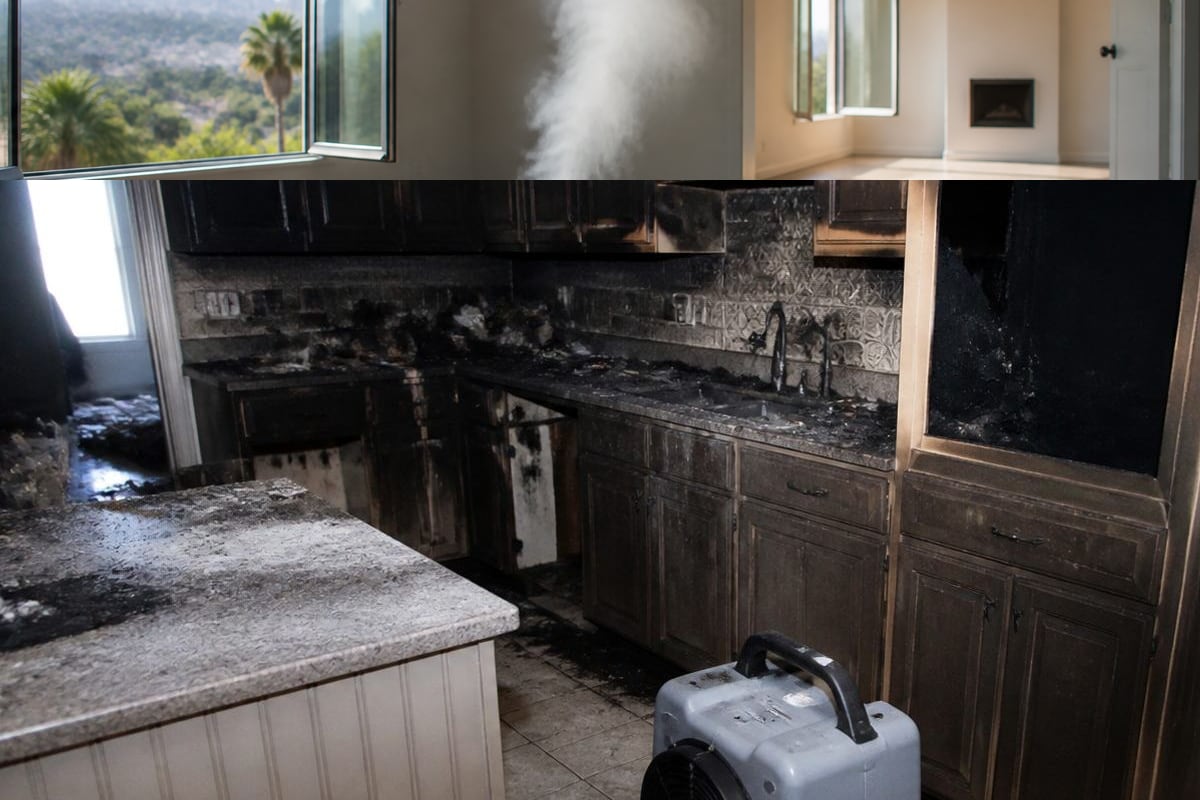
Smoke Damage vs. Soot Damage: What's the Difference and Why It Matters
After a fire, people often use "smoke damage" and "soot damage" as if they're the same thing. They're related, but they're not identical, and mixing them up leads to cleanup mistakes that can make the problem worse instead of better.
This guide separates the two clearly: what each one actually is, how they differ in cause and health risk, and why professional cleaning treats them differently.
What Is Smoke Damage?
Smoke damage is the discoloration, odor, and residue left behind when airborne smoke particles settle onto and penetrate surfaces, fabrics, and building materials. It can extend well beyond the room where a fire occurred, carried through HVAC systems and air currents into parts of a home that never saw flame.
Smoke damage is often invisible at first glance. A room can smell strongly of smoke with no obvious staining, because the particles have embedded into porous materials rather than sitting visibly on a surface.
What Is Soot Damage?
Soot damage refers to the black, carbon-based residue left on surfaces by incomplete combustion during a fire. It's typically visible, greasy or powdery depending on the fire type, and can be mildly to significantly acidic depending on what burned.
Because soot can be acidic and may carry harmful particulates, direct skin contact and inhalation should be avoided, and protective gloves and a mask are recommended before handling soot-covered surfaces.
Key Differences Between Smoke Damage and Soot Damage
Smoke damage and soot damage differ in cause, visibility, corrosiveness, and the cleaning method each requires, even though both come from the same fire. Understanding these differences is the first step toward cleaning either one correctly.
Cause and Source
Smoke damage comes from airborne particles and gases produced during combustion, spreading through air movement. Soot damage comes from the physical carbon particles deposited directly onto surfaces near and within the path of the fire.
Visibility and Location
Soot is typically visible as black or gray residue concentrated near the fire's origin and along airflow paths. Smoke damage can be far less visible, showing up as faint discoloration or persistent odor in rooms with no direct soot deposits at all.
Health Risk Profile
Both carry health risks, but they differ slightly. Soot's physical particulates pose direct skin and respiratory irritation risks on contact. Smoke's risk comes more from lingering airborne particulates and trapped odor compounds that continue affecting indoor air quality after the fire is out.
Cleaning Method Required
Soot generally requires careful physical removal, often starting with dry cleaning methods before any wet cleaning, since introducing moisture too early can smear soot deeper into a surface. Smoke damage cleanup focuses more on odor neutralization, air scrubbing, and treating porous materials that have absorbed smoke particles.
| Factor | Smoke Damage | Soot Damage |
|---|---|---|
| Cause | Airborne particles and gases | Carbon residue from combustion |
| Visibility | Often subtle or hidden | Usually visible, black or gray |
| Spreads via | HVAC systems, air currents | Direct deposit, airflow paths |
| Primary risk | Trapped odor, air quality | Skin and respiratory contact |
| Cleaning focus | Odor removal, air scrubbing | Careful physical residue removal |
Types of Smoke Damage and Residue
Smoke residue isn't one uniform substance. It generally falls into a few recognized categories based on how the fire burned and what materials were involved.
Dry Smoke Residue
Dry smoke comes from fast-burning, high-heat fires, often involving paper or wood. It leaves a powdery residue that's comparatively easier to wipe away, though it can still be widespread.
Wet Smoke Residue
Wet smoke comes from slower, smoldering fires burning at lower temperatures, often involving plastics or synthetic materials. It leaves a sticky, smearing residue with a stronger odor that's more difficult to clean.
Protein Residue Smoke
Protein residue smoke typically comes from kitchen or grease fires. It's often nearly invisible, leaving a thin, greasy film, but it carries a notably strong and persistent odor relative to how little residue is actually visible.
Types of Smoke Residue and Why Cleaning Methods Differ covers all four residue types in much greater depth, including a fourth category tied to fuel and fireplace sources.
Health Risks of Smoke and Soot Exposure
Smoke and soot exposure both carry respiratory and skin irritation risks, and neither should be handled without protective equipment. Anyone in a fire-affected building should avoid re-entry until fire officials confirm it's safe.
Short-Term Health Effects
Respiratory irritation, coughing, headaches, and skin irritation are common short-term effects of smoke and soot exposure. These effects tend to be strongest in the immediate aftermath, before ventilation and cleanup have occurred.
Special Risks for Children, Elderly, and Pets
Children, elderly individuals, and pets can be more sensitive to smoke and soot exposure due to smaller lung capacity, existing health conditions, or closer proximity to floor-level residue. Extra caution, including limiting their presence during active cleanup, is a reasonable precaution.
How Professionals Clean Smoke and Soot Damage
Professional smoke and soot cleaning follows an inspection-first approach, using containment, air scrubbing, targeted surface cleaning, and dedicated odor removal to address both the visible residue and the trapped particles that caused it.
Inspection and Damage Assessment
A technician assesses the type of residue present, the extent of spread, and which materials and areas are affected before choosing a cleaning method. This step prevents wasted effort on the wrong technique.
Containment and Air Scrubbing
Containment barriers limit further spread of soot and smoke particles during active cleanup, while air scrubbers with HEPA filtration reduce airborne particulates in the space.
Surface and Structural Cleaning
Surfaces are cleaned using methods matched to the residue type, often starting with dry sponges for soot before any wet cleaning agents are introduced, to avoid smearing residue deeper into the material.
Odor Removal
Trapped smoke odor is treated using specialized equipment, which may include thermal fogging or ozone treatment in enclosed, unoccupied spaces, targeting odor compounds embedded in porous materials rather than just masking the smell.
How Fire Damage Restoration Works places this cleaning process in the context of the full fire restoration timeline.
Why DIY Smoke and Soot Cleaning Often Falls Short
DIY smoke and soot cleaning often falls short because incorrect techniques can smear residue deeper into surfaces or fail to address odor trapped in places you can't see, like HVAC ductwork and wall cavities. This isn't about scaring homeowners away from any cleanup at all.
Minor, easily accessible soot on hard, non-porous surfaces can often be handled at home with the right protective gear. The trouble comes with anything beyond that. Wiping soot with a wet cloth before you understand the residue type frequently smears rather than removes it. And odor that's embedded in fabric, drywall, or ductwork tends to persist no matter how much surface cleaning happens, because the source of the smell was never actually removed.
Preventing Future Smoke and Soot Damage
A few practical habits reduce the risk of significant smoke and soot damage in the first place, or limit how far it spreads if a fire does occur.
- Install and regularly test smoke detectors in every bedroom and common area.
- Keep HVAC filters clean and systems well maintained to limit smoke circulation if a fire starts.
- Store flammable materials away from heat sources and electrical panels.
- Keep a working fire extinguisher accessible and know how to use it.
- Have chimneys and fireplaces inspected annually if you use them regularly.
Frequently Asked Questions About Smoke and Soot Damage
Can there be smoke damage without soot damage?
Yes. Smoke can spread odor and fine residue into a space even when visible soot deposits are minimal, particularly with certain types of smoldering or synthetic-material fires. This is why professional assessment often uncovers hidden smoke damage that isn't obvious to the eye.
Is soot dangerous to touch or breathe?
Soot can contain fine particulates and, depending on what burned, potentially harmful residues. Avoid direct skin contact and breathing in soot or ash where possible, and use protective gloves and a mask if you must be near it before professional cleanup begins.
Can I clean smoke or soot damage myself?
Minor, surface-level soot on non-porous, easily accessible surfaces may be manageable with proper protective gear. However, smoke residue often penetrates HVAC systems, fabrics, and wall cavities in ways that are difficult to fully clean without professional equipment, and improper cleaning can spread or worsen the damage.
What's the difference between wet smoke and dry smoke residue?
Dry smoke typically results from fast-burning, high-heat fires and leaves a powdery residue that's easier to wipe away. Wet smoke comes from slower, smoldering fires at lower temperatures and leaves a sticky, smearing residue that's harder to clean and often has a stronger odor.
Does homeowners insurance cover smoke and soot damage cleanup?
Coverage varies by policy and insurer. Most standard homeowners policies include some fire-related damage coverage, but the specifics of what's covered and any exclusions depend on your individual policy. Confirm your coverage directly with your insurance provider.
Will the smoke smell go away on its own?
Smoke odor often lingers because smoke particles embed in porous materials, fabrics, and HVAC systems rather than sitting only on visible surfaces. Without proper odor-removal treatment, the smell can persist for a long time or return in humid conditions.
How long does it take to remove smoke and soot damage?
Timeline depends on the extent of the damage, the materials affected, and whether HVAC systems were contaminated. A professional inspection is the most reliable way to get an accurate estimate for your property.
Get Professional Smoke and Soot Damage Cleanup in Los Angeles
Smoke and soot damage rarely stay confined to where the fire happened, which is exactly why a professional assessment matters. LA Water Damage helps homeowners across Greater Los Angeles identify the full extent of smoke and soot damage and clean it using methods matched to the residue involved.
Call request a callback or visit contact form to get started.
---