
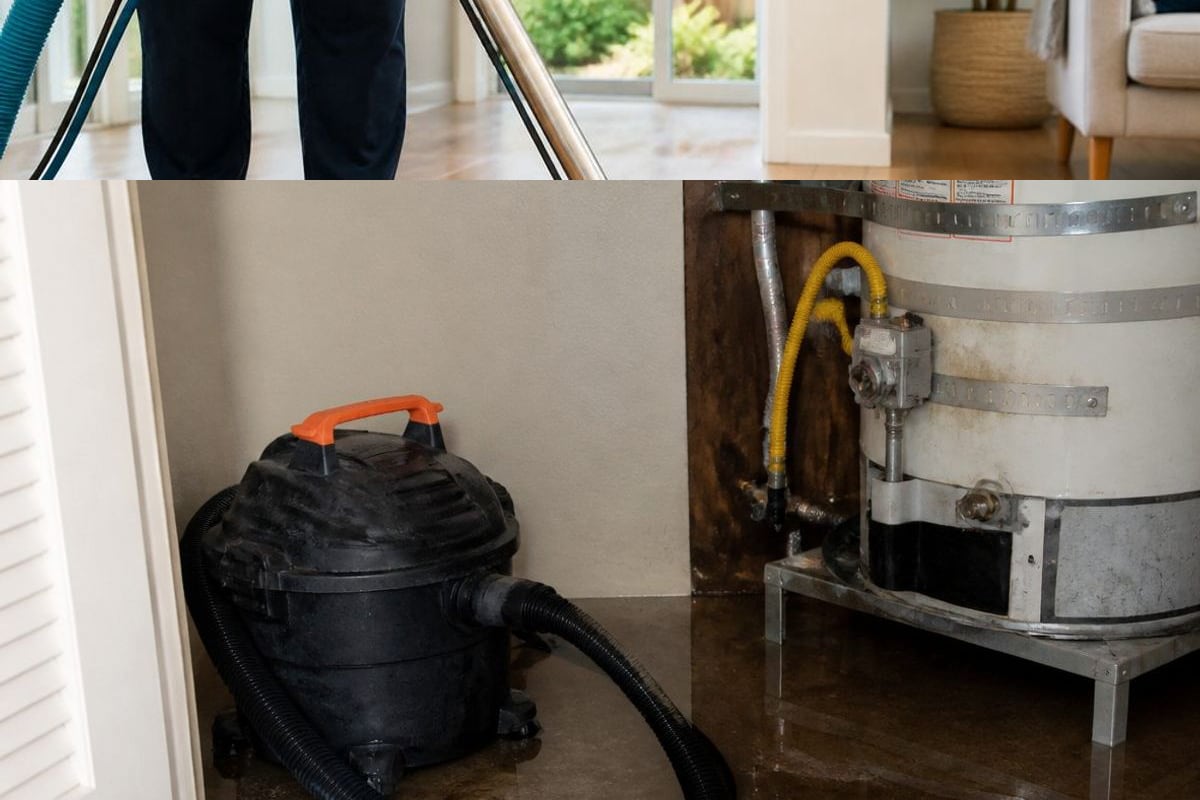
Water damage after firefighting happens because putting out a fire almost always means introducing large amounts of water into a structure that also just suffered heat and smoke damage. It's an unavoidable tradeoff. Firefighters need enough water to fully extinguish a blaze, and that water goes wherever gravity and the building's structure take it, often reaching rooms and floors the fire itself never touched.
For homeowners, this means the work isn't over once the fire is out. What follows is a second, quieter form of damage that needs its own response, usually within the same timeline urgency as the fire itself.
Why Firefighting Efforts Cause Water Damage
Firefighting causes water damage because hoses and, in some buildings, sprinkler systems release far more water than a typical household plumbing leak, and that water spreads by gravity into areas the fire never reached. A fire on an upper floor can soak the ceiling, walls, and flooring of the level below it, even in rooms with no visible fire or smoke damage.
Sprinkler systems, where present, add another layer, since a single activated sprinkler head can run continuously until firefighters shut off the system, not just until the fire is out.
How Much Water Firefighting Uses
The exact volume varies enormously based on fire size, building type, and how long suppression takes, so there's no single figure that applies to every fire. What matters practically is that the water volume is typically large enough to fully saturate flooring, subfloor, and lower wall cavities, not just leave surface dampness.
Common Water-Damage Scenarios After a Fire
The most frequent patterns include water pooling on floors and seeping into subflooring, water traveling down through ceilings into rooms on lower levels, and water trapped inside wall cavities where it isn't visible without moisture-detection equipment. In multi-unit buildings common throughout Greater Los Angeles, water damage can also spread to neighboring units below or beside the unit where the fire occurred.
The Mold Risk From Firefighting Water
Firefighting water creates real mold risk because it leaves behind the moisture and organic material mold needs to grow, and that growth can begin within one to two days under favorable conditions. This is one of the most time-sensitive parts of post-fire recovery, since mold doesn't wait for insurance paperwork or contractor availability.
How Quickly Mold Can Start Growing
Mold spores are present in essentially all indoor environments already. They only need moisture, a food source like drywall paper or wood, and time to start colonizing, and that combination can come together within a day or two after water exposure in a warm environment. This is why prompt extraction and drying matter as much as the fire cleanup itself.
Where Moisture Hides After a Fire
Moisture from firefighting water tends to hide in places that look dry on the surface, including:
- Inside wall cavities behind drywall
- Under flooring and inside subfloor material
- Inside insulation, which can hold water for a long time without visibly showing it
- Behind baseboards and around window and door frames
Structural and Electrical Risks
Combined fire and water damage raises real structural and electrical safety concerns, since heat-weakened materials combined with water saturation can compromise a building's integrity faster than either issue alone. This isn't a category of damage where a visual glance is enough to confirm safety.
Structural Weakening From Water and Heat
Heat can already weaken wood framing, drywall, and other structural materials before water ever arrives. Add water saturation on top of that heat damage, and materials that might have held up fine after either issue alone can fail under the combined stress. Sagging ceilings, warped flooring, and softened framing are all signs that a structural assessment is needed before normal use resumes.
Electrical System Risks
Electrical systems exposed to both fire and firefighting water carry a compounded hazard. Water can reach wiring, panels, and outlets that heat already damaged, creating conditions for a hidden short or fire risk that isn't visible from the outside. Electrical systems in a fire-and-water-affected property should be inspected and cleared by a licensed electrician before anyone re-energizes or uses them, the same safety principle that applies to any electrical fire scenario. Electrical Fire Damage Restoration Considerations
Health Risks From Post-Fire Moisture and Mold
Post-fire moisture and mold can create respiratory and allergy-related health risks for anyone spending time in the affected space before it's properly dried and treated. This is general health information, not a diagnosis, and anyone with existing respiratory conditions should be especially cautious.
Common concerns include:
- Irritation to eyes, nose, and throat from mold spores and mildew odor
- Worsened symptoms for people with asthma or other respiratory conditions
- Allergic reactions in sensitive individuals
- General indoor air quality decline the longer moisture goes unaddressed
The Restoration Process for Combined Fire and Water Damage
Restoring a property with combined fire and water damage generally follows five coordinated stages: safety assessment, water extraction and drying, smoke and soot removal, structural repair, and ongoing mold prevention. Handling both types of damage together, rather than treating them as separate projects, is standard practice and usually produces better results.
Safety Assessment and Site Evaluation
Before any cleanup begins, the property needs to be evaluated for structural safety and confirmed clear by fire officials. This step also identifies which areas have water damage that might not be obvious from a first walk-through.
Water Extraction and Drying
Standing water gets extracted first, followed by structural drying using air movers and dehumidifiers to bring moisture levels in walls, flooring, and subfloor back down to a safe range. [details pending verification]
Smoke and Soot Removal
Smoke and soot removal addresses the fire-related residue on surfaces throughout the affected area, working alongside the drying process rather than waiting for it to finish. How Smoke Odor Removal Works: DIY Steps and Professional Methods
Structural Repair
Once the structure is fully dry, repair work addresses anything weakened or damaged by the combination of heat and water, from framing to flooring to drywall.
Mold Prevention and Monitoring
Moisture monitoring continues after visible drying is complete, since materials can hold residual moisture that isn't apparent without a moisture meter. This step is what prevents mold from developing weeks after the initial cleanup looked finished.
Documenting Water Damage for Your Insurance Claim
Documenting water damage thoroughly and early gives your insurance claim the best chance of accurately reflecting the full scope of loss, not just the visible fire damage. Before any cleanup or repair begins, if it's safe to do so:
- Photograph and video every affected room, including ceilings, floors, and walls
- Note the date and approximate time water exposure occurred
- Keep receipts for any temporary repairs or mitigation steps you take
- Request a written assessment from your restoration provider documenting the extent of water damage found
Why Professional Restoration Matters After Firefighting Water Damage
Professional restoration matters after firefighting water damage because the combination of fire and water creates risks, structural, electrical, and biological, that aren't always visible during a basic walk-through. A trained team can identify hidden moisture, coordinate the drying and repair timeline, and document damage in a way that supports your insurance claim. [details pending verification]
Frequently Asked Questions About Water Damage After Firefighting
Why does firefighting cause water damage even in areas the fire didn't reach?
Fire hoses and sprinkler systems can release large volumes of water that travel beyond the burn area, soaking floors, walls, and lower levels of a structure. This water often penetrates materials that appeared untouched by fire. Left unaddressed, it can cause the same structural and mold problems as flooding.
How quickly should water damage restoration start after a fire?
Restoration should begin as soon as it's safe to enter the property, since moisture-related problems like mold can begin developing within one to two days in favorable conditions. Early water extraction and drying significantly reduce secondary damage. Contact a restoration provider promptly once fire officials clear the property.
Can smoke damage and water damage be restored at the same time?
Yes. Combined fire and water damage restoration is standard practice, typically involving safety assessment, water extraction and drying, smoke and soot removal, and structural repair in a coordinated sequence. Handling both together is usually faster and more effective than treating them separately.
Does firefighting water increase the risk of mold?
Yes, standing or absorbed water from firefighting efforts creates the moisture and organic material mold needs to grow. Hidden moisture in insulation, subflooring, or wall cavities is a common source of delayed mold problems after a fire. Professional drying and monitoring reduce this risk.
Is it safe to use electrical systems after a fire and water exposure?
No, electrical systems exposed to both fire and firefighting water should not be used or inspected by anyone other than a licensed electrician or fire official. Water damage combined with fire damage significantly raises the risk of a hidden electrical hazard. A restoration company can coordinate structural drying while electrical clearance is handled separately.
Will my homeowners insurance cover water damage caused by firefighting?
Water damage from firefighting efforts is generally covered when the underlying fire is a covered peril, but coverage specifics depend on your policy. Documenting the damage with photos and a professional assessment helps support your claim. Check directly with your insurance provider to confirm coverage details.
Next Steps
Combined fire and water damage moves fast, and the water portion of the problem is often less visible than the fire portion, which is exactly what makes it risky to leave unaddressed. If your property was affected by firefighting water, Kitchen Fire Cleanup Guide: What to Do Step by Step and Can Smoke-Damaged Belongings Be Restored? cover related next steps for cleanup and contents.
Contact request a callback or contact form for an assessment of your property's specific fire and water damage situation.
---