
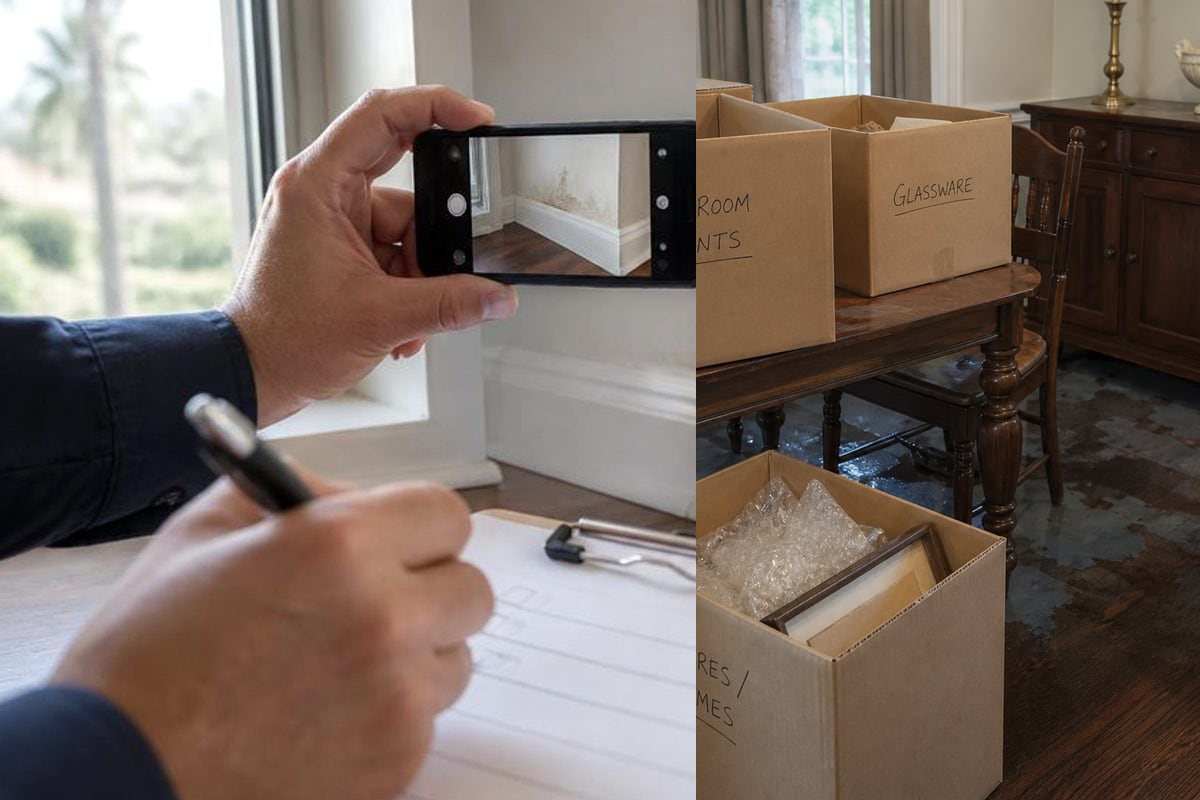
Quick answer: The strength of your fire insurance claim depends almost entirely on the quality of your documentation. Photograph everything before cleaning, build a detailed inventory of damaged items, notify your insurer promptly, and avoid discarding anything until an adjuster has seen it.
Money and insurance are usually the first worry after a fire, right after everyone's physical safety. This guide walks through exactly what to document, how, and when, so your claim reflects the true scope of your loss rather than what you happened to remember days later.
Immediate Steps to Take After a Fire
The first steps after a fire are getting official permission to re-enter the property, notifying your insurance company promptly, and securing the property from further damage. These three actions set the foundation for everything that follows in your claim.
- Ensure safety and get permission to re-enter. Do not enter a fire-damaged structure until fire officials say it's safe. Structural damage isn't always visible from the outside, and smoke inhalation risk can linger.
- Notify your insurance company promptly. Most policies require timely notification, and starting the claim process early gives you more time to document thoroughly before decisions need to be made.
- Secure the property from further damage. Boarding up windows, tarping roof damage, and controlling access prevents weather exposure, theft, or further loss from adding to your original claim. Cleaning, Restoration and Reconstruction After a Fire covers how professionals handle this step.
This is general safety guidance, not legal advice specific to your situation.
Understanding Your Fire Insurance Policy
Your fire insurance policy determines what's covered, what your limits are, and what exclusions might apply, and reviewing it early helps you document toward the right categories. Insurance and cost anxiety are real after a fire, and understanding your actual policy is the fastest way to reduce that uncertainty.
Review Coverage, Limits and Exclusions
Pull your actual policy documents rather than relying on memory of what you think is covered. Pay attention to coverage limits, your deductible, and any exclusions that might apply to your specific loss.
Types of Coverage That May Apply
Depending on your policy, you may have coverage for the structure itself, personal belongings or business contents, additional living expenses or business interruption if you're displaced, and sometimes debris removal. Not every policy includes every category, so confirm what applies to yours directly with your insurer or agent.
Photo and Video Documentation Best Practices
Photograph and video every room and every damaged item before anything is cleaned, moved, or discarded, using wide shots for context and close-ups for detail. This single habit does more for your claim than almost anything else you'll do.
A practical checklist:
- Take wide shots of every room from multiple angles before touching anything
- Take close-up shots of individual damaged items and structural damage
- Include timestamps where possible, either through your camera settings or by photographing a dated newspaper or phone screen
- Video-walk the property narrating what you're seeing room by room
- Photograph damage you might assume is "obvious," like smoke staining on ceilings, since adjusters need it documented too
- Back up all photos and video to at least two locations, including cloud storage
Creating a Damaged Contents Inventory
A thorough damaged contents inventory lists every affected item with its description, approximate value, and condition, supported by receipts or proof of ownership where you have them. This is often the most time-consuming part of a fire claim, and also the part most likely to be shortchanged under stress.
Listing Destroyed and Damaged Items
Go room by room rather than trying to remember everything at once. Include furniture, electronics, clothing, and smaller belongings, noting condition honestly, whether an item is a total loss or salvageable with cleaning.
Gathering Receipts and Proof of Ownership
Bank and credit card statements, warranty cards, photos showing the item in your home before the fire, and original receipts all help establish value. Not every item will have paperwork, and insurers generally understand that, but documentation strengthens each entry where you have it.
Documenting Structural, Smoke, Soot and Odor Damage
Structural damage, smoke staining, soot residue, and lingering odor all need documentation, even in areas that weren't directly burned, since fire damage often extends well beyond the visible flame area. Many homeowners underdocument this category because it's less visually dramatic than charred materials.
Smoke can travel through HVAC systems and settle in rooms far from the fire's origin. Document ceiling staining, odor-affected fabrics, and any HVAC contamination alongside the more obvious structural damage. A professional restoration assessment can help capture the full scope, since technicians are trained to spot damage that isn't obvious to an untrained eye. Cleaning, Restoration and Reconstruction After a Fire explains what that assessment typically covers.
Organizing and Storing Your Claim Documentation
Organize your fire claim documentation into clear digital folders by category, and keep a written log of every communication with your insurer. Disorganized documentation slows down claims and makes it harder to catch errors or omissions.
- Create separate folders for photos, videos, receipts, and correspondence
- Log every call and email with your insurer, including date, contact name, and summary
- Keep both digital and, where practical, physical backups
- Store copies somewhere other than the affected property itself
Working With Your Insurance Adjuster
Your insurance adjuster will inspect the property, review your documentation, and determine your claim's value, so coming prepared with organized records helps you get an accurate assessment. This relationship works best as a collaborative one, not an adversarial one.
What to Ask Your Adjuster
Ask what documentation they still need, what your policy's coverage limits and deductible are, and what the expected timeline looks like for a decision. Get their contact information and claim number in writing.
Should You Hire a Public Adjuster?
A public adjuster works on your behalf, rather than the insurance company's, to document damage and negotiate your claim. Some property owners find this valuable for larger or more complex losses.
Pros generally cited include deeper claim experience and negotiation support. Cons generally cited include a fee, often a percentage of the settlement, and the fact that many smaller, straightforward claims don't need one. Whether it's worth it depends on your claim size and complexity, a decision to make with your insurance and legal advisors, not a default recommendation either way.
Wildfire Damage and Insurance Claims in Los Angeles
Wildfire claims in Los Angeles can involve additional considerations beyond a typical structure fire, including smoke damage to homes that weren't directly burned and evacuation-related expenses. Greater Los Angeles sits adjacent to significant wildland areas, and dry-season conditions make wildfire a real risk for many communities, not just those directly in wildland-urban interface zones.
What Wildfire-Related Losses May Be Covered
Beyond direct structure damage, some policies cover smoke infiltration into homes near but not touched by flames, debris removal, and additional living expenses during evacuation. Coverage specifics depend entirely on your policy, so review it carefully rather than assuming standard fire coverage applies identically.
Steps to Take After Wildfire Damage
Document wildfire-related losses just as thoroughly as direct fire damage, including smoke odor in areas that look untouched. California's property insurance market has faced real strain in wildfire-prone areas in recent years, including reform efforts around the state's FAIR Plan as an insurer of last resort, so confirm your specific coverage directly with your insurer rather than assuming.
Common Fire Insurance Claim Documentation Mistakes
The most common fire insurance claim mistakes are cleaning or discarding items before the adjuster's visit and submitting an incomplete inventory. Both mistakes are understandable under stress, and both can meaningfully reduce a claim's value.
- Cleaning or repairing damage before it's been documented
- Discarding damaged items without photographing them first
- Rushing through the inventory and missing smaller items
- Not keeping a written log of insurer communications
- Accepting the first settlement offer without reviewing it against your documentation
- Failing to document smoke and odor damage in areas that look visually unaffected
How LA Water Damage Supports Your Fire Damage Claim
Money and insurance worries are usually front of mind right after a fire, and LA Water Damage can help by providing a documented, professional damage assessment that supports your claim. Our team assesses structural, smoke, soot and water damage and provides the kind of detailed documentation adjusters look for.
We do not guarantee claim approval or a specific payout amount, since that decision sits with your insurer. What we can do is make sure the full scope of your damage is captured accurately from the start. Contact LA Water Damage at request a callback or contact form for a documented damage assessment.
Frequently Asked Questions About Fire Damage Insurance Claims
Should I clean anything before the adjuster inspects the damage?
No. Avoid cleaning, discarding items or making repairs until your adjuster has documented the damage, unless it's necessary to prevent further harm or ensure safety. Cleaning too early can remove evidence the adjuster needs to accurately assess your claim.
What if I forgot to take photos right after the fire?
Document what remains as soon as possible, and note in writing what has already been cleaned, moved or discarded. Insurers understand that immediate documentation isn't always possible in the chaos after a fire, but the sooner you document, the stronger your claim record.
How detailed should my damaged-item inventory be?
Include the item name, approximate purchase date, estimated value, and condition before the fire for every damaged or destroyed item. Photos and receipts, where available, strengthen each entry. A room-by-room approach helps ensure nothing is missed.
Can smoke odor be part of my claim if nothing looks visibly burned?
Yes. Smoke and soot damage often extends well beyond the visibly burned area, penetrating walls, HVAC systems, fabric and personal belongings. Document odor-affected areas and items even without visible char, since many policies cover smoke damage separately from fire damage.
Do I need a restoration estimate before talking to my adjuster?
It's not required, but having a professional assessment can help ensure the full scope of damage, including smoke, soot and water damage from firefighting efforts, is captured. This can support a more accurate and complete claim.
Should I hire a public adjuster for my fire damage claim?
It depends on the size and complexity of your claim. A licensed public adjuster can help document and negotiate larger or more complicated losses, but for smaller claims many homeowners work directly with their insurer's adjuster. Weigh the potential benefit against any fee structure before deciding.
Are wildfire-related losses covered differently than structure fire losses?
Wildfire claims can involve additional considerations, such as smoke damage to structures that weren't directly burned, evacuation-related expenses, and debris removal. Coverage specifics depend on your policy, so review it carefully and document wildfire-related losses just as thoroughly as direct fire damage.
If you're building a fire damage claim in Greater Los Angeles and want a professional assessment behind your documentation, contact LA Water Damage at request a callback or contact form.
---