
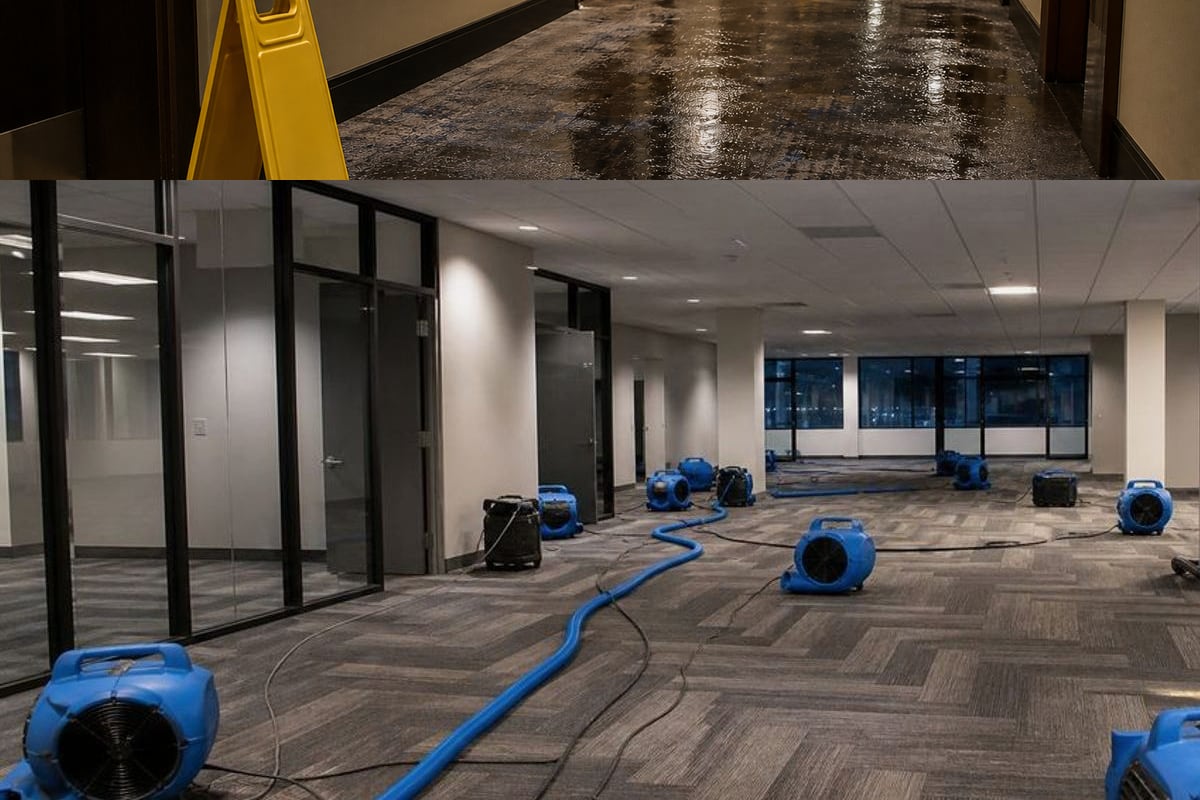
A sewage backup at a commercial property is never just a cleanup problem. It's an operational one. Every hour a restaurant kitchen, medical office, or retail floor stays closed is an hour of lost revenue, and depending on the property type, it can also mean health code violations, liability exposure, or damaged tenant relationships. For property managers and business owners across Greater Los Angeles, treating a sewage event as a business continuity issue, not just a plumbing emergency, is what separates a fast recovery from a prolonged one.
This guide covers why commercial sewage backups happen, what they actually cost a business beyond the cleanup bill, how the process differs by property type, and what businesses can do to get back online faster.
Why Commercial Sewage Backups Happen in Los Angeles Properties
Commercial sewage backups typically result from a combination of aging plumbing infrastructure, high-occupancy usage, and improper disposal practices concentrated in a single building system. Commercial properties push far more volume through their plumbing than residential buildings, which means small issues compound faster.
- Grease buildup in restaurant and food-service drain lines, especially without regular trap maintenance
- Aging infrastructure in older commercial corridors and multi-tenant buildings common throughout Greater Los Angeles
- High-occupancy plumbing load exceeding what an older system was designed to handle
- Improper disposal of wipes, paper products, or industrial materials into drains not built for them
- Tree root intrusion or municipal main line issues affecting multiple connected properties at once
The Business Continuity Risk: What a Sewage Event Costs a Business
A commercial sewage event creates risk across three overlapping areas, operational downtime, compliance exposure, and liability, and all three can compound if the response is slow or poorly documented. Understanding each one helps property managers prioritize the right response.
Operational Disruption
Every closed hour translates to lost revenue, missed appointments, or idle staff, and the disruption often extends beyond the directly affected area if HVAC systems or shared spaces are involved. A single-unit retail space might absorb this differently than a multi-tenant office building where several businesses depend on shared common areas.
Health Code and Compliance Exposure
Restaurants, healthcare facilities, and schools operate under strict health code requirements, and a sewage event can trigger mandatory closure until clearance testing confirms the space is safe. Failing to follow proper notification and remediation steps can create compliance problems that outlast the physical cleanup itself.
Liability and Reputational Risk
An improperly cleaned sewage event that reopens too early creates liability exposure if employees, customers, or tenants are exposed to contamination that wasn't fully addressed. Word travels fast in tightly connected business communities, and a poorly handled event can affect reputation well beyond the immediate financial cost.
Commercial Sewage Cleanup by Property Type
Different commercial property types face different risk profiles and compliance requirements, which is why sewage cleanup needs to be tailored to the specific vertical rather than treated as a one-size-fits-all service.
Multifamily and Apartment Communities
Multifamily sewage backups often affect multiple units simultaneously through shared plumbing lines, requiring coordination across tenants and property management. Toilet Overflow Cleanup: Clean Water or Sewage? Restoration needs to account for occupied units, tenant displacement questions, and common-area contamination all at once.
Hotels and Hospitality
Hotel sewage events carry a direct guest-experience risk on top of the physical damage, since even one contaminated room or common area can affect a property's reputation quickly. Speed and discretion matter as much as thoroughness in hospitality settings.
Restaurants and Food Service
Restaurant sewage backups trigger the strictest health code scrutiny of any commercial vertical, often requiring closure until a health inspector or restoration provider confirms the kitchen and dining areas meet sanitation standards. Grease trap and drain line issues are a frequent root cause here.
Healthcare Facilities
Healthcare sewage cleanup demands the highest level of contamination control because of vulnerable patient populations and strict regulatory oversight. Cross-contamination risk between clinical and non-clinical areas needs careful containment throughout the process.
Schools and Educational Facilities
School sewage events require rapid response to minimize disruption to class schedules, along with clear communication to administrators and, in many cases, parents. Timing around school hours and holiday breaks often shapes the cleanup approach.
Retail Properties
Retail sewage backups affect foot traffic and sales directly, and property managers often want a phased reopening that isolates the affected section while keeping the rest of the store operational where possible.
Warehouse and Industrial Facilities
Warehouse and industrial sewage events can involve larger square footage and heavier equipment considerations, along with potential interaction between contaminated water and stored inventory or materials.
Office Buildings
Office sewage backups often affect shared restrooms or break rooms serving multiple tenants, requiring coordination with building management and clear communication about which floors or areas remain accessible during cleanup.
The Commercial Sewage Cleanup Process
Commercial sewage cleanup follows a structured process built around rapid assessment, thorough decontamination, and documentation that supports both compliance and insurance needs. The scale is larger than residential work, but the underlying principles are the same.
Emergency Response and Assessment
A technician assesses the scope of contamination, identifies affected systems, and develops a containment plan before work begins. [details pending verification]
Containment and Contaminated Water Extraction
Containment barriers isolate the affected area from unaffected parts of the property while industrial extraction equipment removes standing water.
Sanitization and Decontamination
Antimicrobial treatment addresses bacteria and pathogens across all affected surfaces, not just visibly wet ones.
Structural Drying and Air Quality Treatment
Commercial-grade dehumidification and, where needed, air scrubbing address both moisture and airborne contaminants before the space is cleared for reoccupation.
Documentation for Insurance Claims
Detailed photo, video, and moisture-reading documentation supports the insurance claims process and any required compliance reporting.
Verification and Facility Clearance
Final moisture and contamination checks confirm the space meets safety standards before staff, tenants, or customers return.
Contact LA Water Damage at request a callback to discuss commercial sewage response for your property, or reach out through contact form.
How Businesses Get Back Online Faster
Businesses that recover fastest from a sewage event usually share a few practical habits, not just a fast-arriving cleanup crew.
- Communicate clearly and promptly with staff, tenants, or customers about what's affected and what isn't
- Consider a phased reopening that isolates the contaminated area while unaffected zones continue operating where health and safety allow
- Require clearance documentation, including air quality and moisture verification, before reopening affected areas
- Keep a designated point of contact with the restoration company so decisions don't stall waiting on multiple approvals
- Loop in insurance early rather than waiting until cleanup is complete to start the claims conversation
Preventing Future Commercial Sewage Backups
Recurring commercial backups are usually a sign of a systemic issue rather than bad luck, and prevention is almost always cheaper than repeated cleanup.
- Schedule regular grease trap and drain line maintenance for food-service properties
- Have older plumbing systems inspected periodically, particularly in aging commercial corridors
- Install backwater valves where recommended by a licensed plumber
- Train staff on proper disposal practices to avoid clogs from wipes or industrial materials
For a full prevention framework, see How to Prevent Sewer and Drain Backups.
Frequently Asked Questions About Commercial Sewage Cleanup
How quickly can a commercial sewage cleanup team respond?
Response time depends on the provider, the scope of the event, and current demand. [details pending verification] Businesses should ask any restoration provider directly about their current response capacity before an emergency happens, not during one.
Can a business stay open during sewage cleanup?
It depends on the extent of contamination, the affected area, and applicable health codes. Some businesses can continue limited operations in unaffected zones while cleanup happens elsewhere, though food service and healthcare facilities typically face stricter closure requirements until clearance testing is complete.
Does a commercial sewage backup require health department notification?
Requirements vary by property type and local jurisdiction, and restaurants and healthcare facilities generally face the strictest rules. Property managers should confirm specific notification requirements with their local health department rather than assuming a blanket rule applies.
Who is responsible for cleanup costs, the landlord or the tenant?
Responsibility typically depends on lease terms, the cause of the backup, and insurance coverage, and it varies significantly between commercial leases. Reviewing the lease's maintenance and utilities clauses alongside the property's insurance policy is the reliable way to determine responsibility.
What documentation should a business keep after a sewage event?
Photos and video of the damage before cleanup begins, a written timeline of when the issue was discovered and reported, communication with the restoration company, and all invoices are the core documentation insurers and health inspectors typically request.
How is commercial sewage cleanup different from residential cleanup?
Commercial cleanup often involves larger affected areas, stricter compliance requirements (especially in healthcare and food service), coordination with property management or multiple tenants, and a greater emphasis on minimizing operational downtime alongside the physical cleanup itself.
Will insurance cover commercial sewage backup cleanup?
Coverage depends on the specific commercial policy, the cause of the backup, and whether sewer or drain backup coverage was added. Business owners should confirm details directly with their insurance provider or broker. See our guide on sewage backup insurance coverage for more detail. Does Insurance Cover a Sewage Backup?
Request Commercial Sewage Cleanup Service in Greater Los Angeles
If your business or property in Greater Los Angeles needs commercial sewage cleanup, LA Water Damage handles response, decontamination, and insurance documentation across multifamily, hospitality, food service, healthcare, education, retail, industrial, and office properties. Call request a callback or contact us at contact form to discuss your situation. [details pending verification]
---