
How Fire Damage Restoration Works: The Complete Process Explained
Fire damage restoration looks straightforward from the outside. Smoke gets cleaned, damage gets repaired, life goes back to normal. In practice, it's a structured process with a specific order, and skipping steps or rushing the sequence usually costs more time and money later.
This guide walks through exactly how professional fire damage restoration works, from the first inspection to the final repair, along with the health risks involved, realistic timeline expectations, and how insurance factors in.
What Is Fire Damage Restoration?
Fire damage restoration is the process of assessing, cleaning, and repairing a property after fire, smoke, and often water damage from firefighting efforts. It covers everything from initial safety securing through final reconstruction, aiming to return the property to its pre-fire condition.
Restoration vs. Remediation: What's the Difference
These two terms get used almost interchangeably in the industry, though there's a subtle distinction. Remediation typically refers to removing hazards, such as smoke odor, soot, and contamination. Restoration is the broader term, covering the full arc of recovery including structural repairs and reconstruction. In practice, most companies, including the process described here, use both terms to describe the same overall service.
The Fire Damage Restoration Process Step by Step
Professional fire damage restoration follows a consistent sequence: assessment, securing the property, water removal, debris removal, smoke and soot mitigation, cleaning and odor treatment, and finally repair and reconstruction. Each step depends on the one before it.
1. Damage Assessment and Inspection
A restoration professional inspects the property to determine the extent of fire, smoke, and water damage, and identifies which materials and areas are affected. This assessment shapes every decision that follows, from what gets thrown away to what gets restored.
2. Securing the Property
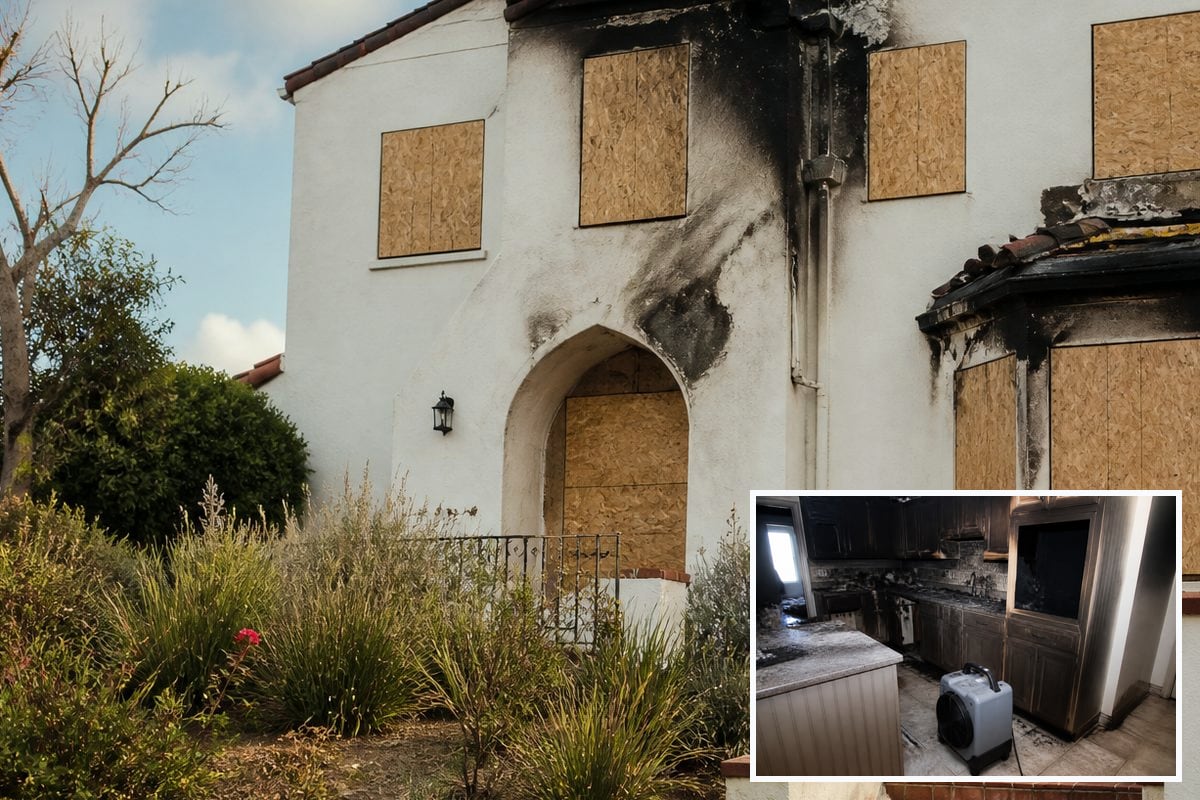
Boarding up windows and doors, and tarping damaged roof sections, protects the property from weather and unauthorized entry while restoration work is underway. This step usually happens fast, often within the first day or two after the fire is out.
3. Water Removal and Structural Drying
Firefighting efforts often leave significant standing water behind, which gets extracted using pumps and vacuums before structural drying begins with air movers and dehumidifiers. Left unaddressed, this water becomes its own separate mold problem within days.
4. Debris and Demolition Removal
Charred, structurally compromised, or non-salvageable materials are removed to make way for cleaning and rebuilding. This includes burned framing, ruined drywall, and destroyed contents that can't reasonably be restored.
5. Smoke and Soot Damage Mitigation
Technicians clean smoke residue and soot from surfaces throughout the property, not just the areas closest to the fire's origin, since smoke travels through HVAC systems and wall cavities. The specific technique depends on the type of residue involved.
6. Cleaning, Sanitizing, and Odor Removal
Remaining surfaces and salvageable contents are cleaned, sanitized, and treated to remove trapped smoke odor, often using specialized equipment such as air scrubbers or thermal fogging. Odor removal is frequently the step that determines whether a restoration feels truly complete.
7. Repair and Reconstruction
Once the property is clean, dry, and free of smoke odor, repair and reconstruction work rebuilds damaged structural elements, drywall, flooring, and finishes to bring the home back to its pre-fire condition.
What to Do After a House Fire covers what a homeowner should be doing on their end while this process unfolds.
How Long Does Fire Damage Restoration Take?
Fire damage restoration timelines vary widely based on the size of the fire, the extent of structural and smoke damage, and how quickly cleanup begins. There's no universal number that applies to every property.
A contained fire limited to one room with minimal smoke spread naturally takes less time than a fire that damaged structural framing or spread smoke throughout an entire home. Reconstruction timelines depend on the scope of repairs needed, permitting requirements, and material availability. A professional on-site assessment is the most reliable way to get a realistic estimate for your specific situation, and [details pending verification] can give you a general sense of initial response expectations.
Health Risks of Fire, Smoke, and Soot Exposure
Fire, smoke, and soot exposure carries real health risks, including respiratory irritation and skin contact hazards, which is why professional restoration follows specific protective protocols throughout the process.
Short-Term Risks
Soot particles and residual carbon monoxide can cause respiratory irritation, headaches, and skin irritation with direct contact. These risks are highest in the days immediately following a fire, before proper cleanup and ventilation have occurred, which is part of why fire officials require clearance before re-entry in the first place.
How Professionals Protect Against Exposure
Restoration technicians use personal protective equipment, including respirators, gloves, and protective clothing, throughout the cleanup process. Air scrubbing equipment with HEPA filtration also helps reduce airborne particulates in the space during active work, protecting both the crew and anyone else present.
What Not to Do After a Fire
Certain actions after a fire can make the situation worse or put you at unnecessary risk, so it's worth being explicit about what to avoid.
- Don't re-enter the structure before fire officials have cleared it as safe.
- Don't turn on gas, water, or electrical utilities without professional inspection.
- Don't touch soot or ash-covered surfaces without gloves and a mask.
- Don't use electronics or appliances that were exposed to fire, smoke, or water.
- Don't begin extensive cleanup before your insurance adjuster has documented the damage.
Can You Do Fire Damage Restoration Yourself?
Minor surface soot cleaning on accessible, non-porous items may be reasonable for a homeowner to handle, but structural, HVAC, and deep odor issues generally require professional equipment and expertise. This is an honest line, not a sales pitch.
The challenge with DIY fire restoration is that visible damage rarely tells the whole story. Smoke can penetrate wall cavities and HVAC ductwork in ways that aren't obvious from a walkthrough, and improper cleaning attempts can actually spread residue rather than remove it. If your fire was small and contained, light surface cleaning with proper protective gear may be fine. Anything involving structural damage, significant smoke spread, or lingering odor is better handled by a professional assessment first.
Does Insurance Cover Fire Damage Restoration?
Most homeowners insurance policies include coverage for fire damage, though the specific terms, deductibles, and documentation requirements vary by policy and insurer. Confirming your exact coverage before work begins avoids unpleasant surprises later.
Tips for a Smoother Insurance Claim
Photograph everything before cleanup starts, keep a detailed home inventory of damaged items, and save every receipt tied to emergency expenses. Get a claim number early and keep notes on every conversation with your adjuster, including names and dates. If you're working with a restoration company, ask whether they coordinate directly with insurers, since that communication can smooth the process considerably.
Sewage Cleanup vs. Water Damage Cleanup walks through a similar insurance classification issue that applies when firefighting water causes secondary damage.
Frequently Asked Questions About Fire Damage Restoration
Is fire damage restoration the same as fire remediation?
The terms are often used interchangeably, though "remediation" sometimes refers specifically to removing hazards like smoke odor and contamination, while "restoration" covers the full process of returning a property to pre-fire condition, including repairs and reconstruction. In practice, most restoration companies use both terms to describe the same overall service.
How long does fire damage restoration typically take?
Timeline depends heavily on the severity of the fire, the extent of structural and smoke damage, and how quickly cleanup begins. A professional on-site assessment is the only reliable way to get a realistic timeframe for your specific property.
Can I stay in my home during fire damage restoration?
This depends on the extent of the damage and whether the structure has been declared safe by fire officials. Homes with significant structural, electrical, or air-quality damage typically require temporary relocation during active restoration work.
What can be salvaged after a house fire?
Salvageability depends on the material and how much heat, smoke, or water exposure it experienced. Non-porous, sealed items often have a better chance of being cleaned and restored, while heavily charred or water-saturated porous materials are frequently not recoverable.
Is professional fire restoration necessary for small fires?
Even small fires can leave behind smoke odor and soot residue that spreads further than what's visible, including into HVAC systems and wall cavities. A professional assessment helps determine whether hidden damage exists beyond the immediately visible area.
Does insurance cover fire damage restoration?
Most homeowners insurance policies cover fire damage, but coverage details, deductibles, and claim requirements vary by policy. Contact your insurance provider directly to confirm your specific coverage before starting restoration work.
What's the first thing I should do after a house fire?
Once fire officials confirm the structure is safe to approach, contact your insurance company to begin the claims process and reach out to a restoration professional for an assessment. Avoid extensive cleanup before damage has been documented.
Get Professional Fire Damage Restoration in Los Angeles
Fire damage restoration works best when it follows a clear, professional process from assessment through reconstruction. LA Water Damage supports homeowners across Greater Los Angeles through every stage of that process, from initial inspection to final repairs, handled to [details pending verification] standards.
Reach out at request a callback or contact form to schedule an assessment.
---