
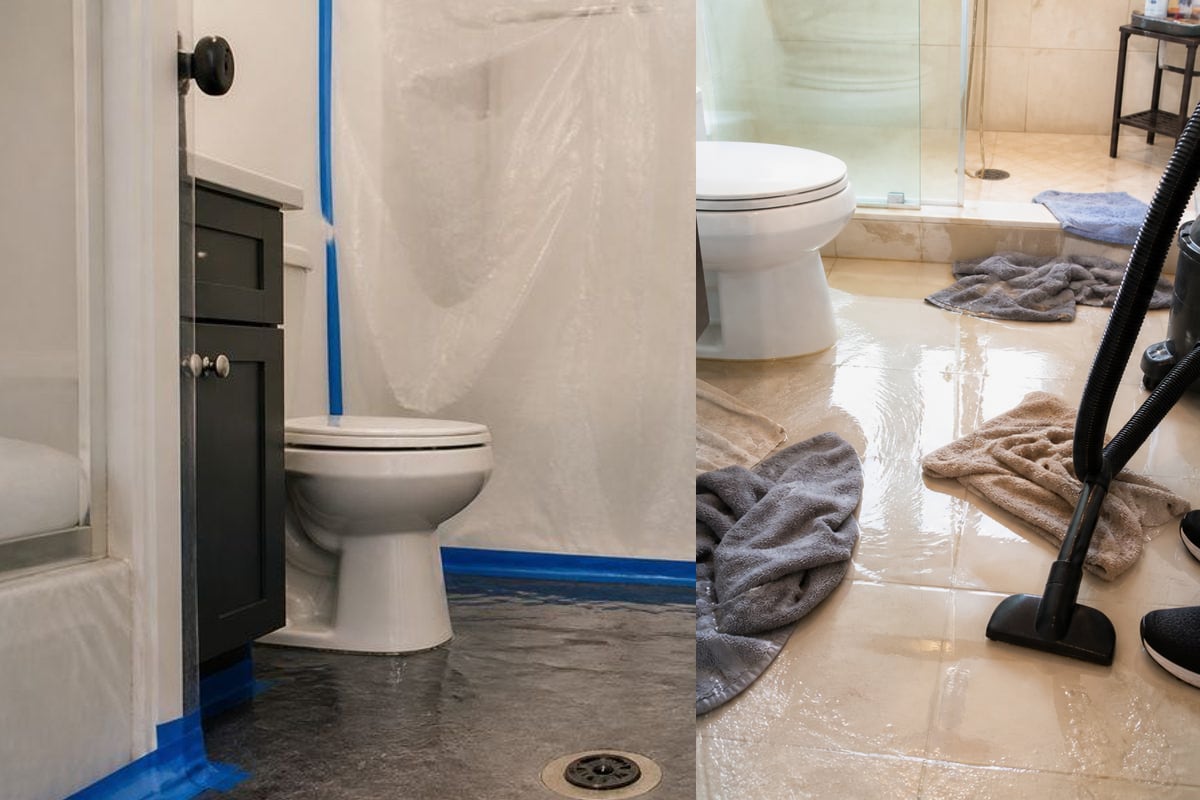
A backed-up toilet or a burst sewer line does not feel like a medical emergency. It feels like a mess. But the water sitting on your floor right now is not the same as a leaking dishwasher or an overflowing bathtub. It is Category 3 water, the industry term for water contaminated with human or animal waste, and it carries real infection risk the moment it touches your skin.
That distinction matters more than most homeowners realize, and it is the reason restoration professionals treat sewage backups differently from every other kind of water damage. This guide explains what makes sewage water dangerous, how fast it spreads through a property, why DIY cleanup puts your health at risk, and what a professional cleanup actually involves. If you are dealing with an active backup in Greater Los Angeles, jump to the section on what to do immediately, or when to call for emergency help.
What Makes Sewage Water a Category 3 Biohazard
Category 3 water, commonly called black water, is water that has come into contact with sewage, waste, or other sources of gross contamination, and it is treated as a biohazard because it can carry bacteria, viruses, and parasites capable of causing illness on contact. That single classification drives almost every decision a restoration team makes, from the protective gear technicians wear to which materials get thrown away instead of cleaned.
Restoration professionals use a three-tier water classification system, and knowing where your water falls tells you a lot about what kind of cleanup it actually needs.
Category 1, 2, and 3 Water: What's the Difference
Category 1 water comes from a clean source, like a supply line break, and poses little health risk if addressed quickly. Category 2 water, sometimes called gray water, contains some contamination, such as water from a washing machine overflow or a dishwasher leak, and carries a moderate risk of causing discomfort or illness if ingested. Category 3 water is grossly contaminated and can contain pathogenic agents, and it includes sewage backups, flooding from rivers or streams, and any water that has been sitting long enough to support bacterial growth.
The category isn't just a label. It determines whether a technician can simply extract and dry the water, or whether porous materials in its path need to be removed entirely.
What "Black Water" Actually Contains
Raw sewage contains human waste, which means it can carry the same bacteria, viruses, and parasites found in that waste. It can also pick up whatever else has gone down a drain or into a sewer line, including cleaning chemicals, grease, and in a flood scenario, outdoor debris and soil contaminants. This is why even sewage water that looks relatively clear on the surface still needs to be treated as fully contaminated.
The Health Risks Hiding in Sewage-Contaminated Water
Sewage water can expose you to bacteria, viruses, and parasites that cause illness ranging from mild gastrointestinal upset to more serious infection, which is why direct skin contact and inhalation of contaminated air are both genuine health concerns. The risk isn't hypothetical or overstated. It's the specific reason professional restoration protocols exist.
Bacterial and Viral Pathogens (E. coli, Hepatitis A, and Others)
Human waste can carry bacteria such as E. coli, along with viruses including Hepatitis A, both of which are associated with gastrointestinal illness when ingested or introduced through broken skin. Restoration technicians are trained to assume any sewage-contaminated surface could carry these pathogens, because there is no way to visually confirm which specific ones are present in a given backup. That assumption is what drives full decontamination rather than a quick wipe-down.
Parasites and Long-Term Exposure Risks
Raw sewage can also carry parasites, including organisms like Giardia, which can cause intestinal illness after exposure. Unlike a bacterial infection that might show symptoms within a day or two, parasitic exposure can sometimes take longer to produce noticeable symptoms, which is part of why documenting exposure and watching for delayed symptoms matters even after the visible mess is gone.
Mold and Airborne Contamination After the Water Recedes
Once sewage water is removed, the risk doesn't disappear. Any moisture left behind in walls, subflooring, or carpet padding creates ideal conditions for mold growth, typically within 24 to 72 hours in a humid environment. In Los Angeles, marine-layer humidity along the coast and poor ventilation in older multifamily buildings can extend that window, making incomplete drying a second health hazard layered on top of the original contamination.
How Fast Sewage Contamination Spreads Through a Property
Sewage-contaminated water spreads through a property faster than most people expect because it wicks into porous materials like carpet, drywall, and subflooring on contact, carrying contamination well beyond the area you can see. That's the core reason waiting to "see how bad it is" tends to make the outcome worse, not better.
The First 24 to 48 Hours
In the first day or two after a backup, contaminated water continues to migrate through flooring and up into baseboards and lower drywall, even after standing water has been removed or has drained away. Once porous materials absorb that water, cleaning the surface no longer solves the problem, because contamination is now inside the material itself. [details pending verification] reflects how quickly LA Water Damage aims to respond once a backup is reported.
How Contamination Travels Into Unaffected Rooms
Contamination doesn't stay confined to the room where the backup occurred. It travels through shared subflooring, wall cavities, and even HVAC ductwork if the system was running during the event, and foot traffic through the area can carry contaminated water into hallways and adjoining rooms. This is one reason professionals set up containment before doing anything else, a step covered in more detail below.
Why DIY Sewage Cleanup Puts Your Health and Property at Risk
DIY sewage cleanup puts your health and property at risk because household cleaning products are not designed to fully decontaminate porous materials, and without proper protective equipment and containment, cleanup itself can spread contamination rather than remove it. This isn't about discouraging capable homeowners. It's about a genuine mismatch between household tools and biohazard-level contamination.
Missing PPE and Containment
Professional technicians wear protective suits, gloves, and respiratory protection when working in a Category 3 environment, along with barriers that physically contain the contaminated area. Most homeowners don't have this equipment on hand, and improvising with kitchen gloves and a mask offers a false sense of protection against pathogens that can enter through broken skin or be inhaled as aerosolized particles during cleanup.
Surface Cleaning vs. True Decontamination
Mopping up visible sewage and wiping down surfaces addresses what you can see, but it does not reach contamination that has soaked into carpet fibers, padding, or the paper backing of drywall. True decontamination requires identifying the full extent of the contamination, not just the puddle in the middle of the room, and treating or removing every material that absorbed contaminated water.
Hidden Contamination Inside Walls, Subfloors, and HVAC
Contamination that has traveled into wall cavities, under flooring, or into HVAC systems is effectively invisible to someone doing a visual cleanup. Without moisture meters and thermal imaging, there's no reliable way to know how far the water actually traveled, which means a homeowner cleaning on their own may declare the job done while contaminated material is still drying out inside the walls.
What Materials Must Be Removed After Sewage Damage?
What Professional Sewage Cleanup Actually Involves
Professional sewage cleanup follows a structured process that starts with assessment and containment, moves through extraction and removal of contaminated materials, and finishes with disinfection and structural drying to prevent secondary damage like mold. Understanding the process helps set realistic expectations for what happens once a technician arrives.
Assessment, Containment, and Safety Setup
A technician first assesses the extent of contamination, identifies the water source if possible, and sets up physical containment to prevent the affected area from spreading contamination to the rest of the property. This includes putting on appropriate PPE before entering the space, which protects both the technician and the household from cross-contamination during the work.
Extraction, Removal, and Disposal of Contaminated Materials
Standing water is extracted first, followed by removal of materials that cannot be salvaged, such as saturated carpet, padding, and drywall. What Materials Must Be Removed After Sewage Damage? walks through exactly which materials typically fall into that category and why. Removed materials are bagged and disposed of according to local waste-handling guidelines for contaminated material.
Cleaning, Disinfection, and Structural Drying
Remaining surfaces are cleaned and disinfected using professional-grade products, and the space is then dried using air movers and dehumidifiers to bring moisture levels back to normal before reconstruction begins. How Sewage Cleanup and Decontamination Work covers this full six-step process in detail, including how technicians verify the disinfection actually worked before calling a space clear.
What to Do Immediately If You're Exposed to Raw Sewage
If you've had direct contact with raw sewage, wash the exposed skin thoroughly with soap and water, avoid touching your face until you have, and remove and isolate any contaminated clothing right away.
- Wash exposed skin thoroughly with soap and water as soon as possible
- Avoid touching your eyes, nose, or mouth until you've washed up
- Remove contaminated clothing and keep it separate from other laundry
- Watch for symptoms like nausea, fever, or gastrointestinal distress
- Contact a physician if symptoms develop
This is general safety guidance, not medical advice. If you develop symptoms after exposure, a doctor can evaluate whether they're related and what treatment, if any, makes sense.
When to Call for Emergency Sewage Cleanup
Call a professional immediately for any sewage backup involving standing water, contamination beyond a small and easily contained area, or exposure in a home with young children, elderly residents, or anyone with a compromised immune system. Los Angeles's older housing stock, including buildings still running on original clay pipe or cast iron sewer laterals in neighborhoods like Highland Park and parts of the Eastside, means backups aren't rare, and slab-on-grade construction common across the region means contaminated water often has nowhere to go but across the floor.
Trigger scenarios that warrant an emergency call include:
- Sewage backing up through a floor drain, toilet, or shower
- A sewer lateral blockage during heavy rain, common during LA's atmospheric-river storm season
- Contamination affecting a commercial kitchen or multifamily common area
- Any backup where you're unsure how far the water has traveled
LA Water Damage responds to residential and commercial sewage emergencies across Greater Los Angeles. Call request a callback or visit contact form to reach a technician.
Frequently Asked Questions About Professional Sewage Cleanup
Is sewage water really dangerous, or is it just dirty water?
Sewage water is classified as Category 3, or black water, because it can contain bacteria, viruses, and parasites from human waste. Unlike a clean-water leak, it poses genuine infection risk on contact, which is why professional handling and proper PPE matter even for what looks like a small backup.
Can I clean up a small sewage backup myself?
Even a small amount of raw sewage carries contamination risk. Professionals recommend against DIY cleanup beyond minimal, incidental contact, since surface cleaning does not remove pathogens absorbed into porous materials like carpet, drywall, or subflooring. For anything beyond a trace amount, professional assessment is safer.
How quickly does sewage contamination spread through a home?
Contaminated water can wick into porous building materials and travel beyond the visibly affected area within hours, which is why prompt response matters. LA Water Damage recommends contacting a professional as soon as a backup is discovered, and [details pending verification] reflects typical response times.
What should I do if I've been directly exposed to raw sewage?
Avoid touching your face, wash exposed skin thoroughly, remove and isolate contaminated clothing, and contact a physician if you develop symptoms like nausea, fever, or gastrointestinal distress. This is general safety guidance, not medical advice.
Will homeowners or commercial insurance cover sewage backup cleanup?
Coverage varies by policy and often depends on the cause of the backup. Review your policy or speak with your insurer directly. LA Water Damage can help document damage for a claim but cannot confirm coverage on your behalf.
What's the difference between DIY cleanup and professional decontamination?
DIY cleanup typically addresses visible mess. Professional decontamination identifies the full contamination footprint, safely removes and disposes of unsalvageable materials, disinfects affected surfaces, and manages structural drying to prevent secondary issues like mold.
Does a sewage backup always mean I have to throw things away?
Not always. Nonporous, sealed surfaces can often be cleaned and disinfected. Porous materials that absorbed contaminated water, including carpet, padding, and some drywall, typically cannot be fully decontaminated and are usually recommended for removal. What Materials Must Be Removed After Sewage Damage? breaks this down material by material.
If you're facing a sewage backup anywhere in Greater Los Angeles, you don't have to figure out the scope of the damage on your own. LA Water Damage handles assessment, containment, and full decontamination for residential and commercial properties. Call request a callback or visit contact form to talk through what you're seeing and what happens next.
---