
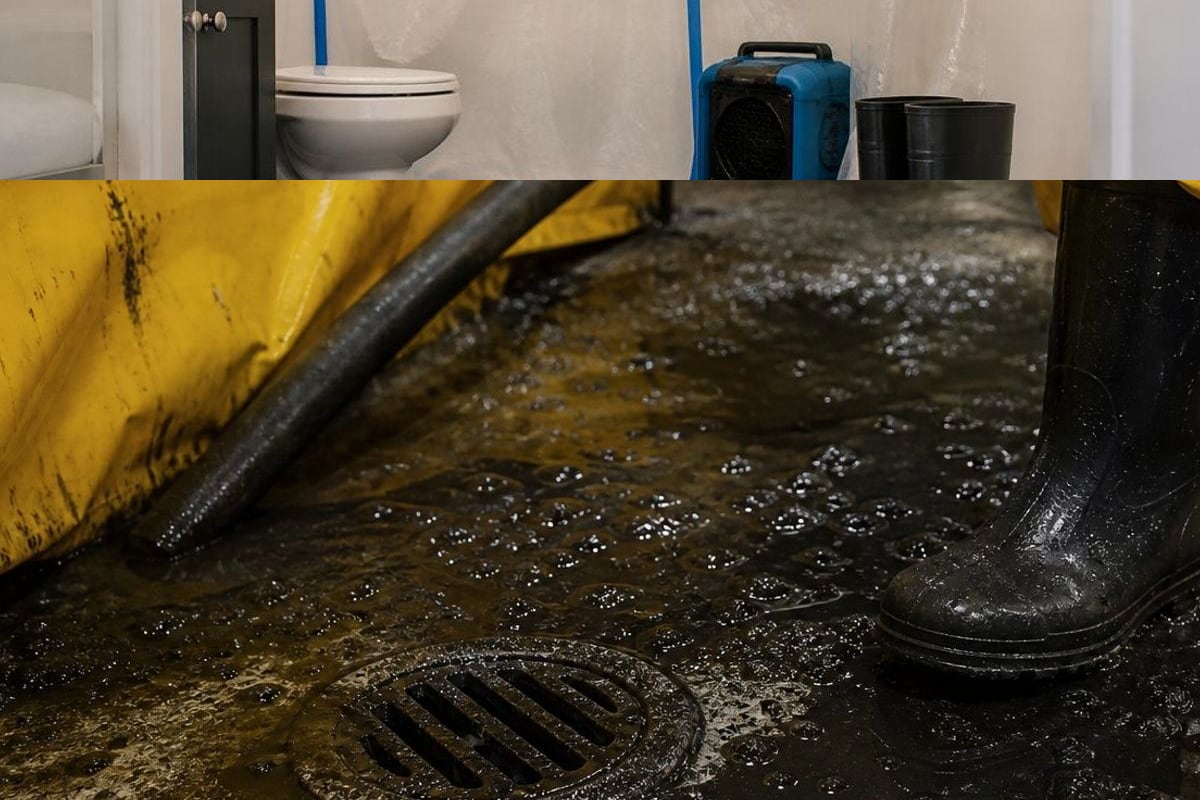
A sewer backup rarely happens without warning, even when it feels sudden. Somewhere upstream, a pipe has been narrowing, cracking, or filling for weeks or months before the moment wastewater finally has nowhere to go but back into your home. Understanding what actually causes sewer backups, and which of those causes are common in Los Angeles specifically, helps you catch the warning signs early and know when the problem needs a plumber versus a restoration team. This guide breaks down the real causes, from tree roots to aging pipe materials to storm-driven system overload.
Common Causes of Sewer Backups
Most sewer backups trace back to one of four causes: tree root intrusion, clogs and blockages, damaged or aging pipes, or heavy rainfall overwhelming the sewer system. Often more than one factor is involved at once, since a partially blocked pipe is far more likely to back up completely during a heavy storm.
Tree Root Intrusion
Tree roots are drawn to the moisture and nutrients inside sewer lines, and even a hairline crack in an aging pipe gives roots an opening to grow into over time. Once inside, roots expand, catch debris, and gradually narrow or fully block the pipe. This is especially common in older Los Angeles neighborhoods with mature trees planted decades before the sewer lines beneath them were ever inspected for root intrusion.
Clogs and Blockages (Grease, Wipes, Debris)
Grease poured down a kitchen drain cools and hardens inside the pipe, gradually narrowing the passage until it catches other debris and blocks flow entirely. So-called flushable wipes are a common culprit too, since they don't break down the way toilet paper does, and they frequently combine with grease and other debris to form blockages inside both household plumbing and municipal lines.
Damaged, Aging or Collapsed Pipes
Pipes crack, shift, or collapse over time due to age, ground movement, or nearby construction, and any of those conditions can create a partial or complete blockage. In much of Los Angeles, particularly in neighborhoods built before the 1960s, original sewer lines have been in the ground for well over half a century, which raises the likelihood of material failure regardless of what's flowing through them.
Heavy Rainfall and Sewer System Overload
During heavy rain, municipal sewer systems, particularly older combined systems that carry both stormwater and wastewater in the same pipes, can become overwhelmed and push wastewater back through household connections. Los Angeles's aging municipal infrastructure, including water mains and sewer lines that in many areas are decades past their original design life, can be more susceptible to this kind of overload during the intense atmospheric river storms that have become a more prominent part of the region's winter weather pattern.
Aging Pipe Materials That Fail Most Often
Older pipe materials common throughout Los Angeles's pre-1960s housing stock, including clay, cast iron, and Orangeburg pipe, are significantly more prone to cracking, root intrusion, and collapse than modern PVC piping used in newer construction.
Clay Pipes
Clay pipe was a standard sewer line material for much of the early to mid-20th century, and while it's durable in some respects, its jointed sections create natural entry points for tree roots and are prone to cracking as surrounding soil shifts over time.
Cast Iron Pipes
Cast iron pipe corrodes from the inside over decades, gradually narrowing the interior diameter and roughening the surface in a way that catches debris more easily than a smooth modern pipe. Eventually, corrosion can weaken the pipe enough to crack or collapse under normal ground pressure.
Orangeburg Pipes
Orangeburg pipe, made from a wood pulp and tar composite, was used in some residential construction primarily from the 1940s through the 1970s as a cheaper alternative to cast iron. It has a much shorter functional lifespan than other materials and is prone to deforming, flattening, or collapsing entirely, which makes it one of the higher-risk pipe materials still found in older LA homes today.
Warning Signs of an Impending Sewer Backup
Most sewer backups give some warning before they happen, and catching these signs early can mean the difference between a plumbing repair and a full restoration project.
- Gurgling drains, especially when running water in one fixture causes gurgling in another, which suggests a blockage affecting shared drain lines.
- Multiple drains backing up at once, a strong signal that the problem is in the main line rather than an isolated fixture.
- Slow draining fixtures across the house, not just one sink or tub, which often points to a developing blockage further down the line.
- Foul odors coming from drains, which can indicate a blockage trapping waste or gas that should otherwise be flowing away from the home.
Gurgling Drains
Gurgling happens when air trapped by a partial blockage gets pushed back up through the pipe as water tries to pass, and it's often one of the earliest audible warning signs available before a backup actually occurs.
Multiple Drains Backing Up at Once
When more than one drain backs up around the same time, particularly the lowest fixtures in the home like a basement floor drain or ground-floor toilet, it typically points to a main line issue rather than a problem isolated to a single fixture.
Slow Draining Fixtures
A single slow drain is often a local clog. Several slow drains at once, especially if they've gotten gradually worse over days or weeks, suggests a developing blockage in a shared line that's worth having inspected before it becomes a full backup.
Foul Odors
Sewer gas odors near drains, especially if they're new or getting stronger, can indicate a blockage or a failing seal somewhere in the system. This is worth investigating promptly rather than waiting, since it often precedes a backup by days or weeks.
Main Line vs. Secondary Line Backups
Whether a backup involves the main sewer line or a secondary line changes both the severity and the fix, and the pattern of which fixtures are affected is usually the clearest clue.
| Factor | Main Line Backup | Secondary Line Backup |
|---|---|---|
| Fixtures affected | Multiple drains and fixtures throughout the property | Usually one fixture or a single area |
| Typical first sign | Lowest drain in the home backs up first | A single toilet, sink, or tub drains slowly or backs up |
| Common causes | Root intrusion, major blockage, municipal system issue | Localized clog, isolated pipe damage |
| Who to call | Licensed plumber, often with sewer camera inspection | Often manageable with standard drain clearing |
A main line backup affects the shared pipe that carries wastewater from your entire property to the municipal sewer connection, so problems there tend to affect multiple fixtures at once, often starting with the lowest drain in the home. A secondary line backup is isolated to the pipe serving one fixture or area, so it typically shows up as a single slow or backed-up drain rather than a house-wide problem.
What to Do After a Sewage Backup
Health and Property Risks of Sewage Backups
Sewage backups carry both immediate health risk and property risk, since raw sewage falls into category 3 water, the most contaminated classification recognized in the restoration industry, and it can carry bacteria and pathogens on contact. Left unaddressed, contaminated moisture also creates ideal conditions for mold growth within 24 to 48 hours, and standing wastewater can cause structural damage to flooring, drywall, and subflooring the longer it sits.
What to Do After a Sewage Backup
How to Prevent Future Sewer Backups
- Install a backwater valve, which mechanically blocks wastewater from flowing back into your home if the municipal line surcharges.
- Schedule periodic sewer line camera inspections, particularly for older homes with clay, cast iron, or Orangeburg pipe.
- Address tree root intrusion early with professional root treatment rather than waiting for a full blockage.
- Practice proper disposal habits, avoiding grease, wipes, and other non-flushable items in drains.
- Have slow drains or gurgling noises inspected promptly rather than waiting for a full backup.
How to Reduce Flood Risk Around Your Los Angeles Property
Why Professional Restoration Matters After a Backup
Once a sewer backup has happened, professional restoration addresses both the contamination and the structural damage in a way that DIY cleanup typically can't match, particularly for category 3 water exposure involving carpet, drywall, or subflooring. A qualified restoration provider handles proper extraction, disinfection, and disposal of contaminated materials, along with documentation that supports an insurance claim. LA Water Damage provides sewage backup restoration for Los Angeles homes and businesses, with relevant licensing and certification including [details pending verification]. Note that restoration is a different service than plumbing repair. A plumber addresses the pipe issue causing the backup, while a restoration provider addresses the damage the backup left behind.
Frequently Asked Questions About Sewer Backup Causes
What is the most common cause of sewer backups?
Tree root intrusion and blockages from grease, wipes, or debris are among the most frequently cited causes across plumbing and restoration industry sources. Aging or damaged pipes and heavy rainfall overwhelming sewer systems also contribute significantly.
Why does my sewer back up when it rains heavily?
During heavy rain, municipal sewer systems (especially older combined systems that carry both stormwater and wastewater) can become overwhelmed, pushing wastewater back through household pipes. Older Los Angeles-area infrastructure can be more susceptible to this during intense storms.
How do I know if I have a main line or secondary line backup?
A main line backup typically affects multiple drains and fixtures at once, often starting with the lowest drain in the home. A secondary line backup usually affects only one fixture or area, such as a single toilet or sink.
Does homeowners insurance cover sewer backup?
Standard homeowners policies commonly exclude sewer backup unless a specific endorsement was purchased. Check your policy directly with your insurer to confirm your coverage.
How much does sewage cleanup cost?
Costs vary based on the extent of contamination, materials affected, and square footage involved. [details pending verification]
Can I prevent sewer backups myself, or do I need a plumber?
Basic prevention like proper waste disposal and avoiding pouring grease down drains helps, but structural issues such as root intrusion or damaged pipes typically require a licensed plumber to diagnose and repair.
What pipe materials are most likely to cause backups?
Older clay, cast iron, and Orangeburg (tar-paper composite) pipes are more prone to cracking, root intrusion, and collapse than modern PVC piping, making backups more likely in older homes with original plumbing.
Next Steps
Understanding what causes sewer backups helps you catch warning signs early, but once a backup has happened, professional restoration is the safest path back to a clean, dry property. LA Water Damage serves homes and businesses across Greater Los Angeles. Call request a callback or visit contact form to get help.