
How to Prevent Mold After a Leak or Flood: A Step-by-Step Guide
The hours right after a leak or flood decide a lot about what happens next. Act quickly and thoroughly, and you can often avoid mold altogether. Wait too long, or dry things halfway, and mold can take hold before you've even finished cleaning up the water. In a city like Los Angeles, where atmospheric river storms can dump a winter's worth of rain in a few days and older plumbing systems fail without warning, knowing these steps before you need them matters.
This guide walks through exactly what to do after a leak or flood to prevent mold, what signs mean mold may already be starting, and when the situation calls for a professional instead of a DIY approach.
How Quickly Mold Grows After Water Damage
Mold can begin developing within roughly 24 to 48 hours after water damage in favorable conditions, which is why the speed of your response matters more than almost anything else. This is a widely accepted general timeframe in the restoration industry, not an exact countdown for every situation.
Temperature, humidity, and the type of material affected all influence how quickly mold actually establishes itself. Warm, humid conditions, common in Los Angeles during marine-layer months, can accelerate the timeline, while cooler, drier conditions may buy a bit more time. Either way, treating the first two days after water exposure as the critical window is the safest approach.
Step-by-Step: How to Prevent Mold After a Leak or Flood
Preventing mold after a leak or flood comes down to eight steps: stop the water source, remove standing water, remove wet porous materials, dry the space thoroughly, clean and disinfect, wear protective gear, monitor humidity, and replace anything that can't be fully dried. Each step matters, and skipping one undermines the rest.
If your property has active flooding or a significant leak right now, don't wait until you've finished reading to act. request a callback connects you with emergency water extraction support.
Stop the Water Source
The first step is always stopping whatever is causing the water intrusion, whether that means shutting off a supply line, patching a roof leak temporarily, or waiting out a storm before repairs are possible. Continuing to dry an area with an active water source is a losing battle.
Remove Standing Water
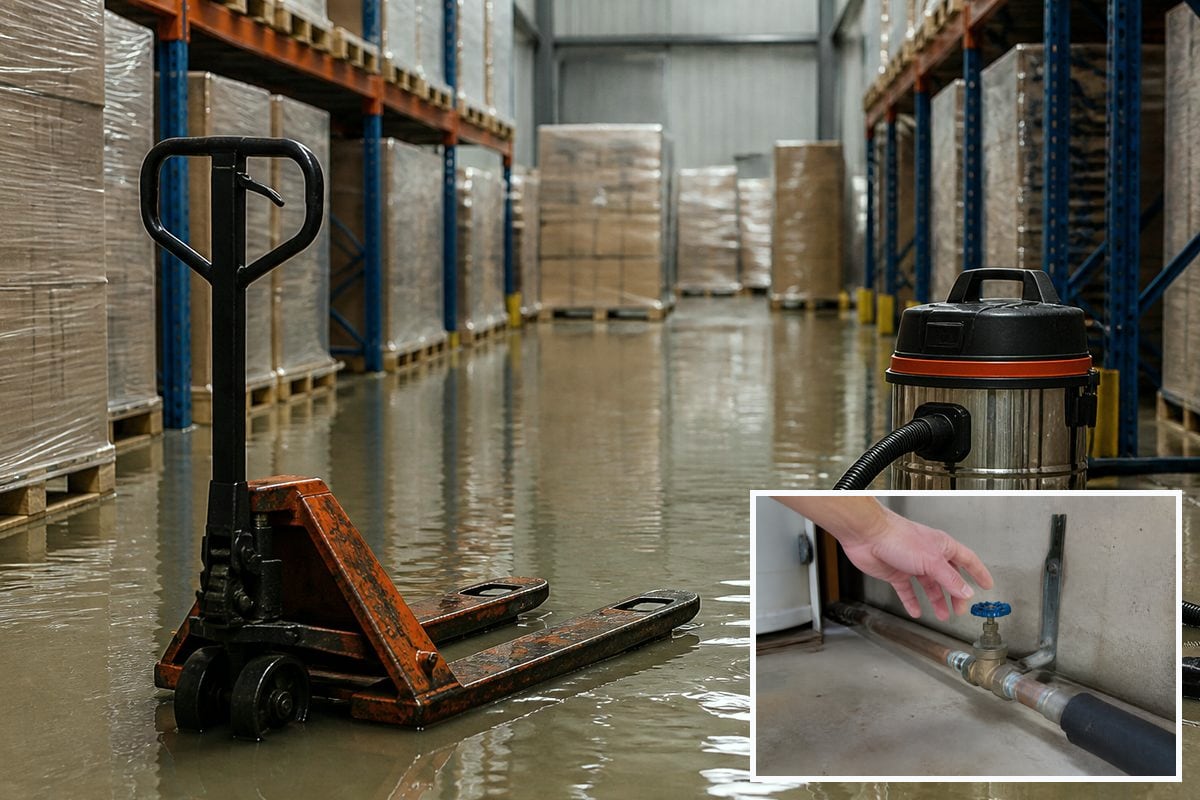
Standing water needs to be extracted as quickly as possible using a wet vacuum, pump, or professional extraction equipment, since standing water accelerates material saturation and mold risk with every hour it sits. The faster this happens, the smaller the eventual scope of drying and repair.
Remove Wet Carpet, Padding, and Damp Materials
Carpet padding, insulation, and other porous materials that stayed wet for an extended period typically can't be fully dried and should be removed rather than left in place. Leaving saturated porous materials in a structure is one of the most common reasons mold prevention efforts fail.
Dry the Space with Fans and Dehumidifiers
Air movers and dehumidifiers working together pull moisture out of both the air and remaining materials, which is far more effective than fans alone. For anything beyond a small, contained area, professional-grade drying equipment dries faster and more thoroughly than consumer equipment.
Clean and Disinfect Affected Surfaces
Surfaces that came into contact with water, especially contaminated water, should be cleaned and disinfected once the area is dry enough to work in safely. This step addresses any residual contamination before it has a chance to become a mold problem.
Wear Protective Gear During Cleanup
Gloves, eye protection, and an N95 respirator are reasonable minimum protection during cleanup, especially when handling water that may be contaminated or materials that have been sitting wet for more than a day or two. This is basic precaution, not overreaction.
Monitor Humidity Levels
Keeping indoor humidity below roughly 50 percent in the days and weeks after a water event helps confirm the space is actually drying rather than just looking dry on the surface. A simple hygrometer makes this easy to track without guesswork.
Replace Materials That Can't Be Fully Dried
Drywall, insulation, particleboard furniture, and similar porous materials that stayed wet for an extended period are usually more practical to replace than to try to fully dry and disinfect. Trying to save every material sometimes costs more in the long run than accepting the replacement.
Signs Mold Has Already Started Growing
Signs mold may already be growing include a persistent musty odor, visible discoloration on walls or surfaces, and any unusual respiratory irritation among people spending time in the space. If it's been more than a couple of days since the water exposure, assume some growth may already be underway.
Watch for:
- A musty, damp smell that doesn't clear with ventilation
- Dark or discolored patches on walls, baseboards, or flooring
- Fuzzy or fuzzy-looking growth on any surface
- Warping, bubbling, or staining on previously wet materials
- Increased sneezing, coughing, or irritation among occupants without another clear cause
If you're seeing any of these signs, an inspection is worth scheduling before you assume DIY cleaning alone will solve it.
Common Mold Types That Follow Water Damage
Several mold types commonly follow water damage, including Aspergillus, Stachybotrys, and Cladosporium, each with different appearances and typical growth conditions. None of these require a different urgency level in your response since prevention steps are the same regardless of species.
Aspergillus is one of the most common indoor molds, often appearing as a powdery green, gray, or black growth on damp surfaces, walls, and even food. Stachybotrys, sometimes called black mold in general conversation, is a dark greenish-black mold that tends to grow on materials with high cellulose content, like drywall paper and wood, when moisture has been present for an extended period. Cladosporium commonly appears as olive-green to black spots and can grow on both porous and non-porous surfaces, including fabric and wood.
Identifying the exact species matters less for prevention than acting quickly on any visible growth, since the response, contain, remove, clean, and dry, is largely the same across common types.
Is Mold Growth After a Flood an Emergency?
Mold growth following a flood is a time-sensitive situation, though whether it qualifies as an emergency depends on the scale of the flooding and how much time has already passed since the water exposure. Larger flooding events, contaminated water, or delays beyond a couple of days move the situation toward urgent territory.
If you're dealing with flood-related water damage and haven't started drying yet, treat it as urgent. request a callback for emergency response. [details pending verification] for typical response times in Greater Los Angeles.
DIY Mold Prevention vs. When to Call a Professional
DIY mold prevention works reasonably well for small, contained leaks caught quickly, while larger floods, contaminated water, or any delay beyond a day or two generally call for professional water extraction and drying equipment. The scale of the water event, more than anything else, should guide this decision.
| Situation | DIY May Be Sufficient | Call a Professional |
|---|---|---|
| Water source | Small leak, quickly stopped | Flooding, burst pipe, sewer backup |
| Water type | Clean water | Contaminated or gray/black water |
| Time elapsed | Addressed within hours | More than 24 to 48 hours elapsed |
| Area affected | Small, contained area | Multiple rooms or large square footage |
| Equipment needed | Fans, basic dehumidifier | Industrial extraction and drying equipment |
Documenting Water Damage Before Cleanup
Documenting water damage before you start cleanup matters because photos and notes taken in the moment are far harder to gather after the fact and can support an insurance claim later. This is a simple step that's easy to skip in the rush to start drying.
Before you start:
- Take photos and video of standing water, affected materials, and visible damage
- Note the date, time, and suspected cause of the water event
- Keep any related repair records or receipts
- Photograph materials before you remove or discard them
Does Insurance Cover Mold Remediation? covers exactly what documentation strengthens a mold-related insurance claim and what insurers typically look for.
Long-Term Mold Prevention for Your Property
Long-term mold prevention comes down to two ongoing priorities, controlling indoor humidity and ventilation, and staying ahead of plumbing maintenance before small issues become leaks. Both matter more in a city with Los Angeles's mix of older housing stock and seasonal humidity swings.
Humidity Control and Ventilation
Keeping indoor humidity in a reasonable range, generally below 50 percent, and making sure bathrooms, kitchens, and laundry areas have working exhaust ventilation reduces the conditions mold needs to establish itself. This matters year-round, not just after a water event, especially during marine-layer humidity months.
Plumbing Maintenance to Prevent Future Leaks
Many Los Angeles properties still have pre-1960s clay pipe, cast iron, or galvanized supply lines, which are more prone to failure than modern plumbing materials. Periodic plumbing inspections, especially for older properties, catch small issues before they become the kind of leak that leads to mold.
If you manage a commercial or multifamily property, prevention planning looks a bit different at scale. Commercial Mold Remediation Planning covers HVAC and multi-unit considerations specific to business and rental properties.
Choosing a Water Damage and Mold Prevention Company
Choosing a water damage and mold prevention company means looking for fast response capability, proper extraction and drying equipment, and clear communication about what's actually needed versus what's optional. A company that explains its drying process, rather than just showing up with fans, is worth prioritizing.
Look for:
- Verifiable licensing and relevant certifications [details pending verification]
- Industrial-grade extraction and drying equipment, not just consumer fans
- Willingness to document damage for insurance purposes
- Clear explanation of what materials need replacement versus drying
- Follow-up moisture monitoring rather than a one-time drying visit
Mold Remediation Cost Factors breaks down what to expect if prevention steps don't fully stop mold from developing and remediation becomes necessary.
Frequently Asked Questions About Preventing Mold After Water Damage
How soon after a leak should I start mold prevention steps?
As soon as possible. Removing standing water and beginning the drying process within the first day or two significantly reduces the chance mold takes hold, since mold generally needs sustained moisture to establish itself.
Can I just use fans to dry out a flooded area?
Fans help with air circulation but work best paired with a dehumidifier to actually pull moisture out of the air and materials. For larger areas or saturated materials like carpet padding, professional-grade drying equipment is often more effective.
Do I need to remove carpet after water damage?
It depends on how long the carpet and padding were wet and what type of water was involved. Padding that stayed saturated for more than a day or two, or any contact with contaminated water, is generally not salvageable.
What household items should I throw away after a flood?
Porous items that absorbed water for an extended period, such as carpet padding, drywall, insulation, and particleboard furniture, are typically difficult to fully dry and disinfect, making replacement the safer option.
Is it safe to clean up mold myself?
Small, isolated areas of surface mold are sometimes manageable with basic protective gear. Larger areas, mold following significant water damage, or mold in HVAC systems are generally better handled by a professional to avoid spreading contamination.
How do I know if mold is already growing after a leak?
A persistent musty odor, visible discoloration on walls or surfaces, and any unusual respiratory irritation among occupants can be early signs. If it's been more than a couple of days since the water exposure, assume some growth may already be starting.
Should I document the damage before I start cleaning up?
Yes. Photos and notes on when the damage occurred, the source, and the extent of the water exposure can support an insurance claim later and are much harder to gather after cleanup has already begun.
Next Steps
The first 48 hours after a leak or flood do more to determine whether mold becomes a problem than anything you do afterward. If you're dealing with water damage right now in Greater Los Angeles, don't wait to see how it plays out.
Call request a callback or visit contact form for help with water extraction, drying, and mold prevention.