
Property owners across Greater Los Angeles often use "mold inspection" and "mold testing" as if they're the same service. They're not, and the confusion costs people money. Some pay for lab testing they didn't need. Others skip an inspection that would have found a hidden moisture problem behind a wall.
This guide explains exactly what each service involves, when you actually need one, the other, or both, and what a fair conversation about cost looks like. Given LA's older housing stock, coastal marine-layer humidity, and stucco-and-slab construction common across the region, this distinction matters more here than in drier, newer-built markets.
What Is a Mold Inspection?
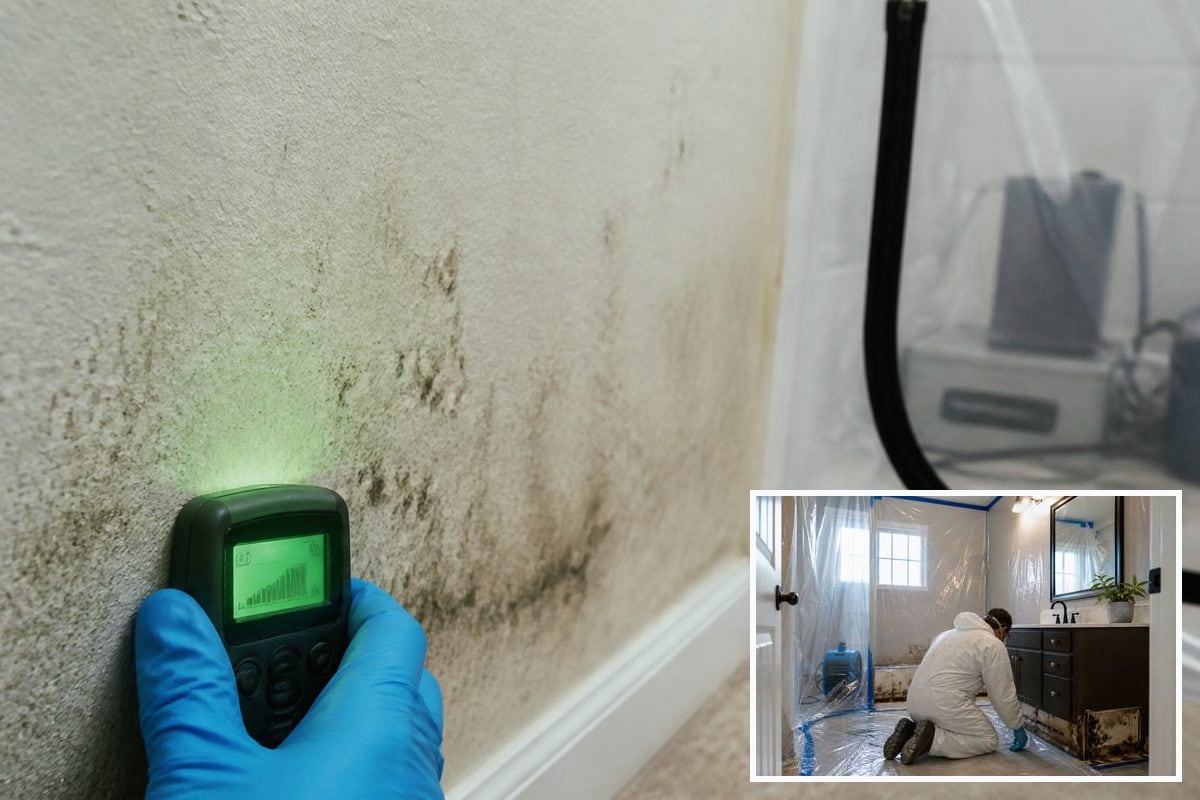
A mold inspection is a visual and moisture-based assessment of a property, performed by a trained inspector who looks for visible mold growth, water damage history, and elevated moisture readings without necessarily collecting samples for a lab. It's typically the starting point when mold is suspected or already visible, and it identifies where the problem is and why it's happening.
Visual Assessment and Moisture Meter Detection
An inspector walks the property looking for visible mold growth, water stains, warped materials, or musty odors, while using a moisture meter to check walls, flooring, and other surfaces for elevated dampness. This combination catches most active mold problems without needing lab confirmation, since visible growth paired with a moisture reading is usually enough to identify the source.
Infrared Thermal Imaging
Some inspections include infrared thermal imaging, which can reveal temperature differences behind walls or under flooring that suggest hidden moisture, even where nothing is visible on the surface. This tool isn't part of every inspection, so confirm with your provider whether it's included or offered as an add-on. What Causes Mold in Buildings? Common Sources in Los Angeles Homes and Properties covers the moisture sources this kind of imaging is designed to catch.
What Is Mold Testing?
Mold testing involves collecting air or surface samples and sending them to a laboratory to identify mold species and measure spore concentrations, producing a documented report rather than a visual assessment alone. Testing answers a more specific question than inspection does: what kind of mold is present, and how much of it.
Air Sampling
Air sampling measures the concentration of mold spores in a property's air compared to typical outdoor levels, which helps determine whether indoor air quality has been affected even when no mold is visible. This is often used when occupants report symptoms but no mold growth can be seen.
Surface Sampling
Surface sampling collects material directly from a suspected area, using tape lifts, swabs, or physical samples, to confirm whether a substance is actually mold and identify which species it is. This method is useful when discoloration on a surface is ambiguous and visual assessment alone can't confirm what it is.
Laboratory Analysis and Turnaround Time
Samples get sent to an accredited lab, where a technician identifies mold species and quantifies spore counts before issuing a written report. Turnaround time varies by lab and sample volume, so ask your provider for [details pending verification] on both the sampling visit and the lab results.
Key Differences Between Mold Inspection and Mold Testing
Mold inspection identifies where mold is growing and what's causing it, while mold testing confirms what type of mold is present and at what concentration, using lab-analyzed samples. The table below breaks down how they differ in practice.
| Factor | Mold Inspection | Mold Testing |
|---|---|---|
| Primary purpose | Locate mold and identify moisture source | Confirm mold species and spore concentration |
| Method | Visual assessment, moisture meter, sometimes infrared | Air sampling, surface sampling, lab analysis |
| Best used when | Mold is visible or moisture history is known | Mold isn't visible but is suspected, or documentation is needed |
| Turnaround | Same-day findings in most cases | Sampling is quick, lab results take longer |
| Typical outcome | A report on location, cause, and extent | A lab report on species and spore counts |
| Common triggers | Visible growth, musty odor, past water damage | Real estate transactions, post-remediation clearance, health concerns |
When You Need a Mold Inspection
An inspection is usually the right first step whenever mold is visible or there's a documented moisture history at the property.
- You can see mold growth on a wall, ceiling, or other surface
- There's a musty odor but the source isn't obvious
- The property had a past leak, flood, or plumbing failure
- You're buying a property and want a general moisture and mold risk assessment
- You want to identify the source of a mold problem before deciding on remediation
When You Need Mold Testing
Testing adds the most value when you need documented, lab-confirmed proof rather than a visual assessment alone.
- No mold is visible, but occupants report symptoms or a persistent musty smell
- You need documentation for a real estate transaction or legal purpose
- A remediation project just finished and you want post-remediation clearance testing
- You want to confirm a specific mold species for health or insurance documentation
- A previous inspection found elevated moisture but no visible growth yet
Do You Need Both an Inspection and a Test?
Many situations resolve with an inspection alone, particularly when mold is visible and the moisture source is clear once an inspector identifies it. Testing becomes worthwhile when you need lab-confirmed documentation beyond what a visual assessment can provide.
Consider a scenario where a tenant reports a musty smell but no visible mold. An inspection alone might not resolve the question, since there's nothing to see and no obvious moisture source yet. In that case, testing plus inspection together give a fuller picture: the inspection locates hidden moisture, and testing confirms whether spore levels in the air are elevated. Compare that to a homeowner who already sees mold on a bathroom ceiling from a known roof leak. An inspection to confirm the extent and source is likely sufficient, with testing adding little beyond confirming what's already visible.
What Mold Inspection and Testing Cost
Cost is one of the most common questions property owners ask, and it deserves a direct answer rather than a runaround. Pricing depends on property size, whether lab analysis is included, and how many samples are collected. Inspection-only visits are typically less expensive than inspection plus lab testing, since lab fees add to the total. Contact LA Water Damage for [details pending verification] specific to your property and situation.
Choosing a Qualified Mold Inspection Provider in Los Angeles
A qualified mold inspection provider in Los Angeles should carry appropriate licensing, explain their process in plain language, and have direct experience with the region's older housing stock and coastal humidity patterns. Not every mold inspector has the same training or equipment, so it's worth checking a few things before hiring.
- Confirm licensing and certification, which LA Water Damage holds under [details pending verification]
- Ask whether the inspector uses moisture meters and infrared imaging, and what's included in the base visit
- Ask how findings are documented and whether you'll receive a written report
- Ask about experience with local building types, including older multifamily stock and stucco-and-slab construction common across Greater Los Angeles
- Get a clear answer on cost and scope before scheduling
To schedule an inspection or ask questions about your property, contact LA Water Damage at request a callback or contact form.
Common Misconceptions About Mold Inspection and Testing
- Myth: Testing is always necessary if you find mold. Fact: If mold is visibly growing, an inspection to determine extent and cause is usually more useful than a lab test confirming what you can already see.
- Myth: A clean air sample means there's no mold problem. Fact: Air sampling reflects conditions at the moment of testing and can miss localized mold behind a wall that hasn't yet released spores into the air.
- Myth: All mold species require the same response. Fact: Response depends on extent, material, and moisture source more than species alone, though some situations warrant additional caution.
- Myth: DIY test kits are as reliable as professional sampling. Fact: Consumer test kits often lack the sampling controls and lab accreditation that give professional results their reliability.
Frequently Asked Questions About Mold Inspection vs Mold Testing
Is mold testing necessary if I can already see mold?
No. If mold is visibly growing, a professional inspection to determine the extent and moisture source is usually more useful than a lab test confirming what's already visible. Testing becomes more valuable when mold is suspected but not visible, or when you need documented proof of air quality.
Can a mold inspection find hidden mold?
Yes. Inspectors use moisture meters and sometimes infrared imaging to detect elevated moisture behind walls, under flooring, or in crawl spaces where mold can grow unseen. This is often the fastest way to locate a hidden problem before it spreads further.
How long does mold testing take?
The on-site sampling itself typically takes under an hour, but lab analysis adds additional time before results are ready. Ask your provider for [details pending verification] on both the inspection visit and lab turnaround.
Which is more important, mold testing or mold inspection?
Neither replaces the other. They answer different questions. An inspection identifies where and why mold is growing, while testing confirms what type of mold is present and at what concentration. Most situations start with an inspection.
How often should a property be inspected for mold?
There's no universal schedule. It depends on prior water damage history, building age, and climate exposure. Properties with a past leak, flood, or ongoing humidity issue benefit from periodic checks. Ask a licensed inspector what makes sense for your specific property.
Do I need both a mold inspection and mold testing?
Not always. Many situations are resolved with an inspection alone, especially when mold is visible and the moisture source is clear. Testing adds value when you need lab-confirmed documentation, such as for a real estate transaction or a health-related concern.
What does a mold inspection or test cost in Los Angeles?
Costs vary by property size, scope, and whether lab analysis is included. Contact LA Water Damage for [details pending verification] specific to your property.
If you suspect mold in your Greater Los Angeles property and aren't sure whether you need an inspection, testing, or both, LA Water Damage can help you figure out the right starting point. Call request a callback or reach out through contact form to talk through your specific situation. For a deeper look at what happens after mold is confirmed, see Mold Removal vs Mold Remediation: What's the Difference and Which Do You Need? and How Mold Remediation Works: The Step-by-Step Process.
---