
Commercial Mold Remediation Planning: A Property Manager's Guide for Greater Los Angeles
If you manage a commercial property in Los Angeles, mold is rarely a surprise. It usually follows something you already know about: a roof leak that went unrepaired through last winter's storms, a slow plumbing leak behind a break room wall, or humidity building up in a building with an aging HVAC system. The hard part isn't spotting mold. It's building a remediation plan that protects tenants, satisfies insurers, and keeps the business running while the work gets done.
This guide walks through what commercial mold remediation actually involves, how to plan it properly, and what to expect at each stage, whether you manage an apartment complex, a restaurant, a school, or an office building.
What Is Commercial Mold Remediation?
Commercial mold remediation is the professional process of identifying, containing, and removing mold contamination from a business or multifamily property, then restoring the affected area to a safe, dry condition. It typically involves an inspection to map moisture and mold extent, containment to stop spore spread, removal of contaminated materials, cleaning, and drying.
Unlike residential mold work, commercial remediation has to account for shared HVAC systems, multiple tenants or occupants, business continuity needs, and sometimes industry-specific compliance requirements. A qualified industrial hygienist or environmental professional often helps define the scope before work begins, especially on larger jobs.
When a Commercial Property Needs Mold Remediation
A commercial property needs mold remediation when moisture has been present long enough for mold colonies to establish, usually signaled by visible growth, a persistent musty smell, or mold-related complaints from tenants or staff. Any water event that wasn't fully dried within a couple of days raises the risk significantly.
Property managers don't always see mold before someone else does. A tenant complaint, a maintenance request, or a routine inspection often triggers the first look. Knowing what to watch for helps you catch problems before they spread through shared walls or HVAC ductwork.
Signs of Mold in Commercial Buildings
Common signs include:
- A musty, earthy odor that doesn't go away with cleaning or air fresheners
- Visible discoloration on walls, ceiling tiles, or around windows
- Peeling paint, bubbling drywall, or warped flooring
- Condensation on windows or cold surfaces on a regular basis
- Tenant or employee reports of respiratory irritation without another clear cause
- Mold-like growth inside HVAC vents or on filters during routine maintenance
None of these signs alone confirms mold, but two or more together are worth a professional look.
Mold Risk After Water Damage or Flooding
Any water intrusion event puts a building at elevated mold risk, and the risk climbs the longer materials stay wet. Roof leaks during atmospheric river storms, burst pipes in older buildings, and sewer backups all create the moisture conditions mold needs. Buildings with flat roofs, common in Los Angeles commercial construction, are particularly prone to slow leaks that go unnoticed until a ceiling tile stains or sags.
How to Build a Commercial Mold Remediation Plan
A commercial mold remediation plan starts with understanding the moisture source and contamination extent, then defines the scope of work, timeline, and communication plan for tenants or staff before any physical work begins. Skipping this planning step is the most common reason remediation projects run over budget or over schedule.
A workable plan generally includes these steps:
- Confirm the moisture source is stopped. Remediation on an active leak is a waste of time and money.
- Get a professional inspection to map the extent of contamination, not just what's visible.
- Define the scope of work in writing, including which materials will be removed, cleaned, or replaced.
- Set a realistic timeline based on the scope, not a guess.
- Identify stakeholders who need updates, including tenants, ownership, insurers, and any regulatory bodies relevant to your industry.
- Decide whether the space can stay occupied during work, or whether phased scheduling is needed.
- Document everything before, during, and after remediation for insurance and liability purposes.
Assessing Moisture Source and Extent
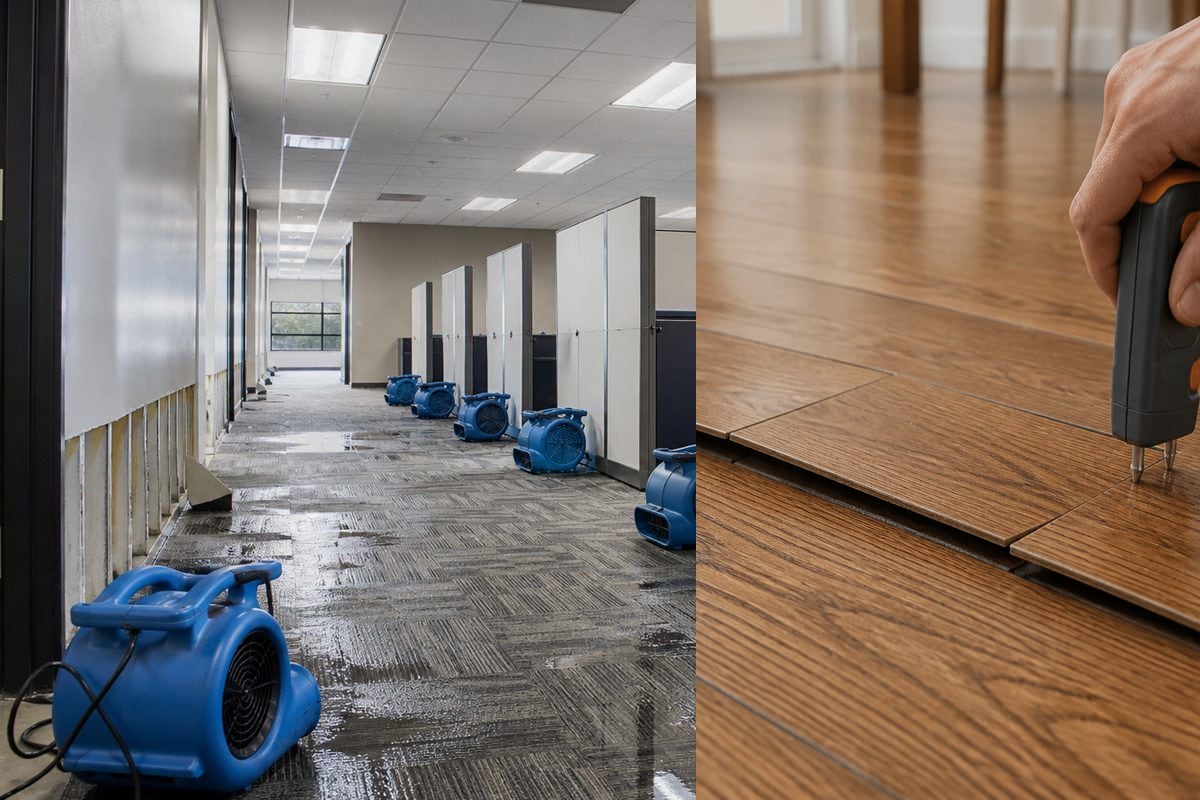
Every remediation plan should start with a moisture assessment, since removing mold without fixing the underlying moisture problem guarantees it comes back. This involves moisture meters, sometimes infrared imaging, and a physical inspection of areas mold commonly hides, like behind baseboards, under flooring, and inside wall cavities near plumbing lines.
Setting Scope, Timeline, and Stakeholder Communication
Commercial properties usually have more people to keep informed than a single homeowner does. A clear communication plan prevents rumors, tenant anxiety, and confusion about access to the space. For multi-tenant buildings, this often means a written notice explaining what's happening, which areas are affected, and what tenants should expect during the work window.
The Commercial Mold Remediation Process Step by Step
Commercial mold remediation generally follows six stages: inspection, containment, air filtration, material removal, cleaning, and drying. The exact sequence and scope depend on the extent of contamination and the type of property involved.
If your building has active water intrusion right now, don't wait on a mold plan before addressing it. How to Prevent Mold After a Leak or Flood
Inspection and Moisture Mapping
A thorough inspection identifies not just where mold is visible, but where moisture has traveled. Technicians use moisture meters and sometimes thermal imaging to trace water behind walls, under flooring, and inside ceiling cavities. This mapping determines the true scope of the job, which is often larger than what's visible from the surface.
Containment Setup
Before any disturbance of mold-affected materials, technicians set up physical containment, usually plastic sheeting and negative air machines, to keep spores from spreading to unaffected parts of the building. The size of the containment area depends on the extent of contamination and whether the space needs to stay partially occupied.
Air Filtration and Negative Pressure
HEPA air scrubbers run inside the containment area to capture airborne spores, while negative air pressure keeps contaminated air from escaping into hallways, adjacent units, or shared HVAC returns. This step is one of the most important for protecting occupied areas of a commercial building during work.
Removal of Mold-Contaminated Materials
Porous materials that have absorbed mold, like drywall, insulation, and carpet, usually can't be fully cleaned and need to be removed. Removal is done carefully to limit disturbance, with contaminated materials bagged and sealed before leaving the containment area.
Cleaning and Antimicrobial Treatment
Remaining surfaces are cleaned with HEPA vacuuming and antimicrobial treatments designed to address residual spores. This step targets both visible surfaces and less obvious areas within the contained zone, like studs and subflooring that will remain in place.
Drying and Structural Restoration
Once cleaning is complete, the space is dried to appropriate moisture levels using industrial dehumidifiers and air movers before any rebuild work starts. Rebuilding too soon, before materials are verified dry, risks trapping moisture behind new finishes and starting the problem over again.
Safety Protocols in Commercial Mold Remediation
Commercial mold remediation safety protocols center on protecting workers and occupants, primarily through personal protective equipment, containment level matched to contamination severity, and precautions around shared HVAC systems. These protocols follow general guidance from the EPA and industry standards rather than being invented per job.
Personal Protective Equipment (PPE)
PPE requirements scale with the size and severity of the affected area. Here's how PPE levels generally break down for remediation work.
| Containment Level | Typical PPE | Common Use Case |
|---|---|---|
| Small isolated area | N95 respirator, gloves, eye protection | Minor, well-contained mold on a small surface area |
| Mid-size contained area | N100 respirator, disposable coveralls, gloves, eye protection | Moderate contamination within a single room or unit |
| Large-scale or full containment | Full-face or powered air-purifying respirator, full disposable suit, boot covers | Extensive contamination, structural involvement, or HVAC contamination |
This table reflects general PPE tiers referenced in EPA mold remediation guidance, not a fixed LA Water Damage protocol for every job. [details pending verification] for specifics on credentials held.
Containment Levels: Limited vs. Full
Limited containment uses plastic sheeting to seal off a smaller affected area, appropriate for contained, moderate mold problems. Full containment involves a sealed structure with an airlock entry and continuous negative air pressure, generally reserved for larger-scale contamination or when work happens near occupied spaces.
HVAC System Precautions
Shared HVAC systems are one of the fastest ways mold spores travel through a commercial building, so systems are typically shut down and sealed off from the containment area before work begins. Ductwork inspection is often part of the scope when mold is found near vents or when a building's HVAC has a history of condensation issues.
Minimizing Business Disruption During Remediation
Most commercial mold remediation can happen without a full building closure, using containment barriers and negative air pressure to isolate affected areas while the rest of the property keeps operating. Full closure becomes more likely when mold has reached HVAC systems, shared airspace, or high-traffic common areas.
Can You Stay Open During Mold Remediation?
Often, yes. Retail floors, office suites, and hotel wings unaffected by the contamination can typically continue operating while a contained area undergoes remediation nearby. The deciding factor is whether the affected area shares air, plumbing, or structural access with occupied space.
Phased Remediation for Occupied Spaces
Phased remediation breaks a larger job into smaller sections, allowing part of a building to be remediated while occupants use another part, then rotating through the space. This approach takes longer overall but avoids the revenue and disruption cost of a full closure, which matters most for hotels, restaurants, and multifamily buildings where displacement has real costs for tenants and guests.
Talk to your remediation provider early about phased scheduling if closing your business isn't an option. request a callback can connect you with a team that plans around your operating hours where possible.
Commercial Mold Remediation by Industry
Commercial mold remediation needs vary by industry, since a hotel, a restaurant, and a healthcare facility each carry different compliance requirements and occupant risk factors. Matching the remediation approach to the property type matters as much as the remediation technique itself.
Multifamily and Apartment Buildings
Multifamily properties carry habitability obligations to tenants, which makes timely mold response a legal as well as a health issue. Los Angeles's renter-majority housing market means property managers often coordinate remediation around occupied units, tenant notices, and sometimes temporary relocation for severely affected units.
Hotels and Hospitality
Hotels need remediation that minimizes guest-facing disruption, often scheduling contained work during low-occupancy periods or isolating affected wings entirely. Guest room turnover schedules add a layer of timing complexity that residential remediation doesn't have to consider.
Restaurants and Food Service
Restaurants face health department inspection standards on top of standard remediation requirements, particularly when mold affects kitchen, storage, or HVAC areas near food prep. Coordinating remediation with health inspection timing helps avoid compounding a mold issue with a compliance issue.
Healthcare Facilities
Healthcare facilities require the most conservative containment and infection control approach, since immunocompromised patients face elevated risk from mold exposure. Remediation in these settings often follows stricter containment protocols and closer coordination with facility infection control staff.
Schools
Schools need remediation scheduled around student and staff presence, often during breaks or weekends when possible, along with clear communication to parents and staff about affected areas. Indoor air quality concerns tend to draw more public attention in school settings than in most other commercial properties.
Retail, Warehouse, and Office Properties
Retail, warehouse, and office properties generally have more scheduling flexibility than healthcare or hospitality settings, allowing phased or after-hours remediation in many cases. Warehouses in particular may have large square footage but lower occupant density, which changes the containment math.
How Long Does Commercial Mold Remediation Take?
Commercial mold remediation timelines depend on the size of the affected area, the extent of moisture damage, and whether the space needs to remain occupied during work. A small, contained job in a single office might wrap up faster than a large-scale project involving HVAC systems or an occupied multifamily building.
Factors that extend timelines include:
- Contamination reaching HVAC ductwork or shared airspace
- Structural materials requiring extensive removal and rebuild
- The need to phase work around business operations
- Delays in receiving inspection or lab results for larger jobs
[details pending verification] for LA Water Damage's typical commercial response and project timeline.
Verifying the Remediation Is Complete
Remediation isn't considered finished until it passes post-remediation verification, an independent check confirming the work met accepted clearance standards before the space is reoccupied. This step, sometimes called clearance testing, typically includes a visual inspection along with moisture and air testing.
What Is Post-Remediation Verification? covers the full process, including who should perform it and what the results actually mean.
What Commercial Mold Remediation Costs
Commercial mold remediation cost depends on the size of the affected area, the materials involved, accessibility, and whether HVAC or structural components are affected. Larger, more complex jobs with structural rebuild needs cost more than small, contained cleanups.
[details pending verification] — every commercial property is different, so an accurate number requires a property-specific assessment. Mold Remediation Cost Factors breaks down exactly what drives pricing up or down.
Does Insurance Cover Commercial Mold Remediation?
Commercial property insurance coverage for mold depends on your specific policy and what caused the mold in the first place. Mold tied to a sudden, covered event, like a burst pipe, is generally more likely to be covered than mold resulting from long-term neglect or deferred maintenance.
Confirm your policy's specific mold provisions with your insurer or broker before assuming coverage either way. Does Insurance Cover Mold Remediation? walks through what's typically covered, what's typically excluded, and how to document a claim properly.
Choosing a Commercial Mold Remediation Company
Choosing a commercial mold remediation company means verifying licensing, checking for relevant certifications, and confirming they'll provide a clear, written scope of work before any work begins. A company willing to explain its process in plain language, rather than pushing you toward the most expensive option, is generally a better sign than flashy marketing claims.
Questions to Ask Before Hiring
- What is your licensing and certification status? [details pending verification]
- Will you provide a written scope of work before starting?
- Do you work with an independent industrial hygienist for testing and verification?
- How do you handle occupied or partially occupied spaces?
- What does your post-remediation verification process look like?
- Can you provide documentation suitable for insurance claims?
Frequently Asked Questions About Commercial Mold Remediation Planning
How long does commercial mold remediation take?
Timelines depend on the size of the affected area, the extent of moisture damage, and whether the space must remain occupied during work. Small, contained jobs may wrap up faster than large-scale or occupied-building remediation. [details pending verification] for LA Water Damage's typical commercial response.
Can my business stay open during mold remediation?
Often, yes. Remediation teams can isolate affected areas with containment barriers and negative air pressure so unaffected parts of the building keep operating. Full closure is more likely when the affected area covers HVAC systems, shared airspace, or high-traffic zones.
What industries need commercial mold remediation most often?
Properties with frequent water exposure or humidity control challenges, including multifamily buildings, hotels, restaurants, healthcare facilities, schools, and warehouses, tend to see mold issues more often, usually tied to plumbing leaks, roof failures, or HVAC condensation problems.
Do I need to test for mold before remediation?
A professional inspection helps define the scope of contamination and guides the remediation plan. Testing approaches vary by situation. A qualified inspector can advise whether sampling is necessary for your specific property.
Is post-remediation verification required after commercial mold remediation?
It's considered a best practice. Verification through visual inspection, moisture testing, and air testing confirms the remediation met clearance standards before the space is reoccupied or renovated. What Is Post-Remediation Verification? covers this in detail.
What does commercial mold remediation cost?
Cost depends on the size of the affected area, materials involved, accessibility, and whether HVAC or structural components are affected. [details pending verification] — contact us for a property-specific assessment.
Does insurance cover commercial mold remediation?
Coverage depends on your specific policy and what caused the mold. Mold tied to a sudden, covered event is more commonly covered than mold from long-term neglect. Confirm details with your insurer or broker.
What should I do first if I find mold at my business?
Document what you see, limit access to the area, address any active moisture source, and contact a qualified remediation company for an inspection. Avoid disturbing visible mold, which can spread spores.
Next Steps for Your Property
Planning a commercial mold remediation project doesn't have to mean guessing your way through it. Whether you're dealing with a single unit or a multi-building portfolio across Greater Los Angeles, a clear plan built around your business's operating needs makes the process faster and less disruptive.
Reach out at request a callback or visit contact form to talk through your property's specific situation and next steps.
---