
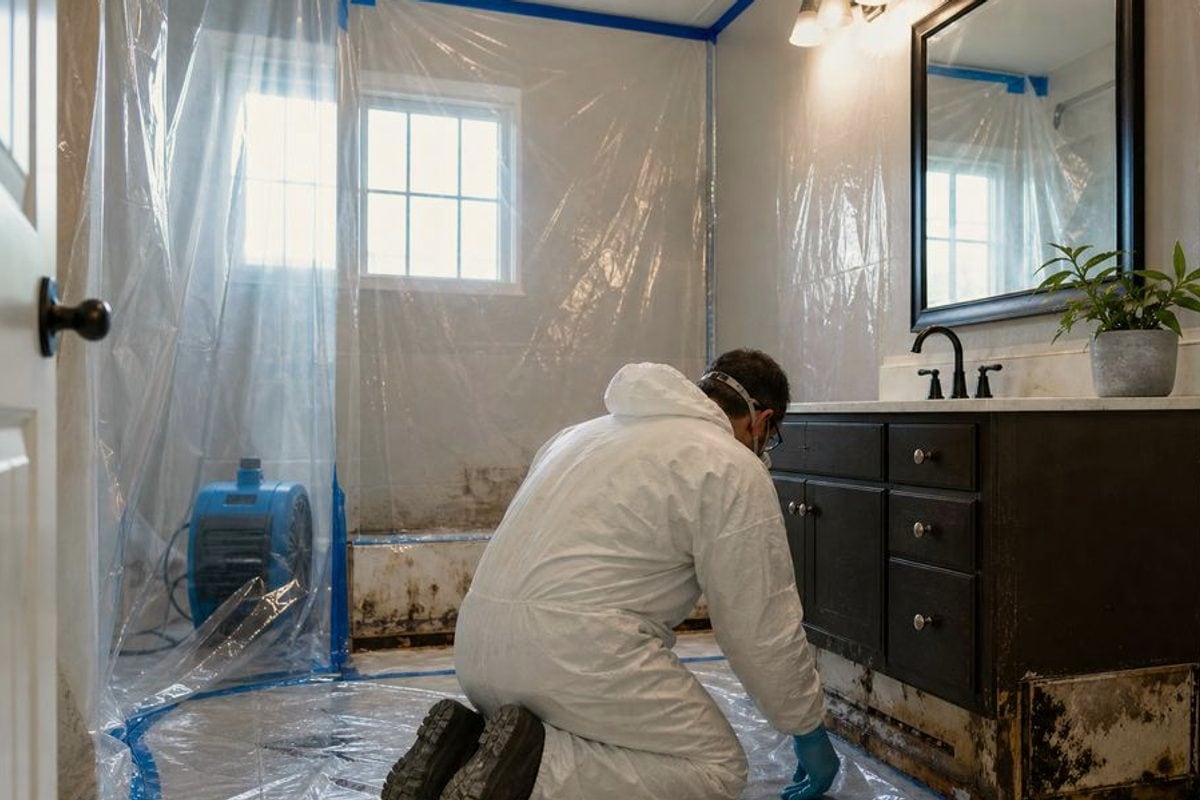
Yes, water damage causes mold. Once drywall, wood, carpet, or insulation stays wet, mold spores that already exist in the air find everything they need to grow, often within 24 to 48 hours. This is not a rare outcome. It is the standard, well-documented result of any water intrusion that isn't dried quickly.
That timeline matters more than almost anything else you'll read about mold. It's the reason restoration professionals talk about drying speed the way doctors talk about the "golden hour" after an injury. The faster the water comes out and the structure dries, the lower the odds mold ever gets a foothold. This guide walks through how fast mold actually grows, how to spot it once it's already there, whether it's dangerous, and what a real remediation process looks like for a Los Angeles home.
Yes — Water Damage Causes Mold, Often Within 24–48 Hours
Mold growth after water damage follows a predictable timeline driven by moisture, warmth, and organic material. Mold spores are already present in nearly every home's air. They only need a wet surface and a few days of stagnant humidity to start colonizing.
The Mold Growth Timeline After a Water Event
- 0 to 24 hours: Materials are wet, but active mold colonization has typically not yet started. This is the window where extraction and drying prevent the most damage.
- 24 to 48 hours: Conditions become ideal for germination. Microscopic mold growth can begin on porous surfaces like drywall paper and carpet backing.
- 48 hours to 1 week: Visible colonies can appear, often as discoloration or fuzzy patches, especially in warm, humid, low-airflow areas.
- 1 week and beyond: Growth can spread across larger surfaces and move into wall cavities, subflooring, and other hidden spaces, making removal more invasive and costly.
What to Do After a House Flood: A Step-by-Step Guide walks through the exact steps to take in that first critical 24-hour window.
Why Los Angeles Homes Are Especially Vulnerable
Los Angeles homes face a specific combination of conditions that raise mold risk after any leak or flood. The rainy season, roughly November through March, brings concentrated periods of heavy rain after long dry stretches, which stresses roofing and drainage systems that sit unused most of the year. Stucco exteriors, common across the region, can trap moisture against wall sheathing if water gets behind them. Many homes sit on slab foundations, so a slab leak can soak flooring and drywall from below before anyone notices. Add poor attic ventilation in older homes and the coastal marine layer's humidity, and materials in Los Angeles can stay damp longer than homeowners expect, even without a dramatic flood event.
How to Tell If Water Damage Has Already Turned Into Mold
Mold after water damage usually announces itself through a combination of visible discoloration, a musty smell, and symptoms that show up before you ever see a spore. Catching these signs early keeps a small problem from becoming a structural one.
Visible Signs (Discoloration, Bubbling Drywall, Warping)
- Dark spots, streaks, or fuzzy patches in green, black, gray, or white
- Bubbling, peeling, or bowing paint and wallpaper
- Warped, swollen, or soft baseboards and drywall
- Buckling or cupping wood flooring near a past leak
- Discoloration on ceiling tiles or drywall seams
Smell and Air Quality Clues
- A persistent musty or earthy odor that doesn't fade with ventilation
- A smell that gets stronger near a specific wall, closet, or floor area
- Unexplained increases in sneezing, coughing, or eye irritation indoors
- An odor that returns after cleaning, suggesting a hidden moisture source
Hidden Signs Behind Walls, Under Flooring, and in Crawl Spaces
- A history of a slow leak, past flood, or unresolved plumbing issue in the area
- Cold or damp spots on walls or flooring with no obvious cause
- Rising utility bills that could point to a hidden water leak
- Visible moisture or staining inside a crawl space or under-sink cabinet
If any of these signs sound familiar, a moisture inspection can confirm what's happening before you open a wall. Schedule a mold inspection at contact form.
Is Mold From Water Damage Dangerous to Your Health?
Mold exposure can cause symptoms in some people, ranging from mild irritation to more pronounced allergic-type reactions, though reactions vary widely by individual. This is general information, not medical advice. Anyone with existing respiratory conditions or ongoing health concerns should speak with a physician or a qualified industrial hygienist before making decisions based on mold exposure alone.
Most reported symptoms are consistent with a mild allergic or irritant response rather than a medical emergency, but that doesn't mean they should be ignored, especially in a home where the source of moisture hasn't been addressed.
Commonly Reported Symptoms
- Sneezing, runny or stuffy nose
- Coughing or throat irritation
- Watery or itchy eyes
- Skin irritation on contact
- Headaches or fatigue in poorly ventilated spaces
Who Is Most at Risk
- People with asthma or existing respiratory conditions
- Individuals with mold or other allergies
- Immunocompromised individuals
- Infants and young children
- Older adults
Common Types of Household Mold After Water Damage
Household mold after a water event usually falls into a handful of well-studied genera, most of which are common, surface-level molds rather than rare or exotic species. Identifying the general category helps set expectations for cleanup, though a lab test is the only way to confirm species with certainty.
Common Surface Molds
Cladosporium and Penicillium are among the most frequently found molds in homes after water intrusion. Both typically appear as green, gray, or black patches on drywall, wood, fabric, or in HVAC systems, and both are well documented in public health literature as common indoor molds tied to moisture problems rather than unusual contamination events.
Black Mold (Stachybotrys)
Stachybotrys chartarum, often called black mold, tends to grow on materials that stay wet for extended periods, such as saturated drywall paper or water-damaged wood. It has a slimy, dark greenish-black appearance when actively growing. It gets outsized attention in popular media, but the practical takeaway is simpler than the reputation suggests: any mold growth following water damage, regardless of color, should be treated as a signal that moisture wasn't fully resolved and warrants assessment.
DIY Mold Cleanup vs Calling a Professional
Small, isolated surface mold on a hard, nonporous surface may be manageable with basic cleaning and proper protective equipment. Larger areas, mold on porous materials, or mold following a significant water event typically call for professional assessment, following general guidance from sources like the EPA on when remediation should be handled by trained technicians.
| Scenario | DIY May Be Appropriate | Professional Recommended |
|---|---|---|
| Affected area | Under roughly 10 square feet | Over roughly 10 square feet |
| Surface type | Hard, nonporous (tile, glass, metal) | Porous (drywall, carpet, insulation, subfloor) |
| Water source | Clean water, dried within 24-48 hours | Contaminated water or prolonged wetness |
| Household health | No respiratory conditions among occupants | Asthma, allergies, or immune concerns present |
| Odor | No lingering musty smell | Strong, spreading, or recurring musty odor |
| History | First-time, isolated spot | Recurring mold or unresolved moisture source |
When a Small Spot May Be Safe to Handle Yourself
A small patch of surface mold on tile, glass, or sealed countertop, caught early and fully dried afterward, can often be cleaned with standard household cleaning products and gloves, provided the underlying moisture source is also fixed.
When You Need Professional Mold Remediation
Mold on drywall, insulation, carpet, or wood framing, mold covering a large area, or mold that keeps returning after cleaning all point toward a moisture problem that needs professional diagnosis, not just surface cleaning. Request a mold assessment at contact form.
What Professional Mold Remediation Involves
Professional mold remediation follows a structured process designed to contain the problem, remove it safely, and verify the underlying moisture source is resolved, rather than just wiping visible growth off a surface. The general sequence below reflects standard industry practice, not a claim specific to any one company's exact methodology. [details pending verification]
Inspection and Moisture Mapping
A technician inspects affected areas and uses a moisture meter and, in many cases, thermal imaging to map how far moisture has traveled behind walls, under flooring, or into adjacent rooms, since mold growth often extends beyond what's visible.
Containment and Air Filtration
Before removal begins, the affected area is typically sealed off with physical containment barriers, and a HEPA air scrubber runs to capture airborne spores and keep them from spreading to unaffected parts of the home during the work.
Removal, Cleaning, and Sanitizing
Contaminated porous materials that can't be fully cleaned, such as saturated drywall or carpet padding, are removed and disposed of, while salvageable surfaces are cleaned and treated with an antimicrobial solution to address remaining spores.
Structural Drying and Repairs
Once the source is addressed and the area is clean, the space is dried completely with air movers and dehumidifiers before any drywall, flooring, or trim repairs begin, closing the loop on the moisture problem that caused the growth in the first place.
If you're dealing with visible mold or a musty odor tied to past water damage, contact LA Water Damage for mold remediation at request a callback.
How to Prevent Mold After Future Water Damage
The single biggest factor in preventing mold after water damage is speed. Materials that dry within 24 to 48 hours rarely develop significant mold growth, while materials left wet for days almost always do.
Fast Water Extraction and Drying
Removing standing water immediately and running air movers and dehumidifiers without delay gives mold the smallest possible window to establish itself. This is the priority step covered in What to Do After a House Flood: A Step-by-Step Guide.
Humidity and Ventilation Control in LA Homes
Keeping indoor humidity below roughly 50 percent, improving attic and crawl space ventilation, and addressing stucco or slab moisture issues promptly all reduce the chronic dampness that lets mold take hold even without a dramatic flood. For a broader look at drying and restoration fundamentals, see Water Damage Restoration Services.
Frequently Asked Questions About Water Damage and Mold
How fast can mold grow after water damage?
Mold can begin growing within 24 to 48 hours of a water intrusion when moisture, warmth, and an organic surface, such as drywall, wood, or carpet, are present. That's why fast water extraction and drying matter more than almost anything else after a leak or flood in a Los Angeles home.
Does all water damage lead to mold?
Not always. If standing water and moisture are fully removed and the area is dried within roughly 24 to 48 hours, mold growth can often be prevented. The longer materials stay wet, the higher the risk becomes.
Can I remove mold myself?
Small, isolated surface mold on a hard, nonporous surface may be manageable with basic cleaning. Larger areas, mold on porous materials, or mold following a significant water event typically call for professional assessment and remediation.
Is mold from water damage dangerous to my health?
Mold exposure can cause symptoms in some people, including irritation and allergic-type reactions. This is general information, not medical advice. Anyone with existing respiratory conditions or health concerns should speak with a physician or a qualified industrial hygienist.
How do I know if mold is hidden behind my walls?
Warning signs include a persistent musty odor, unexplained allergy symptoms indoors, discoloration or bubbling on walls, and any history of a slow leak or past flooding. A professional moisture inspection can confirm what's happening inside wall cavities.
What is the difference between water damage cleanup and mold remediation?
Water damage cleanup focuses on removing water and drying the structure. Mold remediation is a separate, specialized process for safely removing existing mold growth, which may be needed if drying wasn't completed quickly enough after the original water event.
Does homeowners insurance cover mold caused by water damage?
Coverage varies by policy and by the cause of the original water damage. Homeowners should review their policy details or speak with their insurance provider directly to confirm what is and isn't covered.
Get Emergency Water Damage and Mold Help in Los Angeles
If you're dealing with a fresh leak, a flooded room, or mold you've just discovered, waiting rarely makes the situation easier to fix. LA Water Damage serves Greater Los Angeles homeowners with water extraction, structural drying, and mold remediation handled by [details pending verification] technicians. [details pending verification]
Call request a callback or visit contact form to schedule an inspection or request emergency service.
---