
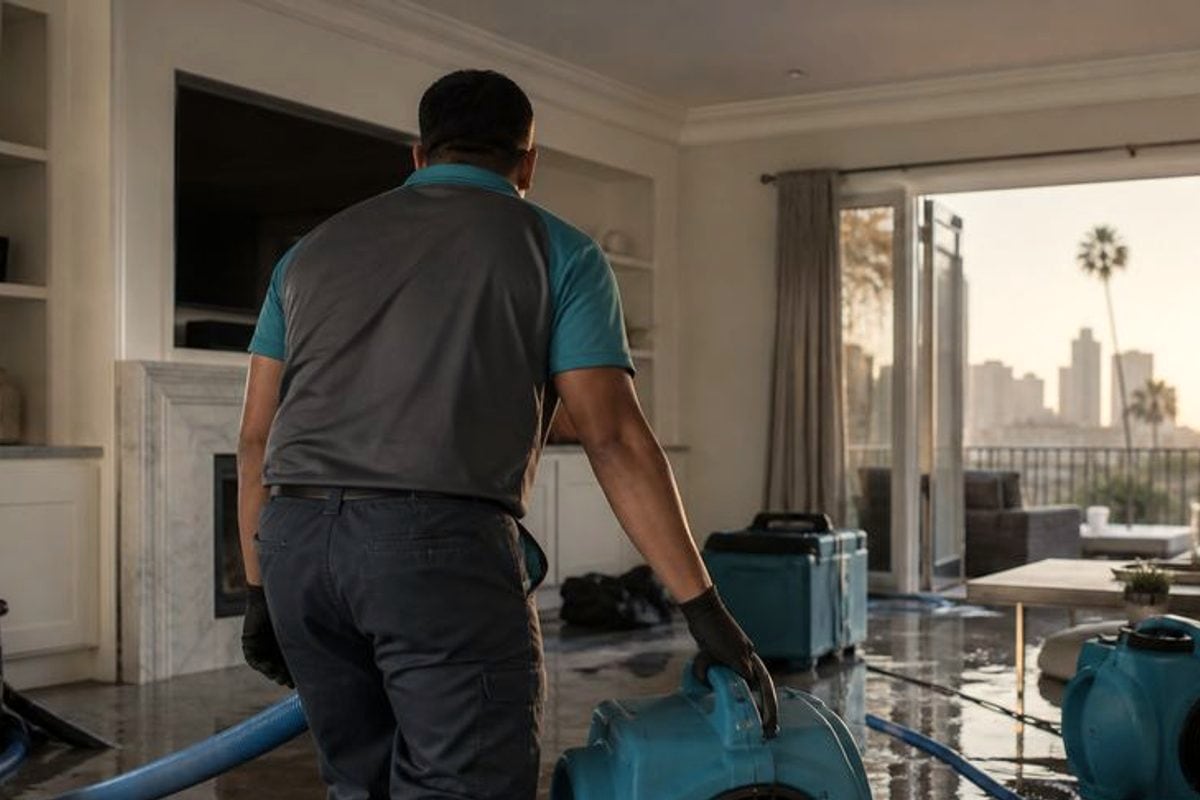
When water, fire, or sewage damage hits your home or building, it's hard to think clearly about anything beyond the mess in front of you. This checklist is built to be used in the moment, not read cover to cover in advance, though it helps to know it exists before you need it. It walks through safety, containment, documentation, insurance, and hiring a restoration company in the order most people actually need them.
How to Use This Checklist
Use this checklist in order during an active property damage situation, starting with safety and moving through containment, documentation, insurance, and professional help. Not every section will apply to your situation. Skip what doesn't and come back to sections you need later. If you want a tighter, minute-by-minute version focused specifically on the first 60 minutes, see What to Do in the First Hour After Property Damage.
Immediate Safety Checklist (First Actions)
Before anything else, check for electrical hazards, gas smells, and structural instability, and leave the property if any of these are present. A professional assessment should confirm any safety concern you're unsure about. This list is general guidance, not a substitute for that assessment.
Residential Safety Checks
- No standing water touching outlets, panels, or appliances
- No gas odor anywhere in the home
- No sagging ceilings, bowed walls, or unstable flooring
- Clear exit paths in case you need to leave quickly
- Pets and household members accounted for
Commercial Property Safety Checks
- Building-wide power and gas status confirmed before re-entry
- Affected floors or units identified and access restricted if unsafe
- Fire alarm and sprinkler systems checked for damage-related false triggers
- Tenants, guests, or occupants accounted for and notified of any restricted areas
Stop and Contain Further Damage
Once the property is safe, contain the damage at its source if you can do so without personal risk, since every additional hour tends to increase both the damage and the eventual repair cost.
Water and Flood Damage
Shut off the main water supply if the source is a plumbing failure. Move furniture and belongings away from standing water if it's safe to do so. Open windows for ventilation if weather permits, since airflow can help slow moisture buildup, though it won't dry a saturated structure on its own.
Fire and Smoke Damage
Don't re-enter closed rooms after a fire, even a small one, until you're sure it's fully out and it's been cleared by fire officials if they responded. Avoid touching soot-covered surfaces, since pressing on them can drive residue deeper into the material.
Sewage and Sewer Backup
Keep people and pets away from the affected area entirely. Sewage is classified as Category 3, contaminated water, and it isn't safe to handle without proper protective equipment. This is one of the few damage types where "just wait for the professionals" is the correct first move, full stop.
Mold Risk Situations
Any water event that isn't fully dried within roughly 24 to 48 hours carries a general, well-documented risk of mold growth, according to standard industry drying guidance, though actual timelines vary by humidity and material. In Greater Los Angeles, coastal marine-layer humidity can slow natural drying even when there's no active leak anymore, which is part of why professional drying equipment often outperforms open windows and fans alone.
Document the Damage
Photograph and record every affected area and item before cleanup begins, since this documentation supports your insurance claim and any restoration company's initial assessment.
Photo and Video Checklist
- Every affected room, photographed from multiple angles
- Close-ups of structural damage, water lines, char marks, or contamination
- A full video walkthrough
- The apparent source of the damage, if visible
Item Inventory and Receipts
List damaged items with approximate value and, where available, receipts or purchase records. Don't dispose of anything until it's been documented and, ideally, reviewed by your adjuster, unless it poses a health hazard.
Contact Your Insurance Company
Report the damage to your insurance company as soon as it's safe, providing your policy number and a clear description of what happened.
Information Your Insurer Will Request
Your policy number, the date and cause of damage, whether the property is currently occupiable, and any documentation you already have ready.
Understanding Your Coverage Basics
Two terms come up constantly in claims conversations: RCV and ACV. RCV, or replacement cost value, is what it costs to replace a damaged item with a new equivalent today. ACV, or actual cash value, is that replacement cost minus depreciation for the item's age and wear. Which one applies depends entirely on your specific policy, so this is worth clarifying directly with your insurer rather than assuming.
File Your Insurance Claim
File your claim by contacting your insurer directly, providing your documentation, and following their process for adjuster review, keeping in mind that filing deadlines vary by policy and state.
- Contact your insurer and open a claim
- Provide your policy number and documentation
- Schedule an adjuster visit if required
- Get repair estimates once your insurer confirms next steps
- Keep records of every communication and reference number
Working With an Insurance Adjuster
The adjuster's job is to assess the damage and determine what your policy covers. Being organized, having your documentation ready, and asking direct questions about coverage terms you don't understand all tend to make this process smoother.
Common Claim-Filing Mistakes
Waiting too long to report damage, starting repairs before the adjuster has seen the property, and throwing away damaged items too early are the three mistakes that come up most often. None of them are fatal to a claim, but all of them can slow things down.
Choose a Restoration Company
Choose a restoration company by checking their licensing, asking about their experience with your specific type of damage, and getting a clear scope of work before they begin. This deserves its own careful look, since not every company you find in a panicked search is equally qualified.
Questions to Ask Before Hiring
- What licensing or industry certification do you hold? ([details pending verification] for LA Water Damage)
- Have you handled this specific type of damage before?
- Do you work directly with insurance adjusters?
- What does your initial assessment include?
- What's your general process from first call to completed work?
What Information to Have Ready
Before you call, gather your address, a description of the damage, and your safety status on-site. What Information to Give a Restoration Company walks through this in full detail, including what's different for water, fire, sewage, and mold situations.
Commercial and Multifamily Property Checklist
Multifamily buildings, hotels, restaurants, healthcare facilities, schools, retail spaces, warehouses, and offices all face the same core steps, plus a layer of coordination that single-family homes don't.
| Step | Residential | Commercial/Multifamily |
|---|---|---|
| Safety check | Household and pets | All occupants, common areas, building systems |
| Notification | Landlord, if renting | Property manager, tenants, sometimes local authorities |
| Documentation | Single unit | Affected units plus shared infrastructure |
| Business impact | Minimal | Potential closures, revenue impact, guest or resident communication |
Notifying Tenants and Residents
Clear, prompt communication about what happened, what's being done, and any temporary access restrictions tends to reduce confusion and complaints. For When Should You Leave a Damaged Property?, the same evacuation criteria that apply to a single home apply at the unit level in multifamily buildings.
Business Continuity Considerations
Commercial properties often need to think about operating hours, guest or customer communication, and whether parts of the building can stay operational during restoration work. A restoration company experienced with commercial properties, like LA Water Damage, can usually help sequence work to minimize downtime, though every situation is different.
Before Disaster Strikes: A Preventive Checklist
- Know where your main water shutoff valve is located
- Keep your insurance policy number and agent contact somewhere accessible
- Photograph your home's contents periodically for insurance purposes
- Save a restoration company's contact information, like LA Water Damage's request a callback, somewhere you can find it quickly
- Know your building's fire alarm and sprinkler system basics if you're in a commercial or multifamily property
Frequently Asked Questions About Emergency Property Damage Checklists
What's the very first thing I should do when I discover property damage?
Check for immediate safety hazards like standing water near electrical outlets, gas smells, or structural instability. If it's unsafe, leave the property and call emergency services before doing anything else. Once it's safe, move on to documenting and containing the damage.
Do I need a different checklist for water damage versus fire damage?
The core steps, safety, containment, documentation, insurance, and professional help, are the same, but specific actions differ. Water damage calls for shutting off the water source, while fire damage requires waiting for an all-clear from fire officials before re-entering.
How long do I have to file an insurance claim after property damage?
Deadlines vary by insurer and policy, sometimes by state requirements too. Check your policy documents or contact your insurance company directly to confirm your specific filing window rather than relying on a general timeframe.
Should I get repair estimates before or after contacting my insurance company?
Contact your insurer first in most cases. They'll often want to send an adjuster before repairs begin, and getting repair work done too early can complicate the claims process. Ask your insurer directly about their preferred sequence.
What's different about an emergency checklist for a commercial or multifamily property?
Commercial and multifamily properties typically add steps like tenant or resident notification, coordinating access to individual units, and business continuity planning, on top of the standard safety, documentation, and insurance steps.
Do I need to keep damaged items, or can I throw them away?
Keep damaged items until your insurance adjuster has reviewed them or given clearance to dispose of them, unless they pose a health or safety hazard. Photograph everything before any disposal.
Next Steps With LA Water Damage
This checklist covers the full arc of an emergency, from the first safety check to hiring the right restoration company. If you're facing property damage right now in Greater Los Angeles, LA Water Damage can help with assessment and mitigation. Reach out at request a callback or contact form to talk through your specific situation.
---