
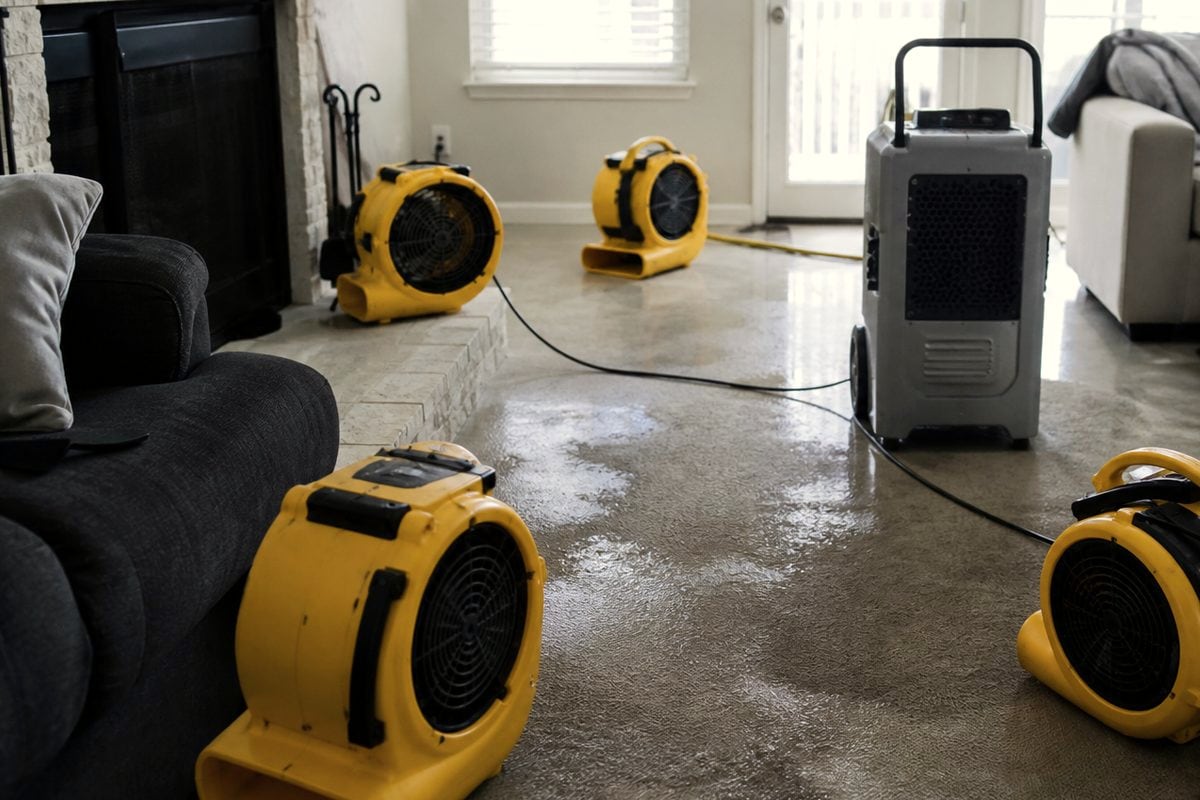
Property damage rarely announces itself politely. A pipe bursts behind a wall, a pan catches fire on the stove, or you come home to water pooling under the bathroom door. In that first hour, what you do (and don't do) shapes how much worse the damage gets, how smoothly your insurance claim goes, and how safe you and your family stay. This guide walks through that first hour step by step, written for homeowners and renters across Greater Los Angeles dealing with water, fire, or sewage damage right now.
Why the First Hour Matters More Than You Think
The first hour after property damage matters because water and smoke keep spreading, and every extra hour of exposure tends to increase both the physical damage and the cost to fix it. Water absorbs into drywall, flooring, and framing continuously until it's extracted or dried. Smoke and soot settle into fabrics and porous surfaces the longer they sit. Industry guidance generally treats the first 24 to 48 hours after a water event as a critical window for preventing secondary damage like mold growth, though the exact timeline depends heavily on humidity, temperature, and how much water is involved. That's not a guarantee of what will happen in your home. It's a reason not to wait around before taking the steps below.
Structural saturation is the other quiet risk. Wood framing, subflooring, and drywall can hold water long after the surface looks dry, which is part of why professional moisture readings matter more than a visual check.
Step 1 — Confirm Everyone's Safety
Before you do anything else, make sure every person and pet is out of immediate danger, and don't enter a property with visible structural damage, standing water near power sources, or a gas smell. Property damage is a physical event first and a property problem second. Safety always comes before saving belongings or documenting anything.
Signs You Should Leave the Property Immediately
- A strong gas odor anywhere in or near the building
- Visible sagging in ceilings or floors
- Water that has reached electrical outlets, panels, or appliances
- Active smoke or fire, even if it looks small
- Cracking, popping, or shifting sounds from walls or framing
If you notice any of these, get everyone outside and call 911 or your local fire department before doing anything else. This is general safety guidance, not a substitute for a professional structural or electrical inspection.
Electrical, Gas, and Structural Red Flags
Standing water and electricity are a dangerous combination. Don't walk through standing water to reach a breaker panel or an appliance. If the panel itself is wet, leave it alone and wait for a licensed electrician or restoration professional to assess it. Gas leaks are a fire department and utility company matter, not a DIY fix. Structural red flags, like a bowed wall or a floor that feels spongy underfoot, mean the building's ability to hold weight safely is in question, and that's a job for a qualified inspector, not a guess.
Step 2 — Stop the Source of Damage (If It's Safe)
If it's safe to do so, stopping the source of ongoing damage, such as shutting off the water supply or cutting power to an affected circuit, can meaningfully limit how much damage spreads before help arrives. "If it's safe" is doing real work in that sentence. Skip this step entirely if it means entering standing water, touching a wet electrical panel, or going anywhere near active fire or a gas leak.
| Damage Type | Safe First Action | Who Should Handle the Rest |
|---|---|---|
| Water leak or pipe burst | Shut off the main water supply valve | Restoration technician |
| Fire (small, contained, extinguished) | Ventilate if safe, don't re-enter closed rooms | Fire department, then restoration technician |
| Sewage backup | Avoid contact, keep people and pets away | Restoration technician with proper PPE |
| Active gas leak | Leave immediately, don't operate switches | Utility company and fire department |
Water Damage: Shutting Off the Water Supply
Most homes have a main shutoff valve near the water meter, in a garage, or in a basement or crawlspace, depending on the property's age and layout. In much of Los Angeles's older housing stock, especially pre-1960s buildings, that valve can be stiff from age or corrosion, so it helps to know where it is and how it operates before an emergency happens. Turning it off stops new water from entering the system while you wait for help. It does nothing for the water that's already on the floor, and that's fine. Extraction is a job for the next step.
Fire and Smoke: What to Do Before Firefighters Arrive
If a fire is small and you've safely extinguished it, don't go back into closed rooms to check on things. Smoke can linger and off-gas even after visible flames are gone, and reopening a room can feed a hidden ember. If firefighters were called, wait for their explicit clearance before re-entering any part of the structure. This is a case where patience genuinely protects you.
Sewage Backup: Why You Should Not Attempt This Yourself
Sewage backup is classified as Category 3 water under industry standards, meaning it's grossly contaminated and can carry bacteria, viruses, and other pathogens. This isn't a "grab some towels" situation. Professional-grade personal protective equipment, containment barriers, and disposal procedures are typically required to handle it safely, which is why this specific type of damage calls for trained restoration technicians rather than a DIY cleanup, even a well-intentioned one.
Step 3 — Document Everything Before You Touch Anything
Once the property is safe, document the damage with photos and video before you move, clean, or discard anything, since this evidence supports your insurance claim later. It's tempting to start mopping up immediately. Resist that urge for a few minutes and document first.
What to Photograph and Record
- Wide shots of each affected room from multiple angles
- Close-ups of damaged items, materials, and visible water lines or char marks
- Video walkthroughs that capture the full extent of the damage
- The source of the damage itself, if visible and safe to photograph
- Timestamps, either built into your phone's photo metadata or noted separately
Saving Receipts and Damaged-Item Records
Keep any receipts you have for damaged items, even old ones. If you don't have receipts, note the item, approximate purchase date, and estimated value as best you can. This becomes the basis of your itemized inventory for the insurance claim, which we cover in more depth in Emergency Property Damage Checklist.
Step 4 — Contact Your Insurance Company
Call your insurance company as soon as it's safe to do so, since most policies expect prompt notification and reasonable steps to prevent further damage. This step can happen in parallel with calling a restoration company. It doesn't have to be sequential.
What Information Your Insurer Will Ask For
- Your policy number
- A description of what happened and when
- Whether anyone was injured
- Whether the property is currently safe to occupy
- Photos or video, if you have them ready
Common Mistakes That Delay Claims
Waiting too long to report the damage is the most common delay. So is starting repairs before the adjuster has seen the damage, or discarding items before they've been documented. None of these mistakes are dramatic, but each one can add friction and time to a claims process that's already stressful enough.
Step 5 — Contact a Restoration Professional
Calling a restoration professional early, ideally within the same first hour, gives trained technicians the best chance to limit secondary damage like mold growth and structural saturation. Insurance and restoration calls often happen back to back, and that's normal.
What Information to Have Ready When You Call
Have your address, a description of the damage type, and whether the property is currently safe on-site. We cover this in full detail in What Information to Give a Restoration Company, but the short version is: the more specific you can be up front, the faster the right crew and equipment get dispatched.
What Happens During the First On-Site Response
A restoration technician arriving on-site will typically assess the extent of the damage, identify the water category or damage source, and begin initial mitigation work such as water extraction or securing the property against further exposure. Response windows vary by situation and current demand. LA Water Damage serves Greater Los Angeles and can be reached at request a callback or through contact form to discuss [details pending verification] for your area.
What Not to Do in the First Hour
In the first hour, avoid discarding damaged items, attempting DIY cleanup on sewage or fire damage, and delaying your insurance and restoration calls, since each of these can complicate your claim or your safety.
Do Not Discard Damaged Items
Even ruined items serve as evidence for your claim. Set them aside instead of throwing them out, unless they pose an active health or safety hazard.
Do Not Attempt DIY Cleanup on Sewage or Fire Damage
Store-bought cleaning products aren't built for Category 3 water or fire residue. Soot in particular can be chemically complex depending on what burned, and improper cleaning can actually grind it deeper into surfaces.
First Hour Checklist for Residential vs. Commercial Properties
The core first-hour steps, safety, stopping the source, documenting, and calling for help, are the same for a single-family home and a commercial building. What changes is scale and who else needs to be looped in.
| Consideration | Residential | Commercial |
|---|---|---|
| Who to notify first | Household members, landlord if renting | Property manager, facilities lead, affected tenants |
| Documentation scope | Single unit or home | Multiple units, common areas, shared systems |
| Business impact | Rarely a factor | Business continuity and operating hours may be affected |
| Property types | Single-family, condo, apartment unit | Multifamily buildings, hotels, restaurants, healthcare facilities, schools, retail, warehouses, offices |
LA Water Damage works with both residential and commercial properties across Greater Los Angeles. What Information to Give a Restoration Company covers what commercial contacts specifically should have ready.
Frequently Asked Questions About the First Hour After Property Damage
Should I turn off my electricity after water damage?
If it's safe to reach the breaker without stepping into standing water, turning off power to affected areas can reduce shock risk. If the panel is wet or you're unsure, don't attempt it yourself. Wait for a qualified electrician or restoration professional to assess it first.
Can I clean up sewage backup myself?
It's not recommended. Sewage water is classified as contaminated (Category 3) water and carries bacteria, viruses, and other pathogens. Professional-grade PPE, containment, and disposal procedures are typically required, so this is a job for trained restoration technicians, not DIY cleanup.
How soon should I call a restoration company?
As soon as the property is safe to assess. Faster response generally reduces secondary damage such as continued water absorption or mold growth, though exact outcomes depend on the specific situation. Contact LA Water Damage at request a callback to discuss your situation.
What information should I have ready when I call for emergency help?
Have your address, a brief description of the damage type (water, fire, sewage, etc.), whether anyone is on-site, and any immediate safety concerns. Photos help but aren't required before the call.
Will my insurance company want me to call a restoration company first?
Insurers generally expect property owners to take reasonable steps to prevent further damage, which can include hiring a restoration company. Always confirm your specific policy's requirements directly with your insurer.
Is it safe to stay in my home after a fire?
Not always. Smoke, soot, and structural damage from fire can create hazards that aren't obvious. A professional fire and smoke damage assessment is recommended before deciding whether the property is safe to occupy.
What's the difference between mitigation and restoration?
Mitigation refers to the immediate steps taken to stop damage from getting worse, like extracting water or boarding up openings. Restoration is the broader process of repairing and returning the property to its pre-damage condition. Both are typically handled by the same restoration company.
Next Steps With LA Water Damage
If you're in the middle of a property damage emergency right now, the first hour is about safety, then containment, then documentation, then getting the right people on the phone. LA Water Damage responds to water, fire, sewage, and mold damage across Greater Los Angeles. Call request a callback or visit contact form to reach a restoration professional and talk through what's happening at your property.
---