
A room can look completely normal and still have a mold problem growing inside its walls. That gap between what you can see and what's actually happening inside a wall cavity is exactly why hidden mold catches so many property owners off guard, usually through a smell they can't quite place before anything becomes visible.
This guide covers why mold hides behind walls in the first place, the specific signs that suggest it's there, what actually causes it, and how to confirm it without tearing into drywall unnecessarily. It also looks at what this looks like in Los Angeles homes and commercial buildings, where wall construction and building age both matter.
Why Mold Hides Behind Walls Before You See It
Mold hides behind walls because the wall cavity creates a dark, often poorly ventilated space where moisture can sit against organic material without anyone noticing. Drywall paper, wood framing, and insulation inside the cavity all provide food sources once moisture is present.
Wall assemblies are built in layers, drywall or plaster on the surface, insulation and a vapor barrier in the middle, framing behind that. Moisture that enters through a leak, condensation, or high humidity can settle into any of these layers long before it reaches the visible surface. By the time you see a stain or smell something off, the mold has often already had days or weeks to establish itself inside the cavity.
Warning Signs of Hidden Mold Behind Walls
The clearest early sign of hidden mold behind a wall is usually a persistent musty odor in a specific room, often before anything is visible on the surface. From there, a handful of other signs tend to follow as the problem develops.
Musty or Earthy Odor
A musty smell that lingers in one area, especially one that doesn't go away with cleaning or air fresheners, is one of the most reliable early indicators of mold activity inside a wall. If the odor is stronger near a specific wall or corner, that's often where the moisture source is closest.
Discoloration, Staining, or Peeling Paint
Dark staining, yellowish or brownish discoloration, or paint that starts peeling or bubbling without an obvious cause can all point to moisture and mold activity behind the surface. These signs mean water has already migrated through the wallboard itself.
Condensation and Unexplained Moisture
Repeated condensation on a wall, especially around plumbing lines or exterior walls, signals that temperature and humidity conditions inside the cavity favor mold growth even if nothing is visible yet.
Soft, Bulging, or Warped Drywall
Drywall that feels soft to the touch, bulges outward, or has a slightly warped appearance has usually absorbed enough moisture to weaken its structure. This is a stronger sign than odor alone and often means moisture has been present for a while.
Unexplained Allergy or Respiratory Symptoms
Sneezing, nasal irritation, or coughing that consistently worsens in one room and improves elsewhere can be tied to mold exposure, even when nothing is visible. Mold After Water Damage: What Property Owners Should Know explains how these symptoms relate to broader mold exposure patterns.
If you're noticing more than one of these signs at once, it's a reasonable point to move from watching the situation to having it inspected.
What Causes Mold to Grow Behind Walls
Mold behind walls is almost always traced back to a moisture source, whether that's an active leak, condensation, or ambient humidity that's higher than the wall assembly can handle. Identifying the source is the difference between a fix that lasts and one that doesn't.
Unrepaired or Undetected Water Damage
Past water damage that wasn't fully dried, even if the surface looked fine afterward, is one of the most common causes of wall-cavity mold. This is especially true for older leaks that were patched cosmetically without addressing what happened inside the wall. Mold After Water Damage: What Property Owners Should Know covers how quickly this kind of hidden moisture can turn into a mold problem.
Plumbing, Roof, or HVAC Leaks
A slow plumbing leak inside a wall, a roof leak traveling along framing before it drips, or condensation from HVAC lines running through a wall cavity can all introduce steady moisture without an obvious flood event to flag the problem.
High Indoor Humidity
Consistently high indoor humidity, common in bathrooms, kitchens, and poorly ventilated rooms, can allow condensation to form inside exterior walls even without a plumbing or roofing failure. This is more common in homes with limited insulation or older, less airtight wall assemblies.
Health Symptoms Linked to Hidden Mold Exposure
Health effects from hidden mold exposure vary significantly from person to person, and many people notice no symptoms at all. Some individuals are more sensitive to mold and may experience allergy-like reactions when spending time in an affected space.
Commonly reported symptoms among sensitive individuals include:
- Nasal congestion or irritation
- Coughing or throat irritation
- Eye irritation
- Worsened asthma or allergy symptoms in those who already have them
If symptoms consistently show up in one room and ease elsewhere, that pattern is worth mentioning to a doctor and worth investigating as a possible mold source.
How to Confirm Mold Is Really Behind Your Wall
Confirming mold behind a wall usually starts with what you can observe yourself and moves to professional testing if suspicion remains. This staged approach avoids unnecessary demolition while still getting a reliable answer.
What You Can Check Yourself
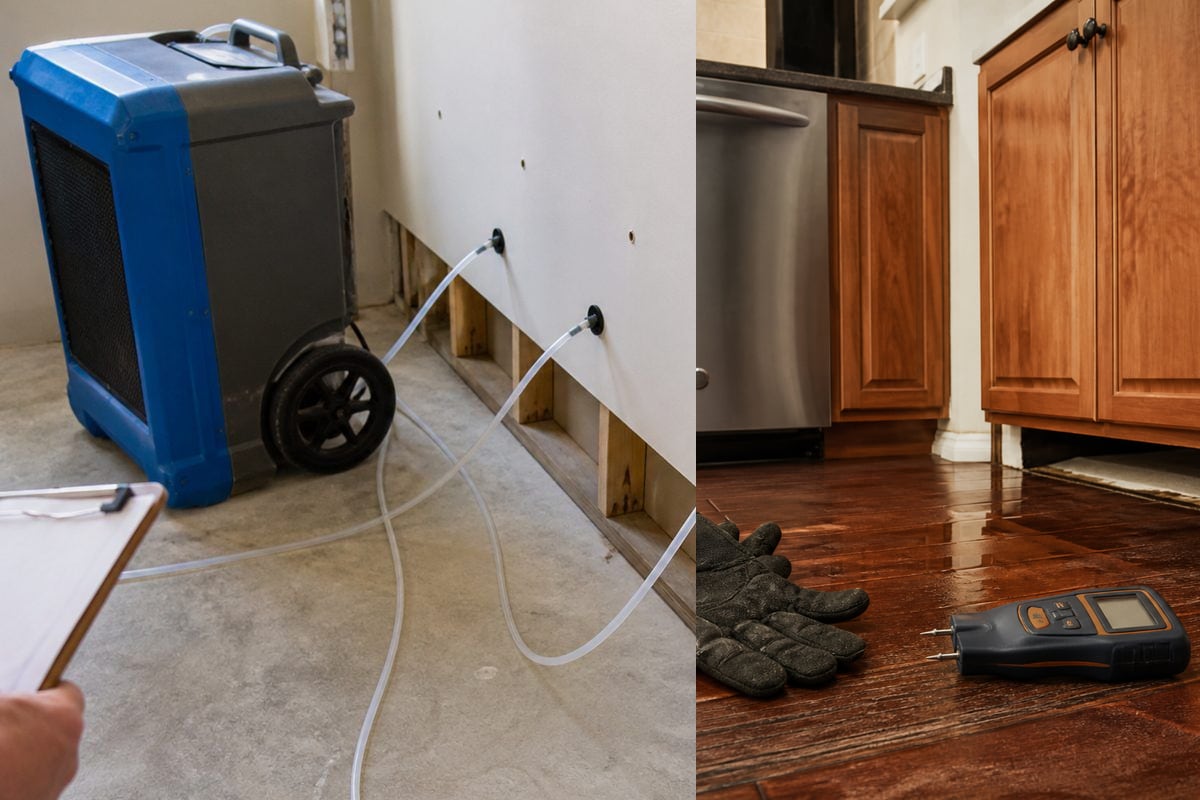
You can track odor location, note any temperature or humidity differences near suspect walls, and use an inexpensive moisture meter against the drywall surface to check for elevated readings. None of these confirm mold on their own, but they help narrow down where a problem is most likely.
Professional Mold Testing and Inspection Methods
Professionals typically combine moisture meters with infrared or thermal imaging to spot temperature differences that often indicate dampness inside a wall, without opening it up first. Air quality testing and targeted surface sampling can add further confirmation when needed. These methods aren't perfect predictors of exactly what's behind a wall, but together they give a much clearer picture than guessing. Bathroom Mold: Causes, Prevention and Remediation covers similar detection methods specific to bathroom wall assemblies, where hidden moisture is especially common.
What to Do If You Suspect Mold Behind Your Walls
- Note where the odor or visible signs are strongest, and check for any history of leaks in that area.
- Avoid cutting into the wall yourself if you can help it, since disturbing mold can release spores into the air.
- Improve ventilation in the room in the meantime, without relying on it as a fix.
- Address any obvious moisture source you can identify, like a dripping fixture.
- Schedule a professional inspection if signs persist for more than a few days or if anyone in the household has ongoing symptoms.
If you're at this stage, reaching out sooner gets you a clearer answer faster. Call request a callback or visit contact form to schedule an assessment.
How Professionals Remove Mold From Behind Walls
Professional mold removal from behind walls typically involves containment, targeted material removal, and HEPA filtration to prevent spores from spreading during the work. The goal is removing what's contaminated while protecting the rest of the property.
Technicians usually begin by setting up containment barriers around the work area to keep spores from migrating into unaffected rooms. Contaminated drywall, insulation, or other porous materials that can't be fully cleaned are removed and disposed of properly, while structural framing is cleaned and treated if it's still structurally sound. HEPA air scrubbers run throughout the process to capture airborne spores, and a final clearance check confirms the area meets acceptable standards before rebuilding begins. Technicians typically hold [details pending verification] for this type of work.
Because this process involves real judgment calls about what can be saved and what can't, it's worth talking to someone before assuming the worst. Call request a callback or visit contact form to discuss what your situation likely involves.
Preventing Mold From Returning
- Fix the original moisture source completely, not just cosmetically
- Run a dehumidifier in rooms prone to high humidity
- Improve ventilation in bathrooms and kitchens with functioning exhaust fans
- Address condensation around windows and exterior walls promptly
- Check previously affected areas periodically for several months after remediation
- Keep indoor humidity below roughly 60 percent where possible
Hidden Mold in Los Angeles Homes and Commercial Buildings
Hidden wall mold in Greater Los Angeles is shaped as much by building age and wall construction as by weather. Stucco exteriors, older plaster-and-lath walls, and a substantial stock of pre-1960s housing all create their own moisture patterns.
Many Los Angeles homes, especially older ones, use plaster-and-lath construction rather than modern drywall, which behaves differently when it absorbs moisture and can hide problems even longer before showing surface signs. Stucco exteriors, common throughout the region, can trap moisture behind them if cracks or improperly sealed penetrations let water in. In multifamily and commercial buildings, shared wall assemblies mean a leak affecting one unit's wall cavity can extend into a neighboring unit before either occupant is aware of it. [details pending verification] Water Damage Restoration in Los Angeles: The Complete Guide covers commercial and multifamily water damage response in more depth.
Frequently Asked Questions About Hidden Mold Behind Walls
Can mold smell without being visible?
Yes. A musty or earthy odor is often the first noticeable sign of hidden mold, appearing before any visible discoloration. If a persistent smell lingers in a specific room or near a wall despite cleaning, it's worth investigating for moisture behind the surface.
What does mold behind drywall look like from the outside?
You typically won't see mold itself, but you may notice discoloration, dark staining, peeling paint or wallpaper, bulging or soft drywall, or a slightly warped surface. These are indirect clues that moisture and mold activity may be present inside the wall cavity.
How do professionals check for mold behind walls without demolishing them?
Professionals often use moisture meters and infrared or thermal imaging to identify damp areas behind a wall before opening it up. Air quality testing and targeted surface sampling can also indicate elevated mold activity without full removal of drywall.
Is it safe to cut into a wall myself to check for mold?
Cutting into a wall can disturb mold and release spores into the air if not done carefully, potentially affecting a larger area. If you strongly suspect mold based on odor or health symptoms, a professional inspection is generally a safer first step than DIY demolition.
What health symptoms are associated with hidden mold exposure?
Some people are more sensitive to mold than others and may notice symptoms like nasal irritation, coughing, or allergy-like reactions in affected spaces. Symptoms vary by individual, and persistent, room-specific symptoms are worth mentioning to a doctor and investigating for a mold source.
How much does it cost to inspect for mold behind walls?
Costs depend on the size of the property and scope of testing needed. [details pending verification]. Contact request a callback or contact form for details specific to your situation.
Can hidden mold behind walls spread to other rooms?
Mold can spread when moisture conditions persist, particularly through shared wall cavities, HVAC systems, or if the underlying leak isn't addressed. Addressing the moisture source is key to preventing further spread.
If you suspect hidden mold behind your walls, an inspection is a lot less disruptive than it sounds and can settle the question quickly. Call request a callback or visit contact form to schedule one.
---