
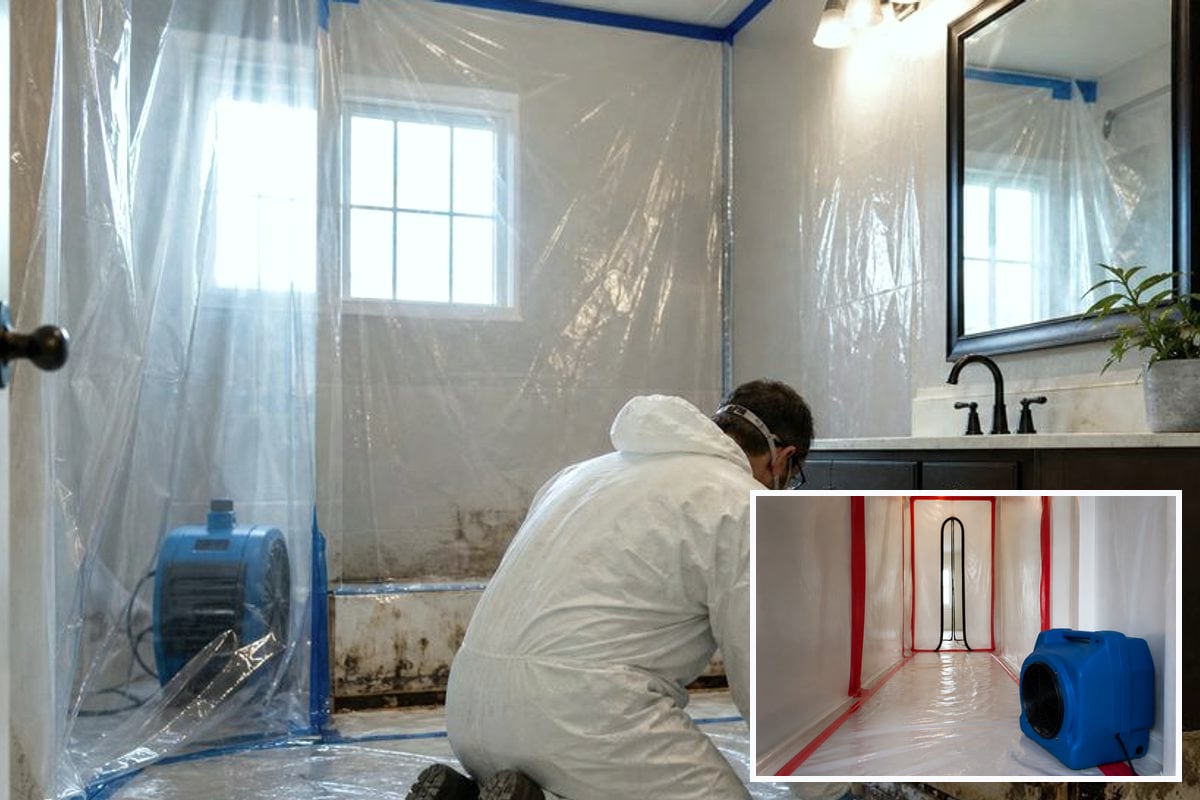
"Mold removal" and "mold remediation" get used interchangeably in casual conversation, but they describe two different levels of response. Getting this distinction wrong matters. Hiring a surface-cleaning service for a problem that needs full remediation means the mold comes back, often within weeks, because the actual cause was never addressed.
This guide explains what separates the two terms, walks through what professional remediation actually involves step by step, and covers the health questions people understandably have when mold shows up in their home or business.
What Is Mold Removal?
Mold removal generally refers to cleaning visible mold off a surface, typically on a small, isolated area and a non-porous material, without necessarily addressing the underlying moisture source. Think of it as surface-level cleanup. It can be appropriate for small patches of mold on tile, glass, or sealed countertops, but it doesn't address why the mold appeared in the first place.
Removal alone leaves open the question of recurrence. If the moisture behind the mold isn't identified and fixed, cleaning the visible growth is often a temporary fix rather than a permanent solution.
What Is Mold Remediation?
Mold remediation is a comprehensive process that contains the affected area, removes mold at its source, and addresses the underlying moisture problem to prevent regrowth, rather than just cleaning what's visible. It's the appropriate response for larger mold problems, mold on porous materials like drywall or wood, or any situation involving a hidden or ongoing moisture source.
Remediation treats mold as a symptom of a moisture problem, not an isolated stain to wipe away. That distinction is the core of why the two terms aren't interchangeable. Mold Inspection vs Mold Testing: What Greater Los Angeles Property Owners Need to Know covers how you determine which situation you're actually dealing with before deciding on a response.
Key Differences Between Mold Removal and Mold Remediation
Mold removal cleans what's visible on a surface, while mold remediation addresses the mold, the contamination it may have spread, and the moisture source causing it. The table below lays out the practical differences.
| Factor | Mold Removal | Mold Remediation |
|---|---|---|
| Scope | Surface-level cleaning | Full containment, removal, and source correction |
| Typical materials | Non-porous surfaces (tile, glass, sealed counters) | Porous materials (drywall, wood, insulation) common |
| Moisture source | Not necessarily addressed | Central to the process |
| Containment | Not typically used | Standard practice to prevent spread |
| Appropriate for | Small, isolated surface mold | Larger areas, hidden moisture, recurring mold |
| Long-term outcome | Risk of recurrence if source isn't fixed | Designed to prevent regrowth |
Why "Complete Mold Removal" Isn't Realistic
Mold spores exist naturally in almost every indoor and outdoor environment, which means eliminating every spore from a property isn't a realistic goal, and any company promising it is overstating what's actually possible. The realistic goal of professional remediation is bringing mold levels back down to a normal range and removing the conditions that let it grow out of control in the first place.
This matters because it should change what you expect from a remediation provider. A company that's honest about this distinction, rather than promising a mold-free environment, is generally giving you a more accurate picture of what remediation can and can't do.
What Happens During Professional Mold Remediation
Professional mold remediation follows a sequence of steps designed to contain the problem, remove contaminated material safely, and confirm the space meets acceptable conditions before the project closes out. Here's the general order those steps follow.
Containment
Physical barriers, often plastic sheeting and negative air pressure, isolate the affected area from the rest of the property before any removal work begins. This step prevents mold spores from spreading to unaffected rooms while contaminated materials are disturbed during cleanup.
Air Filtration
HEPA air scrubbers run throughout the remediation process to capture airborne spores and particulates, improving air quality in and around the work area. This equipment typically stays in place until the project's later stages, since disturbed materials continue releasing particles throughout the removal phase.
Removal of Contaminated Materials
Mold-affected porous materials, such as drywall, insulation, or carpet padding, generally need to be removed and disposed of rather than cleaned, since mold can grow into the material itself. Non-porous materials are more often cleaned and retained.
Cleaning and Antimicrobial Treatment
Remaining surfaces get cleaned with antimicrobial treatments designed to eliminate residual mold and inhibit future growth. This step targets both visible residue and the microscopic contamination that surface cleaning alone would miss.
Drying and Dehumidification
Since moisture is what allowed mold to grow in the first place, remediation isn't complete until the area is brought back to an acceptable moisture level using dehumidification equipment. How Mold Remediation Works: The Step-by-Step Process covers this drying phase and the full remediation sequence in more detail.
Post-Remediation Verification
A final check, sometimes including clearance testing, confirms the space meets acceptable conditions before containment comes down and repairs begin. This step is what separates documented, professional remediation from a surface-level cleanup that just looks finished.
When Mold Removal Alone Is Enough
Removal alone can be a reasonable response in a narrow set of situations.
- The mold is confined to a small, isolated patch, generally less than a few square feet
- It's growing on a non-porous, sealed surface like tile or glass
- There's no evidence of a hidden or ongoing moisture source behind the area
- The mold hasn't recurred after a previous cleaning
When You Need Full Mold Remediation
Full remediation is the appropriate response whenever the situation goes beyond simple surface cleaning.
- The affected area is larger than a small, isolated patch
- Mold is growing on porous material such as drywall, wood framing, or carpet
- There's a known or suspected hidden moisture source, such as a slab leak or roof leak
- Mold has returned after a previous cleaning attempt
- Occupants have raised health concerns related to the mold
Health Considerations With Mold Exposure
Some people are more sensitive to mold exposure than others, and reactions can vary widely from person to person, so it's worth taking health concerns seriously without assuming every mold problem creates a medical emergency. If you or someone in your property has health concerns related to mold, speak with a medical professional in addition to addressing the mold itself. Professional remediation is designed to reduce mold levels and the conditions that support its growth, which supports better indoor air quality for everyone in the space.
Why Mold Keeps Coming Back Without Proper Remediation
If the underlying moisture source isn't identified and fixed, surface cleaning only provides a temporary result. Mold will typically return until the humidity, leak, or ventilation issue causing it is resolved. This is especially common across Greater Los Angeles, where coastal marine-layer humidity and aging plumbing in older multifamily buildings create ongoing moisture conditions that outlast a one-time cleaning. Addressing the root cause, not just the visible growth, is what makes remediation last.
Choosing a Mold Remediation Company in Los Angeles
A qualified mold remediation company should hold appropriate licensing, walk you through their containment and removal process in plain language, and be upfront about what remediation can and can't guarantee. Before hiring, check a few key things.
- Confirm licensing and certification, which LA Water Damage holds under [details pending verification]
- Ask them to explain their containment and air filtration process before work begins
- Ask whether the moisture source will be identified and addressed as part of the scope, or whether that's a separate step
- Get a written scope of work before any removal begins
- Ask about their experience with the building types common across Greater Los Angeles, including older multifamily properties and slab-on-grade construction
To schedule an assessment, contact LA Water Damage at request a callback or contact form.
Frequently Asked Questions About Mold Removal vs Remediation
Is mold removal the same as mold remediation?
No. Mold removal typically refers to cleaning visible mold from a surface, while remediation is a broader process that addresses the moisture source, contains the affected area, and works to prevent regrowth. Remediation is the more thorough approach for anything beyond a small, isolated patch.
Can all mold be completely removed from a building?
Mold spores exist naturally almost everywhere, indoors and outdoors, so eliminating every spore isn't realistic. The goal of professional remediation is to bring mold levels back to a normal range and remove the conditions that let it grow out of control.
Can I remove mold myself instead of hiring a professional?
Small, isolated surface mold on non-porous materials is sometimes manageable with basic cleaning. Larger areas, mold on porous materials like drywall, or mold tied to a hidden moisture source generally require professional remediation to address the root cause properly.
Is mold exposure dangerous to my health?
Some people are more sensitive to mold exposure than others, and reactions can vary widely from person to person. If you have health concerns related to mold in your home, speak with a medical professional in addition to addressing the mold itself.
Why does mold keep coming back after I clean it?
If the underlying moisture source isn't identified and fixed, surface cleaning only provides a temporary result. Mold will typically return until the humidity, leak, or ventilation issue causing it is resolved.
How do I know if I need mold removal or full remediation?
The size of the affected area, the material involved, and whether there's an ongoing moisture source all factor in. A professional inspection is the most reliable way to determine the right scope for your situation.
Not sure whether your property needs simple cleanup or full remediation? LA Water Damage can assess your situation and give you a straight answer. Call request a callback or contact us through contact form. For more on identifying the difference before you call anyone, see Mold Inspection vs Mold Testing: What Greater Los Angeles Property Owners Need to Know, and for a full breakdown of the remediation process itself, see How Mold Remediation Works: The Step-by-Step Process.
---