
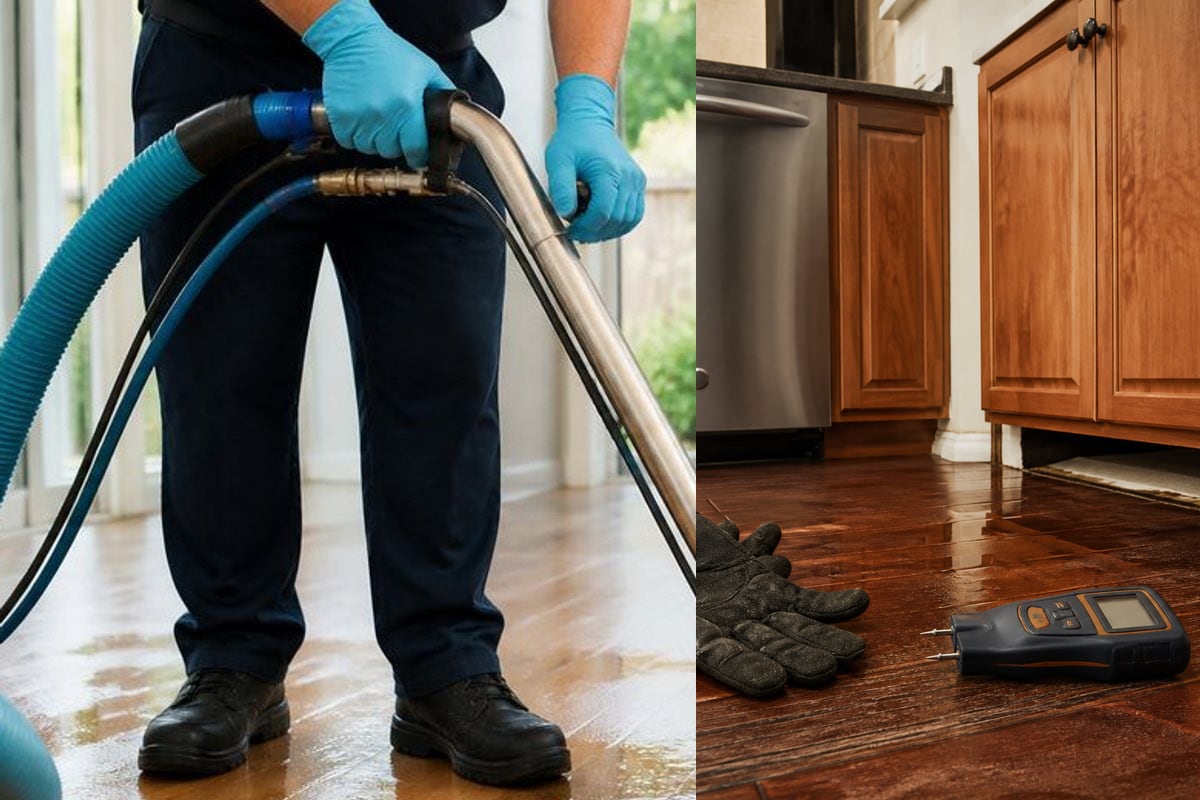
Water damage rarely stays a one-time problem. A burst pipe, a roof leak, or a flooded floor can look manageable on day one and turn into a mold problem by day five. That gap between the initial event and the mold that follows is where most property owners lose control of the situation, often without realizing it until they smell it.
This guide walks through how mold actually develops after water damage, how fast it moves, the warning signs to watch for, and what separates a DIY drying job from one that genuinely needs a professional. It also covers what water damage and mold risk look like specifically in Greater Los Angeles, where older buildings and seasonal storms create their own patterns.
How Water Damage Turns Into a Mold Problem
Mold forms after water damage because moisture, organic material, and time combine in the right conditions. Drywall, wood framing, carpet padding, and insulation all contain organic matter that mold spores feed on once they have enough moisture to activate.
Mold spores exist almost everywhere, indoors and outdoors, in low concentrations. They are dormant until they land somewhere damp. Once drywall or wood stays wet, spores that were harmless a day earlier can begin colonizing the surface. This is why the first 24 to 48 hours after any water event matter so much. It is not a guarantee mold will appear by a specific hour, but it is the general window building science and restoration professionals treat as the danger zone.
How Fast Does Mold Grow After Water Damage?
Mold can begin developing within roughly 24 to 48 hours after water intrusion in favorable conditions, though the exact timing varies with humidity, temperature, and the material involved. Understanding this rough timeline helps explain why speed matters more than any other factor in preventing mold.
Within 24-48 Hours
This is the window where fast extraction and drying make the biggest difference. Materials that stay wet through this period are the ones most likely to support early mold growth, especially porous materials like drywall paper, carpet backing, and untreated wood.
Days 3-7
If moisture is still present after the first two days, conditions become more favorable for visible colonization. This is often when a musty smell becomes noticeable, even in areas that look dry on the surface.
Beyond One Week
Past the one-week mark, mold that has taken hold can begin spreading to adjacent materials and, in some cases, into wall cavities or subfloor areas that were not part of the original water event. At this stage, remediation typically involves more than surface cleaning.
If you are still in the early hours after a leak or flood, moving quickly matters more than anything else covered in this guide. Signs of Hidden Mold Behind Walls explains what to watch for if moisture has already had time to spread out of sight.
Common Sources of Hidden Moisture After Water Damage
Hidden moisture usually comes from a source that was never fully addressed, not always a dramatic flood. Plumbing failures, roof leaks, and HVAC condensation are the most common culprits, and they often go unnoticed longer than an obvious flood would.
Plumbing and Appliance Leaks
Supply line failures, slow drain leaks, and appliance malfunctions (washing machines, dishwashers, water heaters) are among the most frequent sources of water damage in homes. A slow leak under a sink or behind a washing machine can soak subflooring for weeks before it becomes visible.
Roof Leaks
Roof leaks often travel before they show. Water can enter at a damaged shingle or flashing point and run along the roof deck or rafters before dripping somewhere entirely different, which makes the ceiling stain you see rarely the actual leak location.
Flooding and Storm Water
Flooding from storms or overland water introduces both volume and, often, contamination risk. Storm water picks up debris and pollutants as it travels, which changes how it needs to be handled compared to a clean supply-line break.
Sewage Backups
Sewage backups are treated differently from other water sources because they involve contaminated water, sometimes referred to in the industry as black water, which carries bacteria and other pathogens. This category requires different cleanup protocols than a clean water leak, and it is not a job for standard household cleaning. Sewage Backup Cleanup: What Homeowners Need to Know covers this category in more detail.
HVAC Condensation
Condensation around HVAC lines, especially in attics or closets housing air handlers, can create a slow, steady moisture source that goes unnoticed because there was never a single dramatic event to flag it.
Warning Signs of Mold After Water Damage
The warning signs of mold after water damage usually show up through smell and appearance before health symptoms ever enter the picture. Catching these early signals is often what separates a small cleanup from a larger remediation project.
Visual Signs
- Discoloration or staining on walls, ceilings, or baseboards
- Peeling, bubbling, or cracking paint
- Warped, buckled, or soft flooring
- Visible fuzzy or speckled growth in patches of black, green, white, or gray
Odor
- A persistent musty or earthy smell, especially in a room that recently had water damage
- Odor that returns after cleaning, suggesting the source is still present
Health Symptoms
- Increased sneezing, coughing, or nasal irritation in a specific room
- Eye or throat irritation that improves when away from the space
None of these signs alone confirms mold with certainty, but together they are a reasonable trigger for an inspection. Signs of Hidden Mold Behind Walls goes deeper into what to look for when the source isn't visible on the surface.
Is Mold From Water Damage a Health Concern?
Mold exposure affects people differently, and for many people, brief exposure causes no noticeable reaction at all. Some individuals are more sensitive to mold than others and may experience allergy-like symptoms when spending time in an affected space.
Commonly reported symptom categories among sensitive individuals include:
- Respiratory irritation, such as coughing or a scratchy throat
- Nasal congestion or sneezing
- Eye irritation
- Skin irritation in rare cases
If you or someone in your household has ongoing symptoms that seem tied to a specific room, especially one with known past water damage, it is reasonable to have the space inspected rather than guessing.
Can You Dry Water Damage and Prevent Mold Yourself?
DIY drying can work for small, clean-water spills that you catch and address immediately, but it has real limits once water has had time to spread or soak into building materials. The honest answer depends on how much water, how long it sat, and how far it traveled.
When DIY Drying Is Reasonable
A small, isolated spill from a clean source, caught within an hour or two and dried with fans, open windows, and a dehumidifier, is often within reach for a capable homeowner. Moisture meters, which measure the water content of a material, are inexpensive and worth owning if you plan to check your own work.
When DIY Drying Falls Short
Water that has soaked into carpet padding, traveled under flooring, or entered wall cavities is difficult to fully dry with household equipment. You cannot see moisture trapped behind drywall or under subfloor, which means a room can look and feel dry on the surface while staying wet where it matters. This is where professional moisture mapping becomes valuable, because guessing at what's dry is how mold problems start in the first place. If the water source involved anything beyond a small clean spill, Emergency Water Damage Response in Los Angeles walks through what a faster, more thorough response looks like.
How Professionals Prevent Mold After Water Damage
Professional mold prevention after water damage centers on finding moisture you cannot see and drying it completely, not just drying what's visible on the surface. This process typically combines detection equipment with structured drying and monitoring.
Moisture Mapping and Detection
Restoration professionals use moisture meters and thermal imaging cameras to trace where water traveled behind walls, under floors, and above ceilings. Thermal imaging shows temperature differences that often indicate dampness, letting technicians target drying equipment instead of removing materials unnecessarily.
Structural Drying
Once wet areas are mapped, professionals set up commercial-grade air movers and dehumidifiers sized to the space and monitor drying progress with follow-up moisture readings over several days, rather than assuming the job is done after one pass.
Containment and Monitoring
When mold is already present or contamination risk is high, containment barriers limit spread to unaffected areas while work is underway. Ongoing moisture monitoring during the drying process confirms materials have actually reached a safe moisture level rather than just appearing dry.
Technicians working on residential and commercial water damage in Los Angeles typically hold [details pending verification], and most companies aim for [details pending verification] after a call comes in. If you're dealing with active water damage right now, reaching out sooner rather than later gives drying equipment the best chance of preventing mold before it starts. Call request a callback or visit contact form to talk through your situation.
Step-by-Step: How to Prevent Mold After Water Damage
- Stop the water source if it's safe to do so, or shut off the main water supply.
- Remove standing water as quickly as possible using towels, a wet vacuum, or a pump for larger volumes.
- Increase airflow with fans and open windows if outdoor humidity is lower than indoor humidity.
- Run a dehumidifier to pull moisture out of the air, especially in enclosed rooms.
- Move wet furniture, rugs, and belongings away from walls and off wet flooring.
- Check and dry areas water may have traveled to, not just the obvious wet spot.
- Monitor humidity levels with an inexpensive hygrometer, aiming to keep indoor humidity below 60 percent.
- Watch the area for several days after it appears dry, since hidden moisture can resurface as odor or staining.
What Happens If Water Damage Is Left Untreated
Untreated water damage tends to compound rather than resolve on its own. Moisture that isn't addressed continues supporting mold growth, and building materials exposed to prolonged dampness gradually weaken.
Left long enough, untreated water damage can lead to:
- Continued mold colonization spreading beyond the original area
- Deterioration of drywall, subfloor, and wood framing
- Reduced indoor air quality throughout the affected space
- More complex, costlier remediation than if it had been addressed early
Insurance can also become more complicated the longer water damage sits, since some policies distinguish between a sudden covered event and damage attributed to neglect. Water Damage Restoration in Los Angeles: The Complete Guide covers what full restoration looks like once damage has progressed beyond simple drying.
Water Damage and Mold Risk in Los Angeles Homes and Businesses
Water damage and mold risk in Greater Los Angeles follow patterns shaped by the region's climate and building stock, not just individual accidents. Coastal marine-layer humidity, seasonal atmospheric-river storms, and a large share of older multifamily buildings all play a role.
Los Angeles doesn't get the year-round humidity of some regions, but winter atmospheric-river storms can drop significant rain in short windows, testing roofs and drainage systems that go unused most of the year. Marine-layer moisture along coastal and near-coastal neighborhoods keeps ambient humidity higher than many people expect for a famously dry city. Add to that a large stock of older multifamily buildings with aging plumbing, and shared wall and ceiling assemblies mean a leak in one unit can affect a neighbor before anyone realizes it. [details pending verification]
When to Call a Water Damage and Mold Professional
Certain situations call for professional help rather than DIY effort, and recognizing them early prevents a small problem from becoming a large one. General thresholds worth acting on include:
- Water from a sewage backup or other contaminated source
- Standing water that has been present for 24 hours or more
- Visible mold covering an area larger than roughly 10 square feet
- Water damage inside wall cavities, ceilings, or HVAC systems
- Musty odor that persists after surface cleaning and drying
- Any water event affecting a multifamily or commercial property with shared systems
If any of these apply to your situation, it's worth getting a professional assessment rather than waiting to see how things develop. Call request a callback or visit contact form to get started.
Frequently Asked Questions About Mold After Water Damage
Does water damage always lead to mold?
Not always, but the risk is high whenever moisture sits for more than a day or two. Mold needs moisture, organic material like drywall or wood, and time. Fast, thorough drying within the first 24 to 48 hours significantly lowers the chance mold takes hold, which is why quick response after any leak or flood matters.
How soon after water damage can mold start growing?
Mold can begin developing within roughly 24 to 48 hours in favorable conditions, though exact timing depends on humidity, temperature, and the material affected. This is why restoration professionals emphasize rapid extraction and drying rather than waiting to see if a problem develops.
Can I dry out water damage myself and avoid mold?
For small, clean-water spills you catch immediately, DIY fans and dehumidifiers can help. But hidden moisture inside walls, under flooring, or in insulation is easy to miss without moisture-mapping tools, which is why larger or slow-discovered leaks usually benefit from professional assessment.
What are the first signs of mold after a leak?
Common early indicators include a musty or earthy odor, discoloration or staining on walls and ceilings, peeling paint, or a persistent damp feeling in a room. Visible mold isn't always the first sign. Smell and moisture patterns often show up first.
Is mold after water damage dangerous to my health?
Mold exposure affects people differently. Some individuals are more sensitive than others and may notice allergy-like symptoms. If you or household members have ongoing respiratory irritation in an area with known water damage, it's worth having the space inspected.
How do professionals find hidden mold and moisture?
Restoration professionals typically use moisture meters and thermal imaging to map where water traveled behind walls, under floors, or above ceilings, since water rarely stays confined to the visibly affected area. This lets them target drying instead of guessing.
What happens if mold from water damage is left untreated?
Untreated moisture can lead to continued mold growth, deteriorating building materials, and potential indoor air quality concerns over time. The longer moisture sits, the more the affected area typically expands.
How much does mold remediation after water damage cost?
Costs vary based on the extent of water intrusion, affected materials, and remediation scope. [details pending verification]. Contact request a callback or contact form for an assessment specific to your property.
If you're dealing with water damage or suspected mold right now, the fastest thing you can do is get eyes on the situation. Reach out to request a callback or contact form and a member of the team can walk you through next steps for your property.
---