
Once mold remediation gets recommended, most property owners want to know one thing: what's actually going to happen in their home or building. The process isn't mysterious, but it does follow a specific sequence for a reason. Skip a step, or do them out of order, and the mold has a good chance of coming back.
This guide walks through the full remediation process step by step, covers what affects how long it takes, and explains what happens if the underlying moisture problem never gets fixed.
What Is Mold Remediation?
Mold remediation is the process of containing, removing, and cleaning mold contamination while addressing the moisture source causing it, with the goal of returning mold levels to a normal range rather than eliminating every spore. For a full comparison of removal versus remediation and how to decide which one you need, see Mold Removal vs Mold Remediation: What's the Difference and Which Do You Need?.
Signs You May Need Mold Remediation
Certain signs point toward needing full remediation rather than simple surface cleaning.
- Visible mold growth larger than a small, isolated patch
- A persistent musty odor, even without visible growth
- Water stains, warped materials, or a known history of water damage
- Mold on porous materials like drywall, wood, or carpet
- Mold that has returned after a previous cleaning attempt
- Occupants reporting symptoms that seem tied to time spent in a specific area
If any of these apply to your property, a professional inspection is the right next step. See Mold Inspection vs Mold Testing: What Greater Los Angeles Property Owners Need to Know for how that assessment works.
The Mold Remediation Process Step by Step
Professional mold remediation follows seven general steps, starting with inspection and ending with post-remediation clearance, each one building on the work done before it. Here's what happens at each stage.
1. Inspection and Identifying the Moisture Source
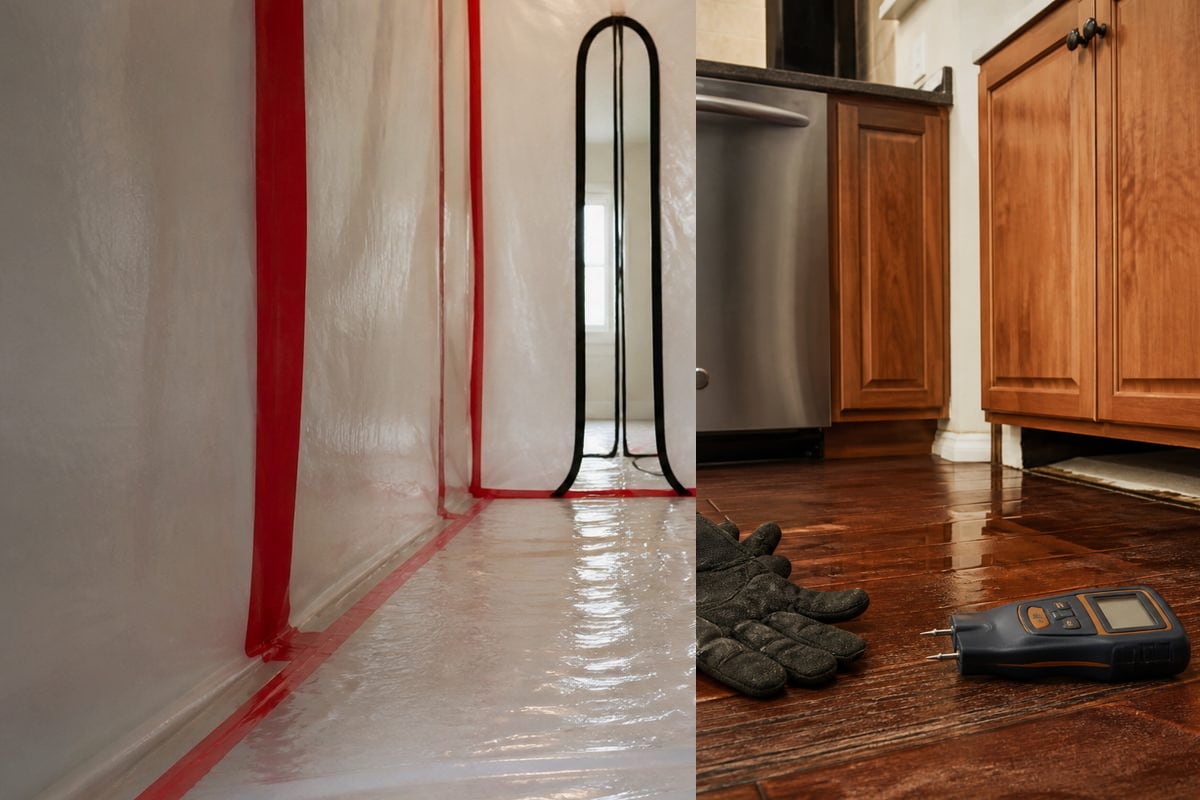
The process starts with an inspection to identify the extent of the mold and, critically, the moisture source feeding it. Skipping this step is one of the most common reasons mold returns after a cleanup, because the underlying cause never gets addressed. This step typically includes moisture meter readings and a visual assessment of the affected area and surrounding materials.
2. Containment and Safety Setup
Before any removal begins, the affected area gets isolated using physical barriers and negative air pressure, which keeps mold spores from spreading to unaffected parts of the property. Crews also set up personal protective equipment appropriate to the scope of the job at this stage.
3. Air Filtration and Negative Pressure
HEPA air scrubbers run throughout the project to capture airborne mold spores and particulates that get disturbed during removal work. Negative pressure inside the containment area keeps contaminated air from escaping into the rest of the property while work is underway.
4. Removal of Mold-Affected Materials
Porous materials that have absorbed mold, such as drywall, insulation, or carpet padding, generally get removed and disposed of rather than cleaned in place. Non-porous materials are more often cleaned and retained, depending on the extent of contamination.
5. Cleaning and Antimicrobial Treatment
Remaining surfaces are cleaned using antimicrobial treatments that address both visible mold residue and microscopic contamination that isn't visible to the eye. This step is what makes the difference between a surface wipe-down and an actual remediation.
6. Drying and Dehumidification
Since mold needs moisture to grow, remediation isn't complete until the area is brought back to an acceptable moisture level using dehumidification equipment and ongoing moisture monitoring. This step can take longer than people expect, especially with materials like framing lumber that release moisture slowly.
7. Post-Remediation Verification and Clearance Testing
A final check confirms the space meets acceptable conditions before the containment is removed and repairs begin. This step is what separates a documented, professional remediation from a surface-level cleanup, and it's worth asking any provider whether clearance testing is included in their scope of work.
How Long Mold Remediation Takes
Mold remediation timelines depend primarily on the size of the affected area, the materials involved, and the drying time needed afterward, which makes a specific universal timeframe impossible to give responsibly. A small, contained area on non-porous material takes considerably less time than a large area involving porous materials and a hidden moisture source. Ask your provider for [details pending verification] specific to your property rather than relying on a generic promise, since a company that gives you an honest range based on your actual situation is more trustworthy than one that quotes a fixed number before ever inspecting the property.
Repairing and Restoring the Area After Remediation
Once remediation is complete and the space passes clearance, repair work can begin, which typically means replacing drywall, flooring, or other materials that were removed during the process. This phase brings the property back to a livable or usable condition and should follow the same documentation standards as the remediation itself, including a written scope of work. Water Damage Restoration Services covers what this rebuilding phase often overlaps with, particularly when the original moisture source involved a leak or flood.
How to Prevent Mold From Returning
Preventing recurrence comes down to managing moisture consistently after remediation is complete.
- Fix the original moisture source, whether that's a leak, ventilation issue, or plumbing failure
- Keep indoor humidity in a reasonable range, particularly in bathrooms and kitchens
- Run exhaust fans during and after showering or cooking
- Check for condensation around windows and HVAC vents periodically
- Address any new water intrusion promptly rather than letting it sit
- Schedule periodic inspections if the property has a history of water damage
For a deeper look at what actually causes mold in the first place, see What Causes Mold in Buildings? Common Sources in Los Angeles Homes and Properties.
What Happens If the Moisture Source Isn't Fixed First
Remediation addresses the existing mold, but it doesn't automatically fix the leak, ventilation problem, or plumbing issue that caused it. If the moisture source isn't repaired, mold typically returns, often within weeks, in the same area or nearby. Moisture-source repair sometimes falls to a different contractor than the one handling remediation, so ask specifically whether it's included in your scope of work or whether you'll need to arrange it separately.
Frequently Asked Questions About the Mold Remediation Process
What is the first step in mold remediation?
The process starts with an inspection to identify the extent of the mold and, critically, the moisture source feeding it. Skipping this step is one of the most common reasons mold returns after a cleanup, since the underlying cause never gets addressed.
Why is containment necessary during mold remediation?
Containment barriers and negative air pressure keep mold spores from spreading to unaffected areas of the property while the affected materials are being removed and cleaned. Without it, disturbing mold during removal can actually spread contamination further.
How long does mold remediation typically take?
Duration depends on the size of the affected area, the materials involved, and drying time needed afterward. Ask your provider for [details pending verification] specific to your situation rather than relying on a generic timeline.
What is post-remediation verification or clearance testing?
After cleaning and removal are complete, a final check confirms the space meets acceptable conditions before the containment is removed and repairs begin. This step is what separates a documented, professional remediation from a surface-level cleanup.
Does mold remediation fix the leak or moisture problem too?
Not necessarily. Remediation addresses the existing mold, but the moisture source, a leak, poor ventilation, or a plumbing issue, often needs to be repaired separately, sometimes by a different contractor. Ask specifically whether moisture-source repair is included in your scope of work.
Can mold come back after remediation?
Yes, if the original moisture source isn't resolved or if a new leak or humidity issue develops. Proper remediation paired with fixing the underlying cause gives the best chance of a lasting result.
If your property needs mold remediation and you want a provider who explains every step of the process before starting, LA Water Damage serves properties across Greater Los Angeles. Call request a callback or reach out through contact form to schedule an inspection and get a clear scope of work for your specific situation.
---