
Residential Mold Removal addresses the immediate damage, the conditions that allowed it, and the work required before the affected area can return to use. A professional assessment should identify the source, affected materials, contamination or residue concerns, access limitations, and the work required before the property can return to normal use.
What this service typically includes
- occupant and pet safety planning
- contents documentation and protection
- moisture-source assessment
- inspection and scope definition
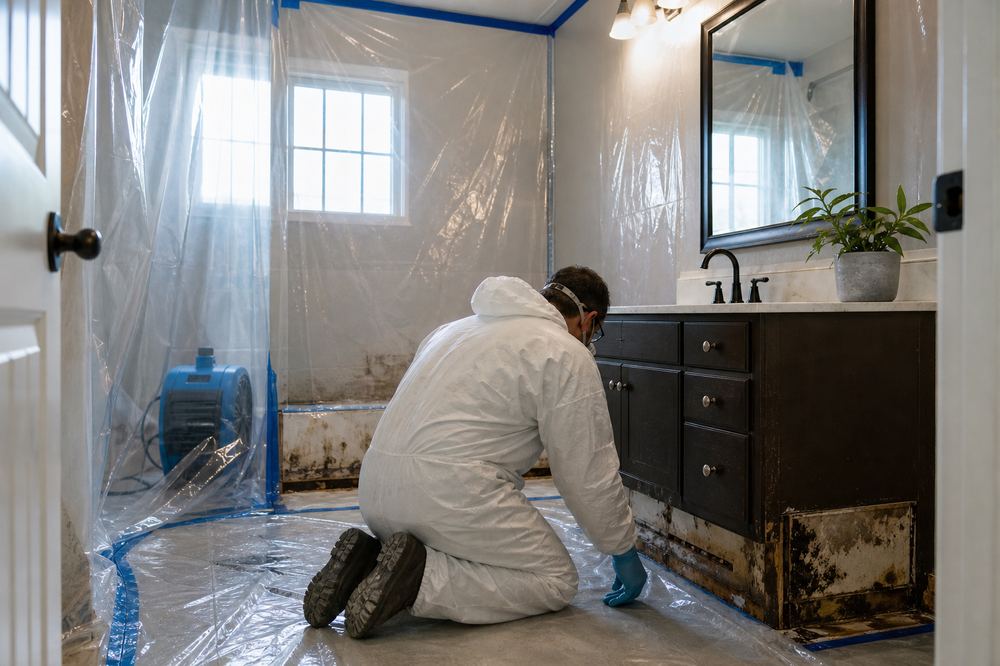
- containment when appropriate
- controlled material removal
- detailed cleaning
- drying and humidity correction
- waste handling
- final visual or independent verification
Common causes
- plumbing or roof leaks
- past water damage
- condensation
- high humidity
- poor ventilation
- wet wall, attic, crawl-space, or basement materials
Signs to watch for
- visible spotting or growth
- musty odor
- recurring stains
- condensation or persistent humidity
- growth behind furniture or inside concealed areas
- known water damage that was not fully dried
Typical process
- Define the problem. Identify affected areas, moisture conditions, and project objectives.
- Correct moisture. Repair or control the leak, condensation, or humidity source.
- Contain. Protect occupants and unaffected areas where the scope requires it.
- Remove and clean. Address affected materials and detailed surface cleaning.
- Dry. Return the work area toward acceptable moisture conditions.
- Verify. Confirm that the area is dry, visibly clean, and ready for repairs.
Where it applies
This service can be adapted for houses, apartments, condominiums, townhomes, and residential common areas. Residential work often requires contents protection and occupant communication. Commercial work may add tenant coordination, security, reporting, after-hours access, and phased reopening. State only the property types the business genuinely serves.
Cost factors
- size of the affected area
- source and duration of the damage
- materials and contents involved
- access, containment, and equipment needs
- specialty-trade or reconstruction requirements
A reliable estimate follows an inspection. Avoid a universal price that ignores source, affected area, material condition, contamination, access, labor, equipment, disposal, specialty trades, and reconstruction.
FAQ
Can occupants stay in the property?
It depends on safety, contamination, utilities, access, equipment, noise, and whether affected areas can be separated.
What affects the project timeline?
The source, affected materials, contamination, access, drying or cleaning progress, and repair requirements all influence timing.
What should be documented?
Photograph visible conditions, record dates and affected areas, keep invoices, and preserve required insurance or property-management communications.
Related services
Mold Prevention After Water Damage
Drying and moisture-control measures intended to reduce conditions that can support mold growth.
Mold Testing & Inspection
Inspection and testing information for suspected mold, with methods and scope determined by the qualified professional involved.
Mold Remediation & Removal
Containment, removal and moisture-control planning for mold-affected materials.
Mold Abatement & Mitigation
Measures intended to address mold-affected materials and reduce the moisture conditions contributing to growth.