
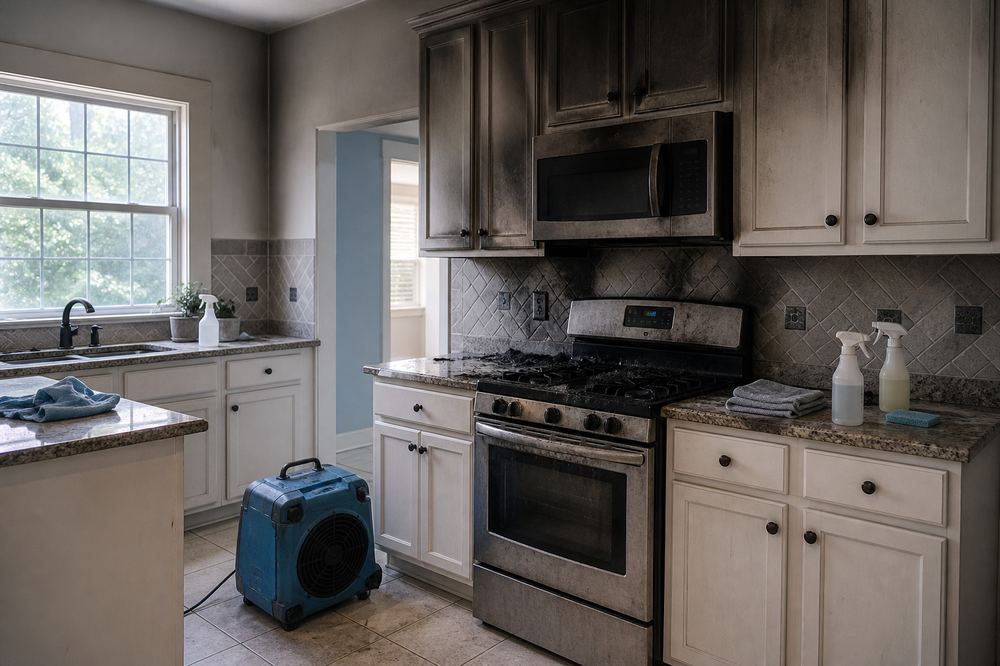
Emergency fire and smoke cleanup begins after official clearance and focuses on stabilization, temporary protection, water removal, documentation, and residue control. A professional assessment should identify the source, affected materials, contamination or residue concerns, access limitations, and the work required before the property can return to normal use.
What this service typically includes
- rapid hazard screening
- urgent source-control coordination
- post-clearance damage assessment
- temporary property protection
- suppression-water removal
- soot and smoke-residue evaluation
- contents coordination
- odor-source correction
- structural cleaning
- repair and reconstruction planning
Common causes
- cooking and appliance fires
- electrical or equipment failures
- heating and fireplace incidents
- candles, smoking, or open flames
- garage or vehicle fires
- wildfire or neighboring-structure exposure
Signs to watch for
- soot or oily residue
- persistent smoke odor
- charred or heat-damaged materials
- water damage from suppression
- open windows, doors, or roof areas
- contents affected beyond the burn room
Typical process
- Wait for clearance. Enter only after authorized officials permit access.
- Stabilize. Secure openings, utilities, and unsafe areas.
- Mitigate water. Remove suppression water and begin drying.
- Test and document. Map residues and test cleaning methods.
- Clean and deodorize. Remove residues and odor sources from structure and contents.
- Reconstruct. Repair damaged assemblies and complete final cleaning.
Where it applies
This service can be adapted for homes, apartments, offices, retail spaces, hospitality properties, warehouses, and managed buildings. Residential work often requires contents protection and occupant communication. Commercial work may add tenant coordination, security, reporting, after-hours access, and phased reopening. State only the property types the business genuinely serves.
Cost factors
- size of the affected area
- source and duration of the damage
- materials and contents involved
- access, containment, and equipment needs
- specialty-trade or reconstruction requirements
- after-hours access and immediate mobilization
A reliable estimate follows an inspection. Avoid a universal price that ignores source, affected area, material condition, contamination, access, labor, equipment, disposal, specialty trades, and reconstruction.
FAQ
What should I do while help is on the way?
Keep people away from hazards, stop the source only when safe, photograph visible conditions, and avoid actions that could spread contamination.
Should I wipe soot from walls?
Not before the residue and surface are evaluated. Incorrect cleaning can smear or set soot and expand damage.
What affects the project timeline?
The source, affected materials, contamination, access, drying or cleaning progress, and repair requirements all influence timing.
What should be documented?
Photograph visible conditions, record dates and affected areas, keep invoices, and preserve required insurance or property-management communications.
Related services
Fire Damage Restoration
Restoration planning for property affected by fire, smoke and related suppression water.
Residential Fire Damage Restoration
Fire and smoke damage restoration planning for homes and residential properties.
Commercial Fire Damage Restoration
Fire and smoke damage restoration planning for commercial and multifamily properties.